Leading Manufacturer & Exporter of
Weld Neck Flanges to Vietnam
Werner Flanges stands as Vietnam's trusted partner for high-quality weld neck flanges, delivering precision-engineered products to support the nation's rapidly expanding industrial infrastructure. With over two decades of manufacturing excellence, we export ASME B16.5 certified weld neck flanges to major Vietnamese cities including Ho Chi Minh City, Hanoi, Da Nang, Hai Phong, and Can Tho, serving critical industries from offshore oil and gas platforms to thermal power stations and petrochemical complexes across the country.
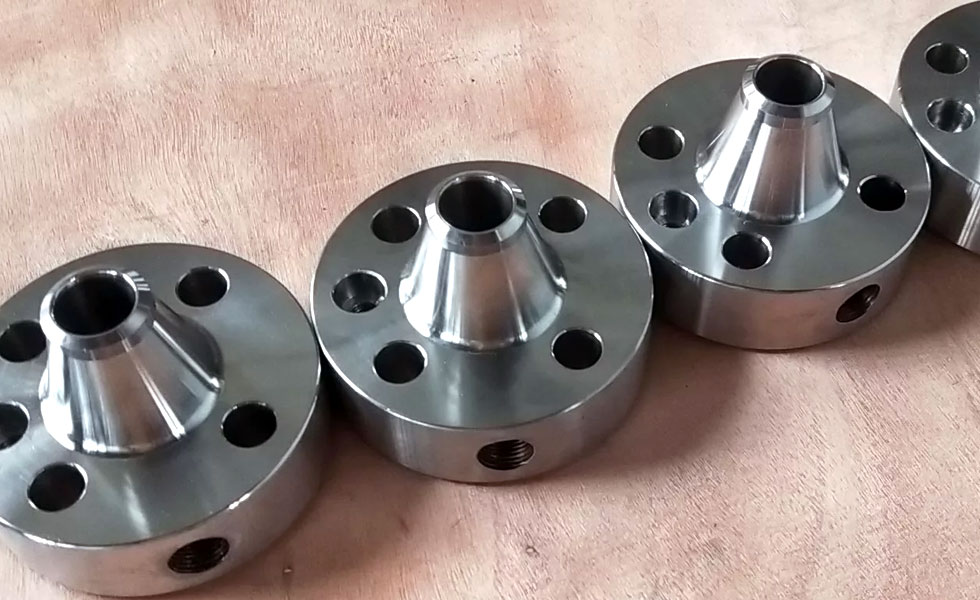
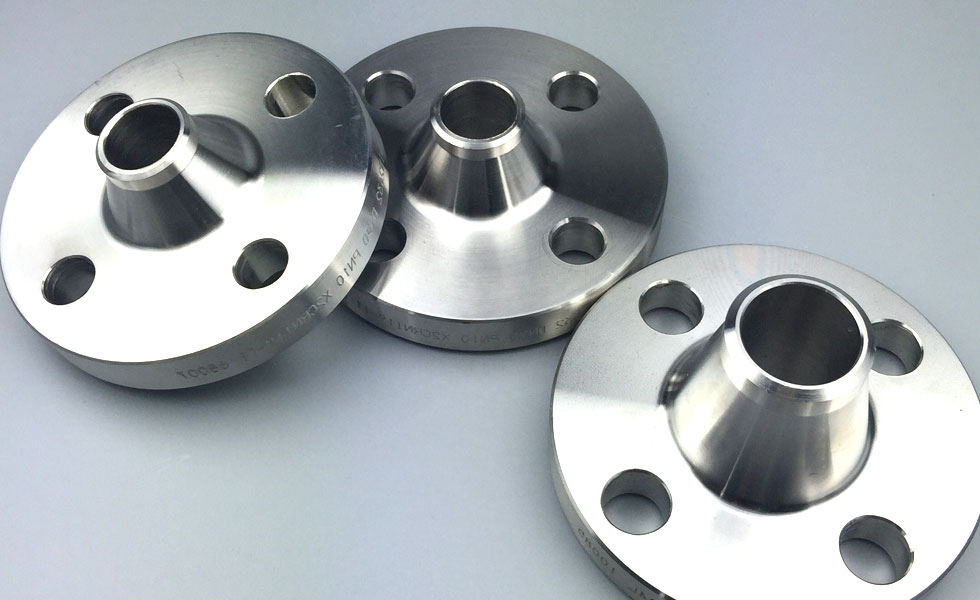
Our weld neck flanges are manufactured using premium-grade raw materials and advanced forging technologies to ensure superior strength, dimensional accuracy, and long-term reliability under high-pressure and high-temperature operating conditions. Each flange undergoes strict quality control procedures, including chemical analysis, mechanical testing, ultrasonic inspection, and third-party certification, ensuring full compliance with international standards and project-specific requirements for Vietnam’s demanding industrial applications.
Werner Flanges supports Vietnam’s growing energy and manufacturing sectors by supplying flanges suitable for refineries, LNG terminals, power generation facilities, shipbuilding yards, and large-scale infrastructure developments. Designed for critical piping systems, our weld neck flanges provide excellent stress distribution and leak-proof performance, making them ideal for corrosive environments and heavy-duty process industries where safety and durability are essential.
With a strong export network and efficient logistics management, Werner Flanges ensures timely delivery, secure packaging, and complete documentation for Vietnamese clients and EPC contractors. Our technical expertise, responsive customer support, and commitment to consistent product quality have positioned us as a reliable long-term partner for engineering companies, distributors, and industrial projects throughout Vietnam.
Vietnam Flange Export Supply | Secure Packaging & Complete Documentation | EPC & Industrial Project Partner | Reliable Long-Term Support
Specifications
| Specification | Details |
|---|---|
| Pressure Rating | Class 150 to Class 2500 |
| Flange Type | Plate Flange |
| Facing Type | Raised Face (RF), Flat Face (FF), Ring Type Joint (RTJ) |
| Size Range | ½” to 24” (DN 15 to DN 600) |
| Temperature Range | -29°C to +593°C (Depending on Material & Pressure Class) |
| Applications | Oil & Gas, Petrochemical, Power Generation, Water Treatment, Marine & Industrial Sectors |
| Manufacturing Process | Forged / Machined |
| Certification | EN 10204 3.1 / 3.2, IBR, NACE MR0175 / ISO 15156 (as applicable) |
Matel and Grade
| Type of Materials | Common Specifications / Customization Available on Request |
|---|---|
| Duplex Steel | ASTM/ASME A182 F51, F60, F61, UNS S31803, UNS S32205 |
| Super Duplex Steel | ASTM/ASME A182 F53, F55, UNS S32750, UNS S32760, F44 (6Mo) |
| Stainless Steel | ASTM/ASME A182 F304, F304L, F316, F316L, F310, F317L, F321, F347 |
| Carbon Steel | ASTM A105, A350 LF1, LF2, LF3, A266 Class 1/2, A694 F42 to F70, A765 Gr. II |
| Alloy Steel | ASTM/ASME A182 F1, F5, F9, F11, F12, F22 |
| Non-Ferrous Alloys | Titanium, Brass, Admiralty Brass, Copper Nickel, Nickel Alloys, Hastelloy |
| Titanium | ASTM/ASME B381 Gr.1, Gr.2, Gr.5, Gr.7, Gr.12, Gr.16 |
| Copper Nickel | ASTM B151 UNS C70600 (Cu-Ni 90/10), C71500 (Cu-Ni 70/30) |
| Brass, Al-Brass | ASTM B152 UNS C26000, C27200, C28000; ASTM B111 for Al-Brass |
| Nickel Alloys | ASTM B160, B161, B564 – UNS N02200, N02201, N04400, N08800, N08825, N06600, N06601, N06625, Monel K500 |
| Alloy 20 | ASTM B462 UNS N08020 |
| Hastelloy | ASTM B564 UNS N10276 (Hastelloy C276), N06022 (Hastelloy C22) |
| Cladded Materials | ASTM B898, B265, B424 or custom explosion/clad bonding using dissimilar metals |
| Titanium-Steel, Nickel-Steel, Titanium-Copper, Stainless Steel-Carbon Steel, Bimetallic/Trimetallic Combinations |
Types of Flanges
| Weld Neck Flanges | Raised Face Weld Neck Flanges | Flat Face Weld Neck Flanges | RTJ Weld Neck Flanges | Long Weld Neck Flanges |
| High Pressure Weld Neck Flanges | Forged Weld Neck Flanges | Reducing Weld Neck Flanges | Industrial Weld Neck Flanges | Custom Weld Neck Flanges |
Industries and Applications We Supply
| Industry | Applications |
|---|---|
Oil & Gas Industry |
Vietnam’s oil and gas sector represents one of the economy’s most critical segments, generating export revenues and supplying domestic energy needs. The industry operates offshore production platforms, onshore processing facilities, refineries, and pipeline networks that depend heavily on reliable weld neck flanges.
Upstream Offshore Production : Vietnamese offshore production platforms in the Cuu Long Basin, Nam Con Son Basin, and Song Hong Basin operate in water depths ranging from 50 to 400 meters, producing crude oil and associated gas from reservoirs containing challenging fluids including hydrogen sulfide (H2S) and carbon dioxide (CO2). These sour gas environments demand weld neck flanges manufactured from corrosion-resistant materials with verified resistance to sulfide stress cracking and hydrogen embrittlement. Topside process facilities use thousands of weld neck flanges in wellhead assemblies, production manifolds, test separators, oil and gas metering systems, and export pumping equipment. Pressure classes range from 600# for low-pressure separation equipment to 2500# for wellhead Christmas trees containing formation pressures exceeding 10,000 psi. Materials selection follows NACE MR0175/ISO 15156 guidelines, with F316L, F22, and super duplex F53 specified based on partial pressures of H2S, chloride content, and operating temperature. The harsh marine environment creates additional challenges beyond process conditions. Salt-laden air attacks carbon steel flanges relentlessly, requiring either corrosion-resistant materials or protective coatings. Werner Flanges supplies 316L and duplex flanges for seawater cooling systems, firewater networks, and produced water handling where the combination of chlorides, oxygen, and microbiologically influenced corrosion (MIC) would destroy carbon steel within months. Vietnamese offshore projects increasingly specify weld neck flanges with supplementary testing requirements including through-thickness testing, hydrogen-induced cracking (HIC) testing, and sulfide stress cracking (SSC) testing to ensure material suitability for the specific operating environment. Our materials sourcing focuses on suppliers qualified to meet these demanding specifications. Onshore Gas Processing Facilities : Natural gas produced from offshore fields requires extensive processing before entering Vietnam’s domestic pipeline network or being exported as LNG. Processing facilities at Nam Con Son in Ba Ria-Vung Tau Province and Ca Mau Province remove water, carbon dioxide, hydrogen sulfide, and heavy hydrocarbons to produce pipeline-quality gas meeting specifications for combustion and petrochemical feedstock. High-pressure inlet facilities operating at 900-1500# pressure class use F22 and F11 alloy steel weld neck flanges resistant to sour gas corrosion and high temperatures from gas compression heat. Acid gas removal units handling sour gas streams rich in H2S and CO2 require 316L stainless steel flanges resistant to acidic amine solutions and corrosive acid gases. Dehydration and sweetening units use carbon steel A105 flanges for dried sweet gas services where corrosion concerns are minimal. NGL (natural gas liquids) recovery systems extracting propane, butane, and natural gasoline operate at cryogenic temperatures down to -40°C, requiring A350 LF2 low-temperature carbon steel weld neck flanges with verified impact properties preventing brittle fracture during upsets and emergency shutdowns. Refining and Petrochemical Operations: Vietnam operates major oil refineries including the Dung Quat Refinery (Quang Ngai Province) processing 200,000 barrels per day and the Nghi Son Refinery and Petrochemical Complex (Thanh Hoa Province) processing 200,000 barrels per day. These facilities transform crude oil into gasoline, diesel, jet fuel, and petrochemical feedstocks using processes operating at extreme temperatures and pressures. Atmospheric and vacuum distillation units use A105 weld neck flanges for lower-temperature fractionation and F11 flanges for high-temperature vapor lines exceeding 400°C. Catalytic cracking units generating high-octane gasoline components require F11 and F22 flanges in reactor sections where temperatures exceed 500°C and erosion from catalyst particles necessitates superior mechanical properties. Hydroprocessing units removing sulfur and nitrogen from diesel fuel operate under combined high temperature and high hydrogen partial pressure, requiring F11 or F22 flanges per API 941 hydrogen service guidelines. The combination of hydrogen embrittlement risk and sulfidation corrosion makes proper material selection critical for long-term reliability in Vietnamese refinery operations. . |
Power Generation
|
|
Petrochemical Processing |
|
|
|
Frequently Asked Questions (FAQs)
- q1: what is the typical delivery time for weld neck flanges to vietnam?
- standard asme b16.5 weld neck flanges typically require 18–25 days for sea freight delivery to major vietnamese ports such as ho chi minh city, hai phong, and da nang. this includes manufacturing, inspection, packing, and ocean transit. expedited air freight delivery is available within 3–5 days for urgent requirements.
- q2: do your weld neck flanges comply with vietnamese pressure equipment standards?
- yes. our weld neck flanges are manufactured according to internationally accepted standards such as asme b16.5, astm, din, and bs specifications, which are widely accepted across vietnam’s oil & gas, petrochemical, and industrial sectors. complete compliance documentation and material traceability are supplied with each shipment.
- q3: can you supply flanges with special coatings for offshore applications?
- yes. protective coatings including fusion bonded epoxy (fbe), thermal spray aluminum (tsa), three-layer polyethylene (3lpe), and galvanizing are available for offshore and marine environments. coating selection depends on exposure conditions such as seawater, salt spray, or buried pipeline service.
- q4: what documentation do you provide for customs clearance in vietnam?
- we provide complete export documentation including commercial invoice, packing list, certificate of origin, bill of lading, material test certificates (en 10204 3.1/3.2), inspection reports, and fumigation certificates when required. documentation is prepared to support smooth vietnamese customs clearance.
- q5: how do i select the correct pressure class for my application?
- pressure class selection depends on operating pressure and temperature according to asme b16.5 pressure-temperature ratings. higher temperatures reduce allowable pressure ratings, so design conditions must always be verified. our technical team can recommend suitable pressure classes based on service conditions.
- q6: can you manufacture weld neck flanges in duplex stainless steel for offshore applications?
- yes. we manufacture duplex and super duplex weld neck flanges including astm a182 f51, f53, and f55 grades. these materials provide high strength and excellent resistance to chloride corrosion and stress corrosion cracking, making them suitable for vietnam’s offshore oil and gas environments.
- q7: what quality certifications can you provide?
- documentation includes en 10204 3.1 or 3.2 material test certificates, dimensional inspection reports, heat treatment records, nondestructive testing reports, pmi certificates, iso 9001 certification, and third-party inspection by tuv, dnv, bureau veritas, lloyd’s register, or sgs when required.
- q8: do you provide technical support for material selection and specification?
- yes. our engineering team assists with material selection, pressure class evaluation, standards interpretation, installation guidance, and specification review to ensure reliable performance for vietnamese industrial and offshore applications.
GET A QUOTE
-
Contact Information
Email: sales@wernerflanges.com