Leading Manufacturer & Exporter of
Stainless Steel Flanges to Vietnam
Werner Flanges stands as Vietnam's trusted partner for premium stainless steel flanges, serving the nation's rapidly expanding oil and gas, petrochemical, and power generation industries. With over two decades of manufacturing excellence and deep expertise in corrosion-resistant piping solutions, we supply ASTM A182 stainless steel flanges that meet the demanding requirements of PetroVietnam projects, offshore gas fields in the Cuu Long Basin, and petrochemical complexes from Dung Quat to Long Son.
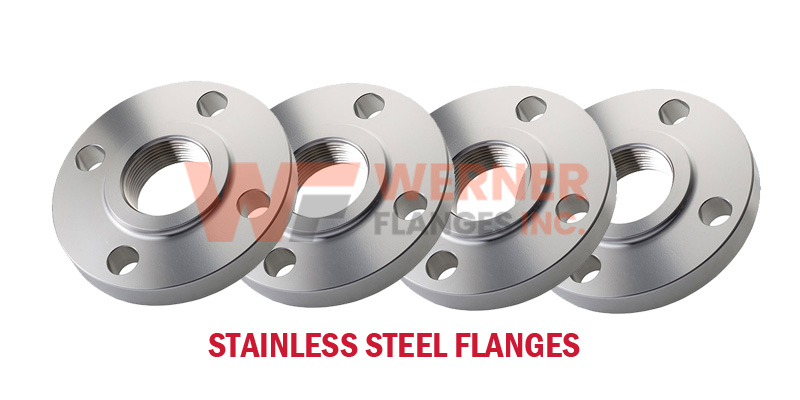
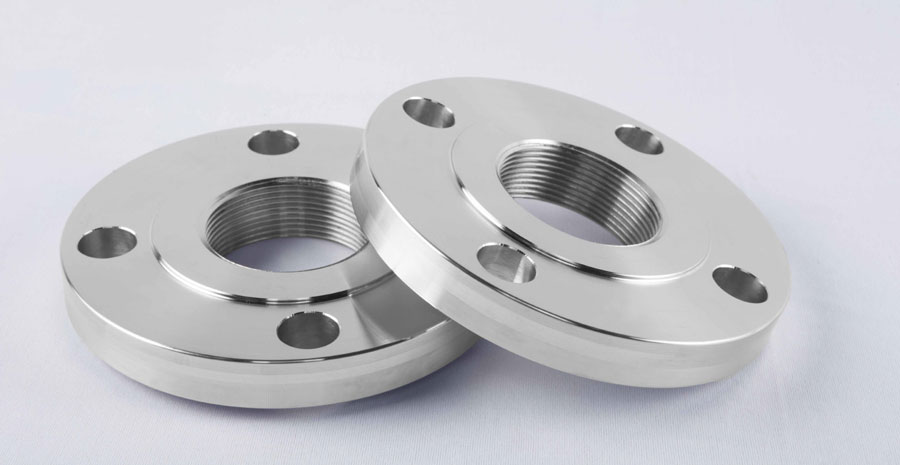
Vietnam’s industrial transformation—driven by the Block B-Ô Môn gas development, Nghi Son refinery expansion, and ambitious LNG infrastructure projects—demands piping components that deliver exceptional corrosion resistance, mechanical strength, and longevity. Our stainless steel flanges meet ASME B16.5, DIN, and BS standards while providing the material traceability and quality documentation required by international project specifications.
We manufacture a comprehensive range of stainless steel flanges in grades including ASTM A182 F304/F304L, F316/F316L, and F321, available in pressure classes from 150# to 2500# and sizes from 1/2″ to 60″. Every flange is precision-forged, heat-treated, and thoroughly tested to ensure performance in Vietnam’s challenging industrial environments, from corrosive offshore applications to high-purity pharmaceutical processing.
With strategic shipping partnerships to Hai Phong Port, Cat Lai Port, and Da Nang Port, we deliver stainless steel flanges to project sites across Northern, Central, and Southern Vietnam within 20–25 days via sea freight, with expedited air freight options available for urgent requirements. Our technical team provides comprehensive support for material selection, pressure class determination, and custom manufacturing solutions tailored to Vietnamese industry standards and project specifications.
Vietnam Stainless Steel Flanges | 20–25 Days Sea Freight | Hai Phong, Cat Lai & Da Nang Delivery | Technical & Custom Manufacturing Support
Specifications
| Specification | Details |
|---|---|
| Pressure Rating | Class 150 to Class 2500 |
| Flange Type | Plate Flange |
| Facing Type | Raised Face (RF), Flat Face (FF), Ring Type Joint (RTJ) |
| Size Range | ½” to 24” (DN 15 to DN 600) |
| Temperature Range | -29°C to +593°C (Depending on Material & Pressure Class) |
| Applications | Oil & Gas, Petrochemical, Power Generation, Water Treatment, Marine & Industrial Sectors |
| Manufacturing Process | Forged / Machined |
| Certification | EN 10204 3.1 / 3.2, IBR, NACE MR0175 / ISO 15156 (as applicable) |
Matel and Grade
| Type of Materials | Common Specifications / Customization Available on Request |
|---|---|
| Duplex Steel | ASTM/ASME A182 F51, F60, F61, UNS S31803, UNS S32205 |
| Super Duplex Steel | ASTM/ASME A182 F53, F55, UNS S32750, UNS S32760, F44 (6Mo) |
| Stainless Steel | ASTM/ASME A182 F304, F304L, F316, F316L, F310, F317L, F321, F347 |
| Carbon Steel | ASTM A105, A350 LF1, LF2, LF3, A266 Class 1/2, A694 F42 to F70, A765 Gr. II |
| Alloy Steel | ASTM/ASME A182 F1, F5, F9, F11, F12, F22 |
| Non-Ferrous Alloys | Titanium, Brass, Admiralty Brass, Copper Nickel, Nickel Alloys, Hastelloy |
| Titanium | ASTM/ASME B381 Gr.1, Gr.2, Gr.5, Gr.7, Gr.12, Gr.16 |
| Copper Nickel | ASTM B151 UNS C70600 (Cu-Ni 90/10), C71500 (Cu-Ni 70/30) |
| Brass, Al-Brass | ASTM B152 UNS C26000, C27200, C28000; ASTM B111 for Al-Brass |
| Nickel Alloys | ASTM B160, B161, B564 – UNS N02200, N02201, N04400, N08800, N08825, N06600, N06601, N06625, Monel K500 |
| Alloy 20 | ASTM B462 UNS N08020 |
| Hastelloy | ASTM B564 UNS N10276 (Hastelloy C276), N06022 (Hastelloy C22) |
| Cladded Materials | ASTM B898, B265, B424 or custom explosion/clad bonding using dissimilar metals |
| Titanium-Steel, Nickel-Steel, Titanium-Copper, Stainless Steel-Carbon Steel, Bimetallic/Trimetallic Combinations |
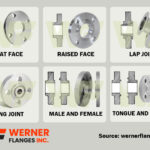
Types of Flanges
| Slip On Flanges | Weld Neck Flanges | Blind Flanges | Socket Weld Flanges | Threaded Flanges |
| Lap Joint Flanges | Reducing Flanges | Orifice Flanges | Long Weld Neck Flanges | Plate Flanges |
Industries and Applications We Supply
| Industry | Applications |
|---|---|
Oil & Gas Industry |
Vietnam’s oil and gas sector, dominated by the state-owned PetroVietnam group, represents the largest consumer of stainless steel flanges in the country. The industry’s expansion into offshore fields, development of marginal reserves, and emphasis on gas monetization creates sustained demand for corrosion-resistant piping components. Offshore Production Platforms: The Nam Con Son Basin, Cuu Long Basin, and Block B-Ô Môn developments feature production platforms where stainless steel flanges provide critical connections in highly corrosive environments. Duplex and super duplex grades (F51, F53) resist chloride stress corrosion cracking from seawater spray while providing the strength required for compact topside piping layouts. Subsea wellhead connections, production manifolds, and riser connections utilize super duplex flanges for their combination of mechanical strength and resistance to sour gas containing H2S and CO2. These flanges must maintain integrity despite continuous exposure to corrosive produced water, thermal cycling from production variations, and dynamic loading from platform motion. Gas Processing Facilities: Vietnam’s transition toward natural gas as primary energy source drives investment in gas processing infrastructure. The Ca Voi Xanh (Blue Whale) gas field development and associated processing facilities require extensive stainless steel piping for amine treating units, dehydration systems, and gas compression. Stainless steel flanges in amine regeneration systems resist the corrosive nature of activated amine solutions, particularly at elevated regeneration temperatures where carbon steel corrosion rates become unacceptable. Grade 316L provides adequate resistance for most amine services, while duplex grades offer enhanced resistance in high-chloride environments. Mercury removal systems, increasingly common as Vietnam exploits offshore gas reserves containing natural mercury, utilize specialized stainless steel materials to resist liquid mercury corrosion that destroys aluminum alloys and carbon steel. Super austenitic or nickel-based alloy flanges provide long-term reliability in these specialized applications. Crude Oil Refineries: The Dung Quat refinery (Quang Ngai Province) and Nghi Son refinery (Thanh Hoa Province) incorporate stainless steel flanges throughout their complex process units. Hydrotreating and hydrocracking units utilize Grade 321 and 347 flanges for their resistance to high-temperature hydrogen attack and sulfidation. Fluid catalytic cracking (FCC) units require stainless steel flanges in regenerator flue gas systems where temperatures exceed 650°C and flue gas contains sulfur compounds that corrode carbon steel. The titanium-stabilized Grade 321 maintains mechanical properties and corrosion resistance under these demanding conditions. Sour water stripper systems, which remove H2S and ammonia from process water, use Grade 316L flanges for their resistance to this corrosive environment. The combination of hydrogen sulfide, ammonia, and water creates conditions that cause rapid corrosion of carbon steel and stress corrosion cracking of some stainless grades. LNG Import Infrastructure: Vietnam’s first LNG import terminal at Thi Vai (Ba Ria-Vung Tau Province) marks the country’s entry into LNG importation to supplement declining domestic gas production. The regasification facility requires extensive use of 316L and 304L stainless steel flanges for cryogenic service (-162°C) where low-temperature toughness is critical. Cryogenic piping systems from LNG storage tanks through vaporizers demand materials that maintain ductility at -162°C without brittle fracture. Austenitic stainless steels retain their face-centered cubic crystal structure at cryogenic temperatures, providing the toughness required for safe LNG service. Charpy impact testing at -196°C verifies adequate toughness. Seawater warming systems that vaporize LNG use titanium or super duplex stainless steel flanges on the seawater side due to the combination of high chloride content, biofouling organisms, and elevated design pressures. Conventional stainless steels experience accelerated corrosion in warm seawater (above 30°C) containing sulfate-reducing bacteria. |
Power Generation
|
|
Petrochemical Processing |
|
|
|
Frequently Asked Questions (FAQs)
- q1: are your stainless steel flanges suitable for vietnam’s coastal marine environments?
- yes. we manufacture flanges in grades suitable for marine service including astm a182 f316/f316l with molybdenum for enhanced chloride resistance, and duplex stainless steel grades f51, f53, and f55 providing superior resistance to chloride-induced pitting and stress corrosion cracking. duplex and super duplex grades are recommended for offshore oil and gas platforms, coastal refineries, and desalination plants. material selection guidance is available based on temperature, chloride concentration, and mechanical loading.
- q2: what is the typical delivery time for stainless steel flanges to vietnamese project sites?
- standard sea freight delivery to major vietnamese ports (hai phong, cat lai, da nang, cai mep-thi vai) requires 20-25 days from order confirmation, including manufacturing, quality testing, packaging, and ocean transit. air freight reduces delivery to 5-7 days for urgent requirements. lead times extend for custom specifications, large quantities, or non-standard materials requiring special procurement. we coordinate with vietnamese logistics partners for customs clearance and inland transportation.
- q3: can you provide material certificates complying with vietnamese regulatory requirements?
- yes. every shipment includes material test certificates (en 10204 type 3.1 or 3.2) documenting chemical composition, mechanical properties, heat treatment parameters, and test results. additional documentation including dimensional inspection reports, pmi results, ndt reports, and third-party inspection certificates can be provided. certificates are traceable and satisfy petro vietnam specifications and international project standards. documentation is in english, with vietnamese translation available if requested.
- q4: do you supply duplex and super duplex stainless steel flanges for offshore applications?
- yes. we manufacture duplex (f51, f52, f60) and super duplex (f53, f55) stainless steel flanges for vietnam’s offshore oil and gas sector. these grades offer higher strength-to-weight ratios than austenitic 316l, resist chloride stress corrosion cracking, pitting, and sour gas (h2s/co2), and are ideal for subsea pipelines, production manifolds, and topside processing equipment. nance mr0175/iso 15156 compliance documentation is provided.
- q5: can flanges be manufactured to custom specifications for special vietnamese project requirements?
- yes. custom manufacturing includes non-standard dimensions, special materials, unique facing configurations, enhanced testing and documentation, and project-specific requirements. our engineering team collaborates with vietnamese project engineers to meet technical requirements. lead time depends on complexity, typically 4-6 weeks beyond standard delivery times.
- q6: what quality inspections and testing do you perform before shipment to vietnam?
- all flanges undergo dimensional verification per asme b16.5, positive material identification (pmi) using xrf, visual inspection, verification of markings and documentation, and mechanical testing (tensile, impact, hardness). optional ndt includes liquid penetrant, magnetic particle, ultrasonic, or radiographic testing. third-party inspection by tuv, dnv, lloyd’s, bv, sgs can be arranged. complete documentation accompanies every shipment for customs clearance and project verification.
- q7: are your stainless steel flanges suitable for pharmaceutical and food industry applications in vietnam?
- yes. we manufacture sanitary-grade stainless steel flanges meeting food contact and pharmaceutical standards. grades f304l and f316l are fda-compliant. surface finishes range from standard machined (125-250 μm ra) to electropolished ≤0.8 μm ra. materials provide full traceability and resist bacterial growth, cip/sip cycles, and are used in vietnamese pharmaceutical and food production facilities. certificates of compliance with food contact regulations and gmp requirements are provided.