Leading Supplier of Premium Carbon Steel Flanges for Thailand’s Industrial Sector
Thailand has emerged as a critical manufacturing and petrochemical hub in Southeast Asia, with a thriving energy sector and rapidly expanding industrial infrastructure. As a leading carbon steel flanges distributor serving Thailand, Werner Flanges brings decades of global expertise combined with deep understanding of the Thai market's unique requirements. Our extensive inventory of ASTM A105 and A350 LF2 carbon steel flanges ensures reliable supply chains for Thailand's most demanding industrial operations, from the petrochemical complexes of Rayong to the power generation facilities throughout the nation.
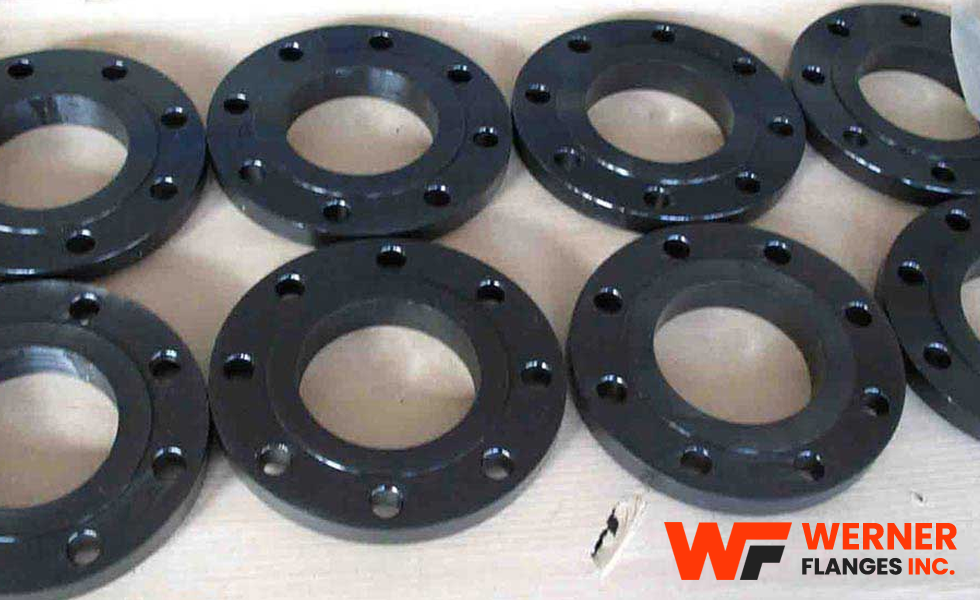
We understand that Thailand’s industries—oil and gas, petrochemicals, refining, power generation, and manufacturing—require flanges that meet rigorous international standards while being delivered on time and within budget. Our carbon steel flanges are manufactured using closed-die forging techniques, heat-treated to precise specifications, and tested to exceed ASME B16.5 standards. Every flange undergoes comprehensive quality inspections, including dimensional verification, mechanical testing, and material certification, ensuring your systems run safely and efficiently.
With established logistics partnerships to Thailand’s major ports—Bangkok, Rayong, and Laem Chabang—we deliver carbon steel flanges to Thai industrial facilities in as little as 18-25 days via sea freight. Our inventory programs ensure critical sizes are available for immediate shipment, while our technical team provides expert guidance on material selection, pressure ratings, and application-specific requirements. Whether you need standard ANSI B16.5 flanges or custom configurations for specialized applications, Werner Flanges is your trusted partner for carbon steel flange distribution throughout Thailand.
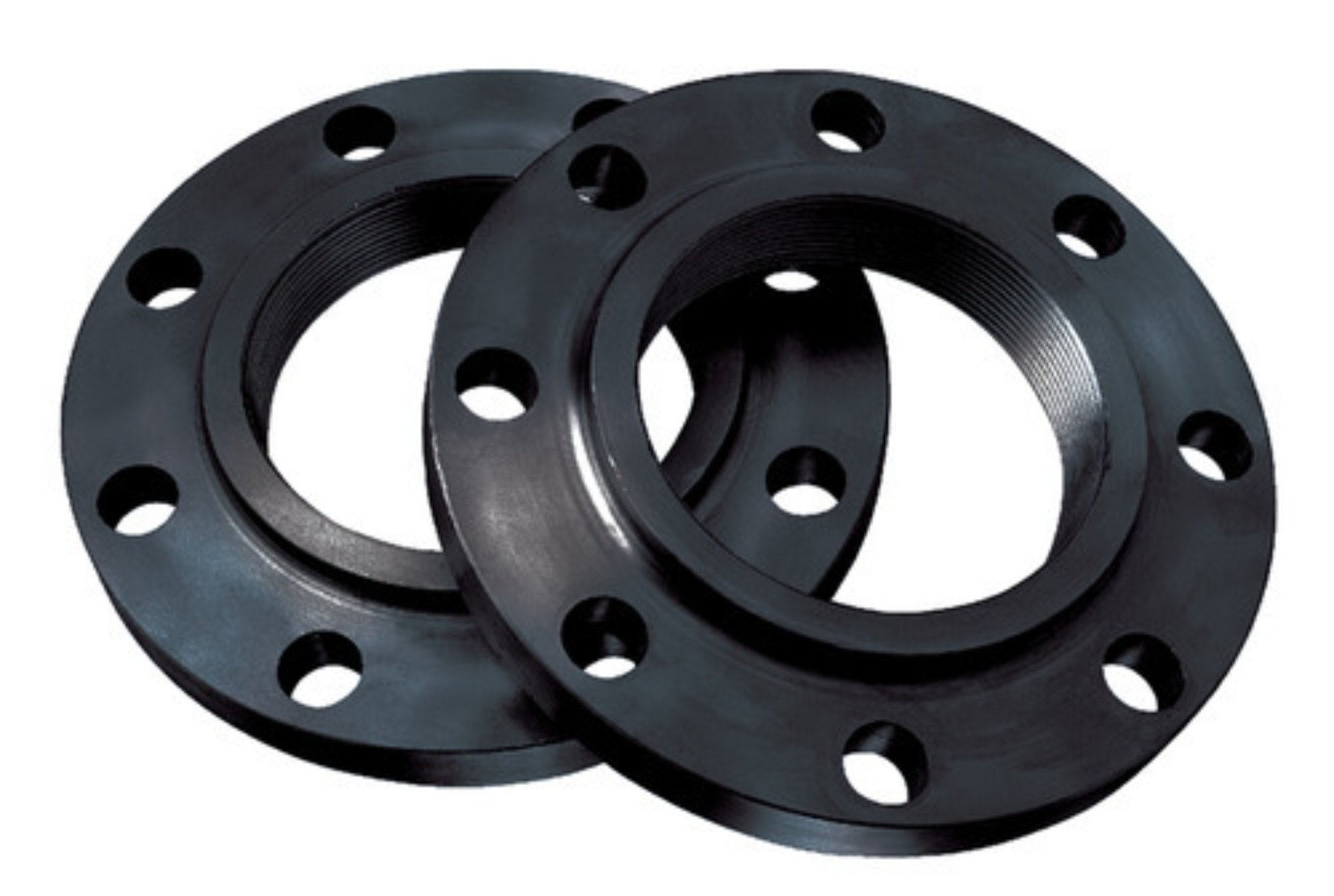
Carbon steel flanges are critical connecting components used to join pipes, valves, pumps, and equipment in industrial piping systems. Manufactured from carbon steel alloys—primarily ASTM A105 and ASTM A350 LF2—these flanges create leak-proof, pressure-resistant connections capable of handling demanding industrial environments.
Carbon steel flanges function by creating a bolted connection between two pipe sections or between a pipe and equipment. The flange face provides a flat surface where two components meet, while the bolt holes distribute pressure evenly across the connection. The raised face design prevents fluid leakage under pressure, while the flange's thickness absorbs mechanical stress and thermal expansion. This straightforward yet robust design has made carbon steel flanges the industry standard for decades.
Carbon Steel Flanges | ASTM A105 & A350 LF2 | Pressure-Resistant Bolted Connections | Durable Industrial Piping Solutions
Specifications
| Specification | Details |
|---|---|
| Pressure Rating | Class 150 to Class 2500 |
| Flange Type | Plate Flange |
| Facing Type | Raised Face (RF), Flat Face (FF), Ring Type Joint (RTJ) |
| Size Range | ½” to 24” (DN 15 to DN 600) |
| Temperature Range | -29°C to +593°C (Depending on Material & Pressure Class) |
| Applications | Oil & Gas, Petrochemical, Power Generation, Water Treatment, Marine & Industrial Sectors |
| Manufacturing Process | Forged / Machined |
| Certification | EN 10204 3.1 / 3.2, IBR, NACE MR0175 / ISO 15156 (as applicable) |
Matel and Grade
| Type of Materials | Common Specifications / Customization Available on Request |
|---|---|
| Duplex Steel | ASTM/ASME A182 F51, F60, F61, UNS S31803, UNS S32205 |
| Super Duplex Steel | ASTM/ASME A182 F53, F55, UNS S32750, UNS S32760, F44 (6Mo) |
| Stainless Steel | ASTM/ASME A182 F304, F304L, F316, F316L, F310, F317L, F321, F347 |
| Carbon Steel | ASTM A105, A350 LF1, LF2, LF3, A266 Class 1/2, A694 F42 to F70, A765 Gr. II |
| Alloy Steel | ASTM/ASME A182 F1, F5, F9, F11, F12, F22 |
| Non-Ferrous Alloys | Titanium, Brass, Admiralty Brass, Copper Nickel, Nickel Alloys, Hastelloy |
| Titanium | ASTM/ASME B381 Gr.1, Gr.2, Gr.5, Gr.7, Gr.12, Gr.16 |
| Copper Nickel | ASTM B151 UNS C70600 (Cu-Ni 90/10), C71500 (Cu-Ni 70/30) |
| Brass, Al-Brass | ASTM B152 UNS C26000, C27200, C28000; ASTM B111 for Al-Brass |
| Nickel Alloys | ASTM B160, B161, B564 – UNS N02200, N02201, N04400, N08800, N08825, N06600, N06601, N06625, Monel K500 |
| Alloy 20 | ASTM B462 UNS N08020 |
| Hastelloy | ASTM B564 UNS N10276 (Hastelloy C276), N06022 (Hastelloy C22) |
| Cladded Materials | ASTM B898, B265, B424 or custom explosion/clad bonding using dissimilar metals |
| Titanium-Steel, Nickel-Steel, Titanium-Copper, Stainless Steel-Carbon Steel, Bimetallic/Trimetallic Combinations |
Types of Flanges
| Slip On Flanges | Weld Neck Flanges | Blind Flanges | Socket Weld Flanges | Threaded Flanges |
| Lap Joint Flanges | Reducing Flanges | Orifice Flanges | Long Weld Neck Flanges | Plate Flanges |
Industries and Applications We Supply
| Industry | Applications |
|---|---|
Oil & Gas Industry |
Thailand’s oil and gas sector, while not as large as some regional neighbors, remains a significant industrial driver. The Thai government operates Gulf of Thailand offshore platforms producing crude oil and natural gas. These platforms, located 100+ kilometers offshore, require flanges that withstand high pressures, saline environments, and thermal cycling.
Carbon steel ASTM A105 300# flanges are the standard for most platform process piping. They connect manifolds, control valves, choke equipment, and separator vessels. The 300# pressure class balances pressure capability with cost-effectiveness for most platform applications operating at pressures of 20-50 bar. For higher-pressure applications—gas gathering systems, subsea pipelines, and high-pressure risers—600# and 900# flanges become necessary. The harsh marine environment demands superior corrosion resistance, leading some operators to specify stainless steel or duplex flanges for service lines exposed to seawater. However, internally protected carbon steel piping still dominates process applications. Delivery logistics matter significantly for offshore operations. Platform maintenance shutdowns must be planned precisely; missing critical spare parts extends downtime and costs hundreds of thousands of dollars daily. Our established logistics partnerships ensure that carbon steel flanges can be delivered to Thai deepwater ports (typically Rayong or Bangkok) and transferred to supply boats with minimal delay. Applications in Gulf of Thailand: Platform manifold piping, separator connections, control valve bodies, choke manifolds, high-pressure gathering systems. |
Power Generation
|
|
Petrochemical Processing |
|
|
|
Frequently Asked Questions (FAQs)
- Q: what’s the difference between astm a105 and astm a350 lf2? which should i choose?
- both are carbon steel materials suitable for flange manufacturing, but optimized for different service conditions. astm a105 is standard for moderate-temperature applications (up to 425°c), offering excellent performance and cost-effectiveness. astm a350 lf2 is designed for low-temperature and cryogenic service (down to -50°c), providing superior impact resistance to prevent brittle fracture. choose astm a105 unless operating below 0°c, then a350 lf2 is recommended.
- Q: how do i know what pressure class flange i need?
- pressure class depends on your system’s operating pressure and temperature. general guideline: 150# for systems below 20 bar, 300# for 20-50 bar, 600# for 50-100 bar. precise pressure rating depends on temperature—flanges handle higher pressures at lower temperatures. asme b16.5 provides detailed pressure-temperature tables. our engineering team can recommend the correct class if you provide operating conditions.
- Q: what’s the typical delivery time to thailand?
- standard sea freight delivery to bangkok, rayong, or laem chabang ports is 18-25 days. air freight is available for urgent needs, typically 5-7 days. for stock items, we can ship within 24-48 hours; made-to-order items take 2-4 weeks manufacturing plus 18-25 days ocean transit.
- Q: can you manufacture custom flanges not in standard ansi b16.5 specifications?
- yes, custom flanges for specialized applications can be manufactured. typical lead time is 6-12 weeks depending on complexity. examples include oversized flanges, specialized facing, unique bolt patterns, and custom material combinations. contact our engineering team for evaluation, quotation, and delivery timeline.
- Q: what documentation do you provide with flanges?
- every flange comes with material test certificates (mtc) from the mill, dimensional inspection reports, mechanical test results, heat treatment records, and positive material identification (pmi) reports. third-party inspection certificates from tuv, dnv gl, lloyd’s register, or other agencies are available for critical applications. documentation ensures complete traceability and compliance verification.
- Q: are your flanges certified for ped (pressure equipment directive) european markets?
- yes, our flanges comply with ped 2014/68/eu and carry ped certification. notified body certification through tuv sud enables supply to european projects requiring ped compliance. we provide the necessary certification documentation for equipment exported to europe or where ped compliance is required.