Leading Manufacturer & Exporter of
Stainless Steel Flanges to South Africa
Werner Flanges stands as a premier manufacturer and exporter of high-quality stainless steel flanges to South Africa, serving the nation's diverse industrial sectors for over two decades. Our extensive experience in supplying corrosion-resistant piping components has made us a trusted partner for South African industries ranging from mining and mineral processing to petrochemical plants and municipal water infrastructure.
We manufacture and supply a comprehensive range of stainless steel flanges in grades including ASTM A182 F304, F304L, F316, F316L, F321, and duplex stainless steel F51, F53, and F55. Our products are engineered to meet international standards including ASME B16.5, ASME B16.47, DIN, EN, and BS specifications, ensuring compatibility with South African engineering requirements and global best practices.
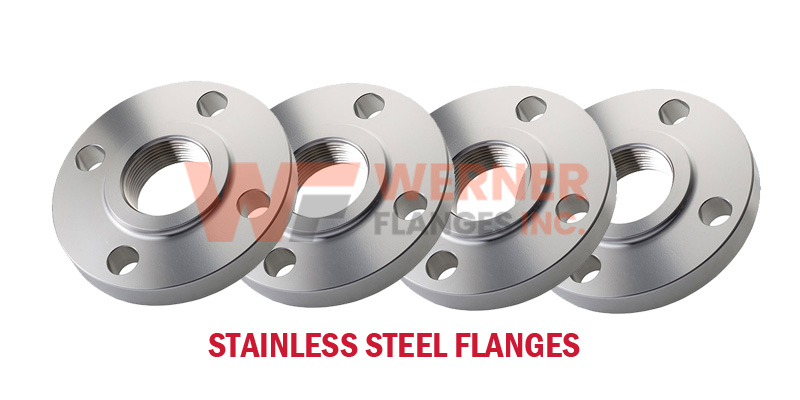
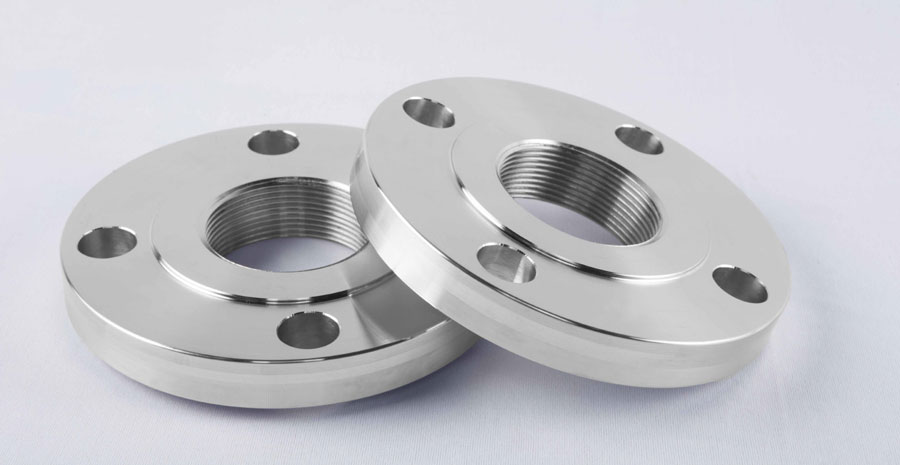
Our manufacturing facility employs advanced forging and precision machining technologies to produce stainless steel flanges in sizes ranging from 1/2″ to 60″ and pressure classes from 150# to 2500#. Every flange undergoes rigorous quality testing including dimensional inspection, mechanical testing, positive material identification (PMI), and non-destructive testing to guarantee performance in demanding South African applications.
We maintain strategic logistics partnerships enabling efficient delivery to major industrial hubs including Johannesburg, Cape Town, Durban, Port Elizabeth, Pretoria, and Secunda. Our stainless steel flanges are specified across South Africa’s mining operations, chemical processing plants, offshore oil and gas facilities, pulp and paper mills, and infrastructure projects where corrosion resistance and long-term durability are paramount.
With ISO 9001:2015 certification and compliance with NACE MR0175/ISO 15156 standards for sour service applications, Werner Flanges delivers the quality assurance and technical documentation required by South African engineering firms, contractors, and end-users. Our commitment to competitive pricing, fast turnaround times, and comprehensive technical support has established us as a preferred stainless steel flanges supplier for South Africa's industrial growth.
Specifications
| Specification | Details |
|---|---|
| Pressure Rating | Class 150 to Class 2500 |
| Flange Type | Plate Flange |
| Facing Type | Raised Face (RF), Flat Face (FF), Ring Type Joint (RTJ) |
| Size Range | ½” to 24” (DN 15 to DN 600) |
| Temperature Range | -29°C to +593°C (Depending on Material & Pressure Class) |
| Applications | Oil & Gas, Petrochemical, Power Generation, Water Treatment, Marine & Industrial Sectors |
| Manufacturing Process | Forged / Machined |
| Certification | EN 10204 3.1 / 3.2, IBR, NACE MR0175 / ISO 15156 (as applicable) |
Matel and Grade
| Type of Materials | Common Specifications / Customization Available on Request |
|---|---|
| Duplex Steel | ASTM/ASME A182 F51, F60, F61, UNS S31803, UNS S32205 |
| Super Duplex Steel | ASTM/ASME A182 F53, F55, UNS S32750, UNS S32760, F44 (6Mo) |
| Stainless Steel | ASTM/ASME A182 F304, F304L, F316, F316L, F310, F317L, F321, F347 |
| Carbon Steel | ASTM A105, A350 LF1, LF2, LF3, A266 Class 1/2, A694 F42 to F70, A765 Gr. II |
| Alloy Steel | ASTM/ASME A182 F1, F5, F9, F11, F12, F22 |
| Non-Ferrous Alloys | Titanium, Brass, Admiralty Brass, Copper Nickel, Nickel Alloys, Hastelloy |
| Titanium | ASTM/ASME B381 Gr.1, Gr.2, Gr.5, Gr.7, Gr.12, Gr.16 |
| Copper Nickel | ASTM B151 UNS C70600 (Cu-Ni 90/10), C71500 (Cu-Ni 70/30) |
| Brass, Al-Brass | ASTM B152 UNS C26000, C27200, C28000; ASTM B111 for Al-Brass |
| Nickel Alloys | ASTM B160, B161, B564 – UNS N02200, N02201, N04400, N08800, N08825, N06600, N06601, N06625, Monel K500 |
| Alloy 20 | ASTM B462 UNS N08020 |
| Hastelloy | ASTM B564 UNS N10276 (Hastelloy C276), N06022 (Hastelloy C22) |
| Cladded Materials | ASTM B898, B265, B424 or custom explosion/clad bonding using dissimilar metals |
| Titanium-Steel, Nickel-Steel, Titanium-Copper, Stainless Steel-Carbon Steel, Bimetallic/Trimetallic Combinations |
Types of Flanges
| Slip On Flanges | Weld Neck Flanges | Blind Flanges | Socket Weld Flanges | Threaded Flanges |
| Lap Joint Flanges | Reducing Flanges | Orifice Flanges | Long Weld Neck Flanges | Expander Flanges |
Industries and Applications We Supply
| Industry | Applications |
|---|---|
Oil & Gas Industry |
|
Petrochemical & Chemical Processing |
|
Power Generation |
|
Water & Wastewater Treatment |
|
Frequently Asked Questions (FAQs)
What stainless steel grades do you manufacture for South African applications?
Werner Flanges produces a comprehensive range of stainless steel flanges including austenitic grades F304, F304L, F316, F316L, and F321 per ASTM A182, duplex stainless steel F51, and super duplex F53 and F55. We also manufacture specialty grades including F904L superaustenitic and precipitation-hardened stainless steels for extreme corrosion resistance. Material selection depends on your specific corrosive environment, temperature, and pressure requirements. Our technical team provides guidance selecting the optimal grade for South African offshore, chemical processing, mining, or other applications.
How long does delivery take to South African ports and cities?
Sea freight delivery typically requires 18–25 days from India to Durban Port (our closest and most economical routing), 20–25 days to Cape Town, and 22–26 days to Port Elizabeth or Richards Bay. After customs clearance, inland transport adds 1–3 days to Johannesburg, Pretoria, Secunda, or other inland destinations. For urgent requirements, air freight to O.R. Tambo International Airport in Johannesburg or Cape Town International Airport provides 5–7 day door-to-door delivery. We maintain inventory of common sizes in F304L and F316L for immediate shipment, while specialty materials are manufactured within 3–4 weeks.
Do your stainless steel flanges comply with NACE requirements for sour service?
Yes, Werner Flanges manufactures stainless steel flanges conforming to NACE MR0175/ISO 15156 requirements for sour service containing hydrogen sulfide (H₂S). We provide material composition verification, hardness testing confirming maximum 22 HRC for austenitic stainless steel, and complete documentation demonstrating NACE compliance. F316L is our most common grade for sour service in South African oil and gas applications, though duplex F51 or super duplex F53 may be specified for extreme conditions combining sour gas and high chloride content.
Can you supply third-party inspection for South African projects?
Absolutely. Werner Flanges regularly works with internationally recognized inspection agencies including TÜV SÜD, DNV, Lloyd’s Register, Bureau Veritas, SGS, and Intertek. These organizations perform source inspection at our facility, witness material testing, verify dimensional conformance, and issue independent certificates. Third-party inspection satisfies quality requirements of major engineering contractors and South African end users requiring independent verification. Inspection scope and costs are quoted based on your specific requirements and selected agency.
What documentation is provided with stainless steel flange shipments?
Every shipment includes a comprehensive documentation package: EN 10204 Type 3.1 Material Test Certificates documenting chemical composition and mechanical properties, dimensional inspection reports, heat treatment charts, PMI (positive material identification) test results for every flange, liquid penetrant or magnetic particle inspection reports, and certificates of origin for customs clearance. When specified, we provide third-party inspection certificates, NACE compliance documentation, and additional testing reports. Complete documentation supports engineering acceptance, quality assurance programs, and regulatory compliance for South African facilities.
Do you manufacture custom or non-standard stainless steel flanges?
Yes, Werner Flanges provides custom manufacturing beyond standard ASME B16.5 configurations. We produce non-standard sizes to match metric piping or equipment nozzles, special facings including RTJ grooves and tongue-and-groove configurations, extended hub weld neck flanges for heavy-wall pipe, drilled and tapped flanges, and special materials including superaustenitic and nickel alloys. Our engineering team reviews customer drawings and specifications to confirm feasibility and provide accurate quotations. Custom manufacturing typically adds 1–2 weeks to standard lead times depending on complexity.
What is your pricing compared to European or other suppliers?
As a direct manufacturer, Werner Flanges provides factory-direct pricing typically 15–25% below European distributors and 10–15% below other Asian suppliers for equivalent quality. Our integrated manufacturing process, efficient operations, and elimination of intermediary markups enable competitive pricing while maintaining rigorous quality standards. For South African projects, total landed cost including ocean freight from India often provides significant savings compared to European sources while offering comparable or superior lead times. We provide transparent quotations showing material costs, manufacturing, testing, and logistics separately.
How do I select between F304L and F316L for my application?
F304L is suitable for general corrosion resistance in atmospheric exposure, potable water, mild chemicals, and food processing where chloride concentrations remain low. F316L’s molybdenum addition (2–3%) provides superior resistance to chloride-induced pitting and crevice corrosion, making it the preferred choice for South African marine and coastal environments, seawater contact, chemical processing with halides, and offshore applications. For inland facilities without chloride exposure, F304L often provides adequate performance at lower cost. For any coastal installation or chloride-containing process, F316L is recommended. Our technical team can review your specific environment to recommend the optimal material.
Can stainless steel flanges be used in high-temperature applications?
Yes, specific stainless steel grades excel in high-temperature service. F321 titanium-stabilized stainless steel is designed for continuous operation at 427–816°C where F304/F316 would experience sensitization and intergranular corrosion. F321 serves extensively in South African coal-fired power station superheater piping, petrochemical high-temperature process streams, and boiler systems. For even higher temperatures up to 870°C, F316L maintains adequate strength though corrosion resistance may be reduced. Temperature ratings also depend on pressure class — review ASME B16.5 pressure-temperature tables for specific limits. Our engineering team provides detailed rating information for your application parameters.
GET A QUOTE
- Contact Werner Flanges:
Email: sales@wernerflanges.com