Leading Manufacturer & Exporter of
Weld-Neck Flanges to Singapore
Singapore's position as a global petrochemical hub and major international shipping center makes it a critical market for high-quality industrial piping components. Werner Flanges has established itself as a trusted supplier of precision-engineered weld-neck flanges to Singapore's dynamic industrial landscape, serving the region's refining, petrochemical, marine engineering, and offshore industries. With over two decades of manufacturing expertise, comprehensive ASME B16.5 and international standard certifications, and rapid delivery capabilities to Singapore's major ports, we deliver the exact specifications your projects demand.
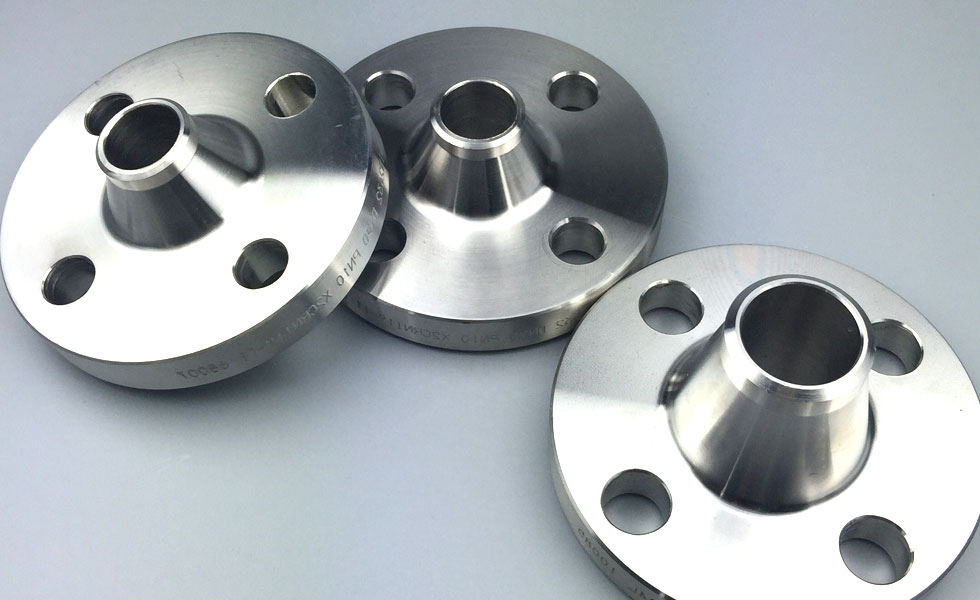
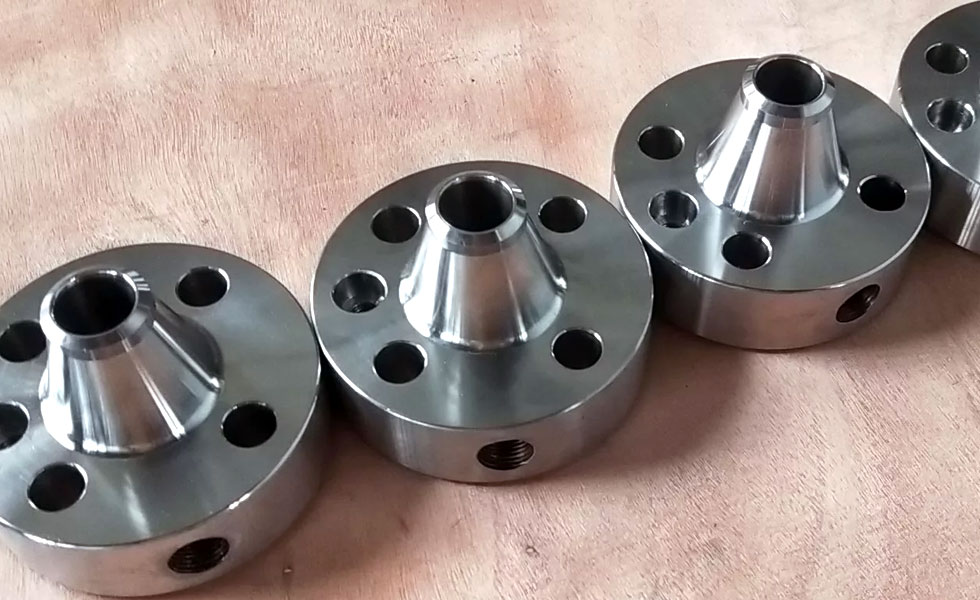
Weld-neck flanges represent the gold standard in piping connections for high-pressure, high-temperature applications. Singapore’s thriving industrial ecosystem—driven by the Jurong Island petrochemical complex, major shipping and maritime industries, and growing offshore energy developments—requires flanges that combine precise engineering with absolute reliability. Werner Flanges manufactures weld-neck flanges specifically engineered for Singapore’s demanding operational environments, from the intense pressure and temperature conditions in refining operations to the corrosive marine atmospheres of offshore platforms.
Our manufacturing capabilities encompass the complete spectrum of weld-neck flange variations across all ASME pressure classes (150#, 300#, 600#, 900#, 1500#, 2500#) and size ranges from ½” to 60″, manufactured in Carbon Steel (ASTM A105, A350 LF2), Stainless Steel (304, 304L, 316, 316L, 321), Alloy Steel (F11, F22, F91), and Duplex/Super Duplex grades (F51, F53, F55). Every flange undergoes rigorous dimensional inspection, mechanical testing, and non-destructive testing to exceed ASME B16.5 specifications and meet the stringent requirements of Singapore’s petrochemical and offshore operators.
Our commitment to Singapore's industrial sector includes maintaining strategic inventory positions for rapid delivery to Jurong Island facilities, PSA terminals, and offshore installation bases. With average delivery times of 18–25 days for standard orders via Port of Singapore, and expedited air freight options available for critical requirements, we ensure your projects maintain schedule and budget integrity. Our technical support team maintains regular communication with Singapore-based engineers, project managers, and procurement specialists, ensuring seamless collaboration from quotation through delivery and installation support.
Singapore Industrial Flange Supply | 18–25 Days via Port of Singapore | Jurong Island & Offshore Support | Engineering & Procurement Coordination
Specifications
| Specification | Details |
|---|---|
| Pressure Rating | Class 150 to Class 2500 |
| Flange Type | Plate Flange |
| Facing Type | Raised Face (RF), Flat Face (FF), Ring Type Joint (RTJ) |
| Size Range | ½” to 24” (DN 15 to DN 600) |
| Temperature Range | -29°C to +593°C (Depending on Material & Pressure Class) |
| Applications | Oil & Gas, Petrochemical, Power Generation, Water Treatment, Marine & Industrial Sectors |
| Manufacturing Process | Forged / Machined |
| Certification | EN 10204 3.1 / 3.2, IBR, NACE MR0175 / ISO 15156 (as applicable) |
Matel and Grade
| Type of Materials | Common Specifications / Customization Available on Request |
|---|---|
| Duplex Steel | ASTM/ASME A182 F51, F60, F61, UNS S31803, UNS S32205 |
| Super Duplex Steel | ASTM/ASME A182 F53, F55, UNS S32750, UNS S32760, F44 (6Mo) |
| Stainless Steel | ASTM/ASME A182 F304, F304L, F316, F316L, F310, F317L, F321, F347 |
| Carbon Steel | ASTM A105, A350 LF1, LF2, LF3, A266 Class 1/2, A694 F42 to F70, A765 Gr. II |
| Alloy Steel | ASTM/ASME A182 F1, F5, F9, F11, F12, F22 |
| Non-Ferrous Alloys | Titanium, Brass, Admiralty Brass, Copper Nickel, Nickel Alloys, Hastelloy |
| Titanium | ASTM/ASME B381 Gr.1, Gr.2, Gr.5, Gr.7, Gr.12, Gr.16 |
| Copper Nickel | ASTM B151 UNS C70600 (Cu-Ni 90/10), C71500 (Cu-Ni 70/30) |
| Brass, Al-Brass | ASTM B152 UNS C26000, C27200, C28000; ASTM B111 for Al-Brass |
| Nickel Alloys | ASTM B160, B161, B564 – UNS N02200, N02201, N04400, N08800, N08825, N06600, N06601, N06625, Monel K500 |
| Alloy 20 | ASTM B462 UNS N08020 |
| Hastelloy | ASTM B564 UNS N10276 (Hastelloy C276), N06022 (Hastelloy C22) |
| Cladded Materials | ASTM B898, B265, B424 or custom explosion/clad bonding using dissimilar metals |
| Titanium-Steel, Nickel-Steel, Titanium-Copper, Stainless Steel-Carbon Steel, Bimetallic/Trimetallic Combinations |
Types of Flanges
| Weld Neck Flanges | Raised Face Weld Neck Flanges | Flat Face Weld Neck Flanges | RTJ Weld Neck Flanges | Long Weld Neck Flanges |
| High Pressure Weld Neck Flanges | Forged Weld Neck Flanges | Reducing Weld Neck Flanges | Industrial Weld Neck Flanges | Custom Weld Neck Flanges |
Industries and Applications We Supply
| Industry | Applications |
|---|---|
Oil & Gas Industry |
Singapore’s petrochemical sector is dominated by the massive Jurong Island complex, containing numerous petrochemical plants, oil refineries, chemical processing facilities, and bulk storage terminals. Jurong Island refineries process crude oil from Middle Eastern sources (Saudi Arabia, UAE, Kuwait), converting crude oil into gasoline, diesel, jet fuel, lubricating oils, and chemical feedstocks. In refining processes, weld-neck flanges are ubiquitous throughout process piping systems:
In petrochemical plants, weld-neck flanges connect reactor vessels, heat exchangers, distillation columns, storage vessels, and transfer lines. Each application has specific pressure, temperature, and corrosion requirements driving material selection. |
Petrochemical Plants: |
|
| Power Generation |
|
|
Singapore relies partially on desalination for freshwater supply, with multiple desalination plants operated by the Public Utilities Board (PUB). Desalination plants process seawater at elevated pressures (15-25 bar) through reverse osmosis membranes, producing freshwater while rejecting concentrated brine.
Product Water and Brine System connections operate at lower pressures but in corrosive seawater environments, requiring 300# or 400# stainless steel flanges throughout. |
Frequently Asked Questions (FAQs)
- Q1: What’s the difference between weld-neck flanges and slip-on flanges, and which should I specify?
- Weld-neck flanges feature a tapered hub that is welded directly to the pipe, creating a monolithic joint with superior load-carrying capacity. Slip-on flanges slide over the pipe and are welded on both top and bottom surfaces. Weld-neck flanges offer advantages in high-pressure (above 300#), high-temperature, or high-velocity applications, while slip-on flanges are more economical for low-pressure applications. For Singapore’s petrochemical and refining applications, weld-neck flanges are standard in process piping systems.
- Q2: How do I select between carbon steel (ASTM A105), stainless steel (304L/316L), and alloy steel (F11/F22) flanges?
- Material selection depends on operating temperature and corrosion environment. ASTM A105 carbon steel is economical for ambient-temperature, non-corrosive service (standard process piping). ASTM A182 F304L/F316L stainless steel is required for seawater exposure, corrosive process fluids, or food/pharmaceutical applications. ASTM A182 F11/F22 alloy steel is necessary for elevated temperatures (above 300°C) where carbon steel strength becomes inadequate. For hydrogen service, F11/F22 is mandatory. Consult our engineering team for material recommendations based on your specific service conditions.
- Q3: What testing and certification is required for offshore platform applications?
- Offshore platforms typically require ASME B16.5 flanges manufactured from duplex or super-duplex stainless steel (ASTM A182 F51, F53, or F55) with ring-type-joint (RTJ) facing, third-party inspection (DNV, Lloyd’s Register, or TÜV), non-destructive testing (ultrasonic and magnetic particle inspection), and comprehensive documentation. Platform operators follow the IMCA (International Marine Contractors Association) guidelines, which specify these requirements. We provide offshore-grade flanges with third-party certification meeting all regulatory requirements.
- Q4: What are the typical lead times for standard vs. special flanges?
- Standard sizes and materials (1″-6″ sizes, 150#-600# pressure classes, ASTM A105 carbon steel, ASTM A182 F304L/F316L stainless steel) are maintained in inventory with delivery within 2-5 business days. Less common sizes (8″-12″), higher pressure classes (900#-2500#), or specialty materials (duplex, super-duplex, alloy steel) require manufacturing and have lead times of 18-25 days for sea freight delivery to Singapore. Air freight options are available for expedited delivery (5-7 days) at premium cost.
- Q5: How do I verify that delivered flanges meet ASME specifications?
- Every flange shipment includes documentation package: Material Test Certificates (chemical composition, mechanical properties), Dimensional Inspection Reports (all flange dimensions verified against ASME B16.5 tolerances), and Non-Destructive Testing Reports. Review these documents to verify compliance. For critical applications, request third-party inspection (DNV, Lloyd’s, TÜV) which provides independent certification of ASME compliance.
- Q6: What pressure-temperature rating should I use to select flanges for my application?
- Flange pressure rating decreases with increasing temperature. Refer to ASME B16.5 pressure-temperature charts for your specific material (ASTM A105, F304L, F316L, F11, F22, etc.). For example, ASTM A105 300# flanges are rated 740 psi at room temperature but only 225 psi at 400°C. If your application involves elevated temperature, verify that the flange’s rated pressure at your operating temperature exceeds your system pressure. If the standard pressure class is inadequate at elevated temperature, select a higher pressure class. Consult our engineering team for verification of flange adequacy for your specific temperature-pressure conditions.
- Q7: Can weld-neck flanges be used in place of slip-on flanges (or vice versa)?
- Weld-neck and slip-on flanges have identical bolt hole patterns and facing dimensions for the same pressure class and size, enabling direct substitution of weld-neck flanges in place of slip-on flanges. However, substituting slip-on flanges for weld-neck flanges is not recommended, as slip-on flanges have lower pressure ratings and different structural characteristics. Always specify the flange type appropriate for your application’s pressure and temperature requirements.
- Q8: How do I install weld-neck flanges, and what special procedures are required?
- Weld-neck flanges are installed by cutting the pipe to length, beveling the pipe end per ASME B16.34 specifications (typically 37.5° bevel angle for carbon steel), sliding the flange over the prepared pipe end (the tapered hub self-centers the flange), and then performing a full-penetration weld circumferentially around the flange hub perimeter. The weld joint must achieve complete penetration and uniform bead profile. Post-weld heat treatment may be required for certain materials (alloy steel, some stainless steels). Always follow the equipment manufacturer’s installation procedures and applicable welding codes (ASME Section VIII, B31.3, etc.).
GET A QUOTE
-
How to Request a Quotation:
Email: sales@wernerflanges.com