Leading Manufacturer & Exporter of
Stainless Steel Flanges to Qatar's Energy, Chemical & Desalination Industries
Werner Flanges stands as Qatar's trusted partner for premium ANSI B16.5 flanges, delivering engineering excellence to the nation's thriving LNG industry and petrochemical sector. With over two decades of manufacturing expertise, we supply comprehensive flange solutions that meet the exacting standards of Qatar's North Field expansion, Barzan Gas Project, and Qatar Petroleum's expanding infrastructure network.
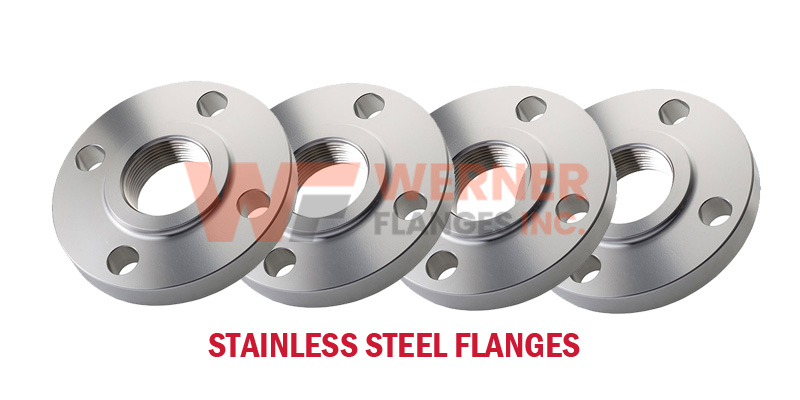
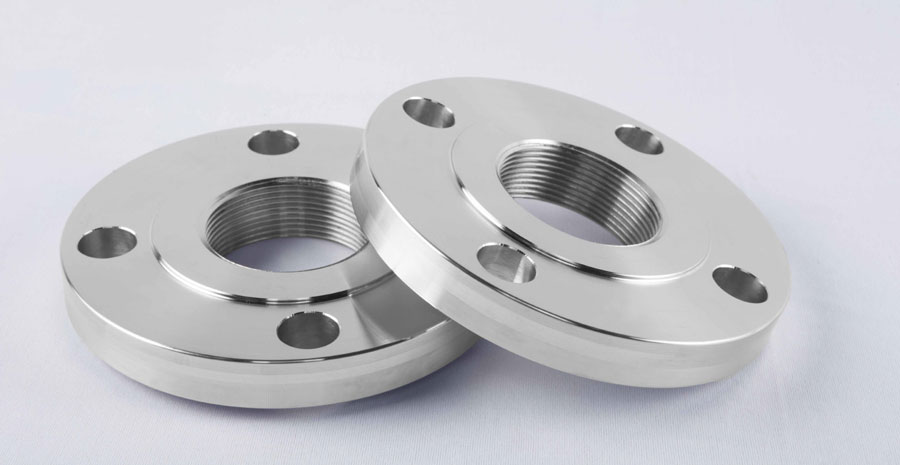
Our ANSI B16.5 flanges serve as critical components across Qatar’s industrial landscape—from the sprawling gas processing facilities in Ras Laffan Industrial City to offshore platforms in the Arabian Gulf, and from petrochemical complexes in Mesaieed Industrial Area to power generation facilities supporting Doha’s urban expansion. Every flange we manufacture adheres to stringent ASME B16.5 specifications, ensuring optimal performance in Qatar’s demanding operational environments where temperatures can soar and corrosion resistance is paramount.
Qatar’s ambitious industrial growth, driven by the world’s largest LNG production capacity and ongoing diversification initiatives, demands flange solutions that combine reliability with rapid availability. Werner Flanges delivers precisely this combination—manufacturing capabilities spanning all seven flange types (Weld Neck, Slip On, Blind, Socket Weld, Threaded, Lap Joint, and Long Weld Neck), material grades from carbon steel to exotic alloys, pressure classes from 150# to 2500#, and sizes ranging from ½” to 60″. Our direct shipping routes to Hamad Port ensure delivery timelines of 18-22 days for sea freight, with expedited air freight options available to Hamad International Airport for urgent project requirements.
Whether you're sourcing flanges for QatarEnergy's mega projects, supporting contractors working on FIFA infrastructure developments, or maintaining existing facilities in Qatar's industrial zones, Werner Flanges provides the technical expertise, quality assurance, and responsive service that Qatar's industrial sector demands. Our ISO 9001:2015 certified manufacturing processes, comprehensive material traceability, and third-party inspection capabilities ensure every flange meets both international standards and project-specific requirements.
Qatar Industrial Flange Supply | ISO 9001:2015 Certified Manufacturing | Mega Project & Infrastructure Support | Full Traceability & Third-Party Inspection
Specifications
| Specification | Details |
|---|---|
| Pressure Rating | Class 150 to Class 2500 |
| Flange Type | Plate Flange |
| Facing Type | Raised Face (RF), Flat Face (FF), Ring Type Joint (RTJ) |
| Size Range | ½” to 24” (DN 15 to DN 600) |
| Temperature Range | -29°C to +593°C (Depending on Material & Pressure Class) |
| Applications | Oil & Gas, Petrochemical, Power Generation, Water Treatment, Marine & Industrial Sectors |
| Manufacturing Process | Forged / Machined |
| Certification | EN 10204 3.1 / 3.2, IBR, NACE MR0175 / ISO 15156 (as applicable) |
Matel and Grade
| Type of Materials | Common Specifications / Customization Available on Request |
|---|---|
| Duplex Steel | ASTM/ASME A182 F51, F60, F61, UNS S31803, UNS S32205 |
| Super Duplex Steel | ASTM/ASME A182 F53, F55, UNS S32750, UNS S32760, F44 (6Mo) |
| Stainless Steel | ASTM/ASME A182 F304, F304L, F316, F316L, F310, F317L, F321, F347 |
| Carbon Steel | ASTM A105, A350 LF1, LF2, LF3, A266 Class 1/2, A694 F42 to F70, A765 Gr. II |
| Alloy Steel | ASTM/ASME A182 F1, F5, F9, F11, F12, F22 |
| Non-Ferrous Alloys | Titanium, Brass, Admiralty Brass, Copper Nickel, Nickel Alloys, Hastelloy |
| Titanium | ASTM/ASME B381 Gr.1, Gr.2, Gr.5, Gr.7, Gr.12, Gr.16 |
| Copper Nickel | ASTM B151 UNS C70600 (Cu-Ni 90/10), C71500 (Cu-Ni 70/30) |
| Brass, Al-Brass | ASTM B152 UNS C26000, C27200, C28000; ASTM B111 for Al-Brass |
| Nickel Alloys | ASTM B160, B161, B564 – UNS N02200, N02201, N04400, N08800, N08825, N06600, N06601, N06625, Monel K500 |
| Alloy 20 | ASTM B462 UNS N08020 |
| Hastelloy | ASTM B564 UNS N10276 (Hastelloy C276), N06022 (Hastelloy C22) |
| Cladded Materials | ASTM B898, B265, B424 or custom explosion/clad bonding using dissimilar metals |
| Titanium-Steel, Nickel-Steel, Titanium-Copper, Stainless Steel-Carbon Steel, Bimetallic/Trimetallic Combinations |
Types of Flanges
| Slip On Flanges | Weld Neck Flanges | Blind Flanges | Socket Weld Flanges | Threaded Flanges |
| Lap Joint Flanges | Reducing Flanges | Orifice Flanges | Long Weld Neck Flanges | Plate Flanges |
Industries and Applications We Supply
| Industry | Applications |
|---|---|
Oil & Gas Industry |
Qatar’s oil and gas sector—anchored by QatarEnergy (formerly Qatar Petroleum) and producing approximately 3.9 million barrels of oil equivalent per day—represents the nation’s economic foundation and the primary market for ANSI B16.5 flanges. The North Field, the world’s largest non-associated natural gas field shared with Iran (where it’s called South Pars), contains approximately 900 trillion cubic feet of natural gas reserves, sustaining Qatar’s position as the world’s largest LNG exporter. ANSI B16.5 flanges serve throughout Qatar’s gas production chain: offshore wellhead platforms extracting gas from subsea reservoirs employ Class 600 to Class 1500 flanges in pressure classes rated for 2000-5000 psi wellhead pressures (reduced from higher reservoir pressures through downhole equipment). Weld Neck flanges in ASTM A105 carbon steel, ASTM A350 LF2 for low-temperature gas separation, and ASTM A182 F316L stainless steel for seawater systems create the backbone of platform piping systems. Duplex stainless steel flanges (F51, F53) resist Arabian Gulf seawater corrosion in injection systems, firewater mains, and ballast systems. Onshore gas processing facilities at Ras Laffan Industrial City—the world’s largest LNG production site processing over 77 million tonnes per annum—utilize ANSI B16.5 flanges throughout the production process: feed gas reception facilities employ Class 600 carbon steel flanges for 800-1200 psi gas pipeline connections, acid gas removal systems use Class 300 flanges with corrosion-resistant materials for amine solutions and acid gas handling, and mercury removal systems specify stainless steel flanges preventing mercury amalgamation with carbon steel. LNG liquefaction trains—incorporating propane, ethylene, and methane refrigeration cycles—employ thousands of flanges spanning Class 150 to Class 600 in materials from A350 LF2 low-temperature carbon steel for -46°C service to F304L/F316L stainless steel for -196°C LNG contact. The cryogenic main heat exchangers, operating at multiple temperature levels simultaneously, require careful flange material selection ensuring adequate toughness at minimum design metal temperature. QatarEnergy’s North Field East and North Field South expansion projects—adding 33 million tonnes per annum of LNG production capacity and representing over $30 billion investment—will install hundreds of thousands of ANSI B16.5 flanges across new liquefaction trains, utilities, and supporting infrastructure. Werner Flanges positions itself to supply this massive expansion, offering the quality, delivery capability, and technical support Qatar’s most important industrial project demands. Our experience supplying previous LNG expansions, combined with pre-qualified material sources and established logistics to Hamad Port, enables responsive support for this critical national development initiative. Condensate production facilities—processing natural gas liquids separated from gas streams—employ Class 300 and Class 600 flanges throughout stabilization, storage, and export systems. These facilities handle liquid hydrocarbons from butane to heavy condensate, requiring flanges resistant to hydrocarbon service with proper material selection for operating temperatures ranging from ambient to 260°C. Condensate export terminals at Ras Laffan utilize large-diameter Class 150 and Class 300 flanges in loading systems, tank farm piping, and marine berth connections, with stainless steel specified for seawater cooling and firefighting systems. |
Petrochemical & Chemical Processing |
|
| Power Generation |
|
Construction & Infrastructure |
Qatar’s aggressive infrastructure development—driven by Qatar National Vision 2030 diversification goals and maintaining the FIFA World Cup legacy—creates significant demand for ANSI B16.5 flanges in building services, district cooling, and municipal utilities serving residential, commercial, and institutional facilities throughout greater Doha and surrounding municipalities. District cooling systems—increasingly mandated for new developments to reduce electrical demand and improve energy efficiency—employ ANSI B16.5 flanges in central chiller plants and distribution networks: central plants producing chilled water at 4-7°C for distribution to multiple buildings specify Class 150 flanges throughout chiller evaporators, condenser water circuits, and primary/secondary loop configurations; distribution piping ranging from 8″ to 48″ diameter and operating at 8-12 bar (120-175 psi) employs Class 150 or Class 300 carbon steel flanges with corrosion protection coatings for buried service; building energy transfer stations (ETS) interfacing district supply with building systems use Class 150 flanges in heat exchangers, control valves, and meters; and secondary building loops distributing cooling to air handling units and fan coils utilize Class 150 flanges throughout mechanical rooms and riser systems. Commercial high-rise buildings—iconic structures reshaping Doha’s skyline including towers at Lusail City, West Bay, and Msheireb Downtown—require extensive mechanical systems incorporating flanged piping: chilled water systems serving variable air volume air handlers and zone equipment employ Class 150 flanges from 3″ to 16″ sizes; heating hot water or steam systems (less common in Qatar’s climate but used for specialized applications) specify Class 150 to Class 300 flanges depending on temperatures; domestic water service from desalinated water supply uses Class 150 flanges in F316L stainless steel preventing iron staining and taste issues; fire protection systems distributing water from basement storage tanks to sprinkler floors and standpipes employ Class 150 or Class 300 carbon steel flanges depending on system pressures. Municipal infrastructure projects—including new cities, residential districts, and industrial zones—extensively utilize ANSI B16.5 flanges: potable water distribution networks from desalination plants and storage reservoirs to neighborhoods and buildings employ Class 150 ductile iron or carbon steel flanges in sizes from 6″ to 48″; sewage collection systems and wastewater treatment plants use Class 150 ductile iron flanges in non-pressure applications and Class 150 carbon steel in pumping stations; stormwater drainage systems (despite Qatar’s minimal rainfall, flash flood management requires infrastructure) specify Class 150 flanges in pump stations and outfall structures; reclaimed water distribution for irrigation—increasingly important given water scarcity—employs Class 150 carbon steel or ductile iron flanges throughout treatment plants and distribution networks. |
Frequently Asked Questions (FAQs)
- Q1: Are stainless steel flanges suitable for Qatar’s LNG facilities?
- Yes, stainless steel flanges manufactured to ASME B16.5 standards using grades such as ASTM A182 F304L and F316L are widely used in Qatar’s LNG plants due to their corrosion resistance, strength, and reliability in cryogenic and high-pressure environments.
- Q2: What stainless steel grades are commonly manufactured for Qatar industrial applications?
- Commonly manufactured grades include F304, F304L, F316, F316L, duplex stainless steel F51, and super duplex grades. These materials provide excellent resistance against chloride corrosion, high temperatures, and marine atmospheric exposure typical in Qatar.
- Q3: Do stainless steel flanges comply with international standards required in Qatar?
- Yes, flanges are manufactured according to ASME B16.5 dimensional standards and ASTM material specifications with full inspection, testing, and traceability documentation required by EPC contractors and industrial projects.
- Q4: Are stainless steel flanges suitable for seawater and offshore applications in Qatar?
- Stainless steel and duplex stainless steel flanges provide strong resistance to seawater corrosion, stress corrosion cracking, and chloride attack, making them suitable for offshore platforms, desalination plants, and marine infrastructure.
- Q5: Can custom stainless steel flanges be manufactured for specialized Qatar projects?
- Yes, manufacturers can produce custom flanges with modified dimensions, special facing types, and project-specific material grades to meet unique engineering requirements across Qatar’s oil, gas, and industrial sectors.
- Q6: Are stainless steel flanges available for sour service applications?
- Yes, stainless steel and duplex grades can be manufactured in compliance with NACE MR0175 / ISO 15156 requirements for sour service environments where hydrogen sulfide resistance is critical.
GET A QUOTE
-
Contact Us
Email: sales@wernerflanges.com