Leading Manufacturer & Exporter of
ANSI B16.5 Flanges to Nigeria
Werner Flanges stands as Nigeria's trusted partner for premium ANSI B16.5 flanges, serving the nation's rapidly expanding oil and gas, petrochemical, and power generation sectors for over two decades. As an ISO 9001:2015 certified manufacturer and direct exporter from India, we supply comprehensive flange solutions to major Nigerian industrial hubs including Lagos, Port Harcourt, Warri, Kaduna, and Abuja.
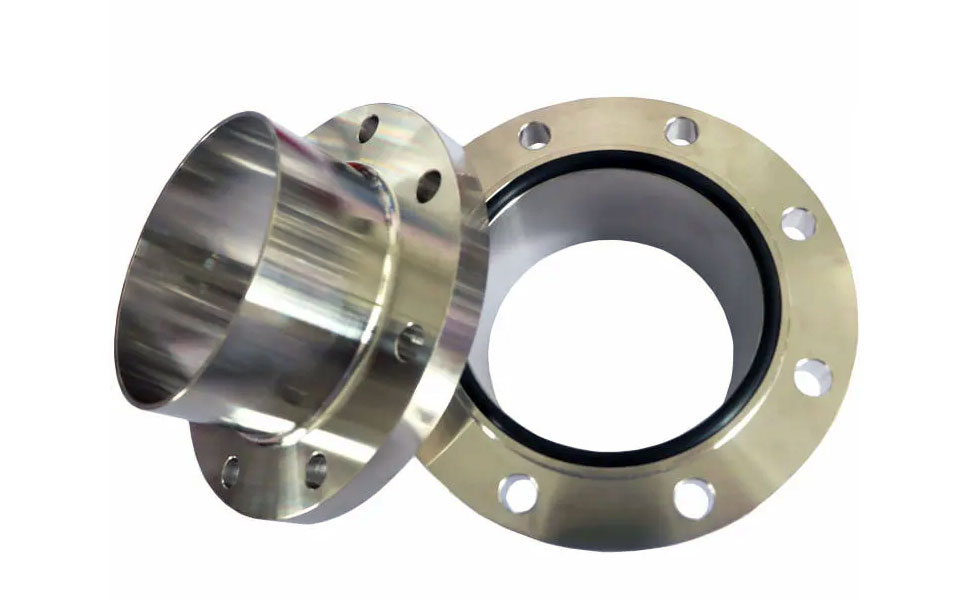
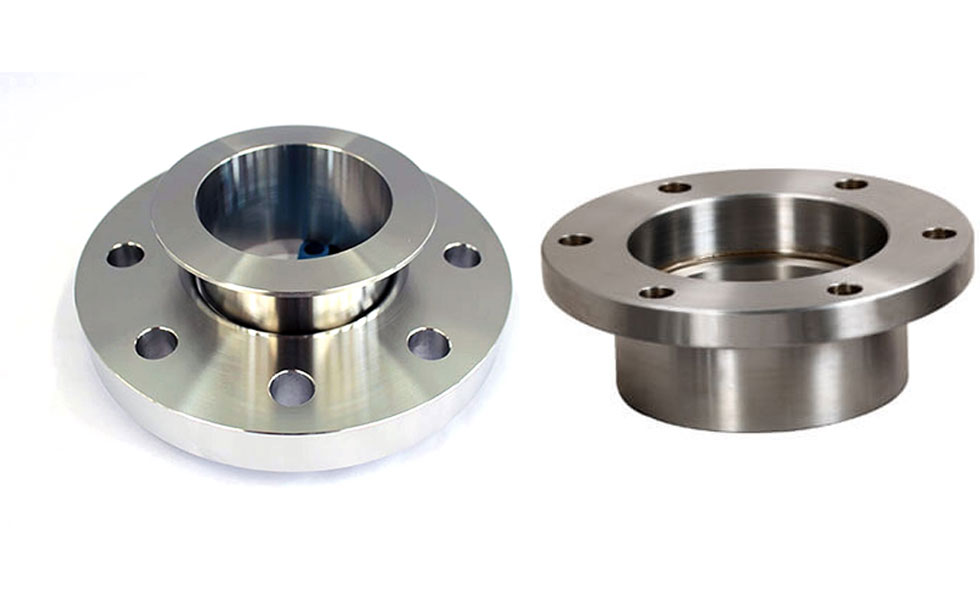
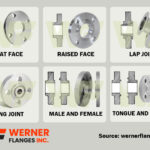
Our ANSI B16.5 flange inventory encompasses all seven standard types manufactured in accordance with ASME B16.5 specifications: weld neck flanges, slip on flanges, blind flanges, socket weld flanges, threaded flanges, lap joint flanges, and reducing flanges. Each product meets the stringent requirements of Nigeria’s petroleum industry, particularly for operations in the Niger Delta region where corrosion resistance and structural integrity are paramount.
We manufacture ANSI B16.5 flanges in complete material specifications including carbon steel (ASTM A105, A350 LF2), stainless steel grades (304, 304L, 316, 316L, 321), alloy steel (F11, F22, F91), and duplex/super duplex stainless steel (F51, F53, F55). Our pressure class range spans from 150# to 2500#, with sizes available from ½” to 60″ to meet diverse project requirements across Nigeria’s industrial landscape.
With strategic shipping partnerships through Apapa Port and Tin Can Island Port in Lagos, as well as Port Harcourt and Onne Port, we ensure reliable delivery timelines of 18-25 days for sea freight and expedited 5-7 day options via air freight. Every ANSI B16.5 flange shipment includes comprehensive documentation packages featuring Material Test Certificates (MTC) 3.1/3.2, dimensional inspection reports, PMI test results, and all necessary customs clearance documents for seamless import into Nigeria.
ASME B16.5 flanges Nigeria price
Weld neck flanges Lagos supplier
Carbon steel flanges Port Harcourt
Stainless steel 316L flanges Nigeria
Class 600 flanges Nigerian oil and gas
NACE MR0175 flanges sour service Nigeria
RTJ flanges supplier Nigeria offshore
Duplex flanges Nigerian petrochemical
ANSI B16.5 flanges Abuja delivery
API 6A flanges Nigeria wellhead
Specifications
| Specification | Details |
|---|---|
| Pressure Rating | Class 150 to Class 2500 |
| Flange Type | Plate Flange |
| Facing Type | Raised Face (RF), Flat Face (FF), Ring Type Joint (RTJ) |
| Size Range | ½” to 24” (DN 15 to DN 600) |
| Temperature Range | -29°C to +593°C (Depending on Material & Pressure Class) |
| Applications | Oil & Gas, Petrochemical, Power Generation, Water Treatment, Marine & Industrial Sectors |
| Manufacturing Process | Forged / Machined |
| Certification | EN 10204 3.1 / 3.2, IBR, NACE MR0175 / ISO 15156 (as applicable) |
Matel and Grade
| Type of Materials | Common Specifications / Customization Available on Request |
|---|---|
| Duplex Steel | ASTM/ASME A182 F51, F60, F61, UNS S31803, UNS S32205 |
| Super Duplex Steel | ASTM/ASME A182 F53, F55, UNS S32750, UNS S32760, F44 (6Mo) |
| Stainless Steel | ASTM/ASME A182 F304, F304L, F316, F316L, F310, F317L, F321, F347 |
| Carbon Steel | ASTM A105, A350 LF1, LF2, LF3, A266 Class 1/2, A694 F42 to F70, A765 Gr. II |
| Alloy Steel | ASTM/ASME A182 F1, F5, F9, F11, F12, F22 |
| Non-Ferrous Alloys | Titanium, Brass, Admiralty Brass, Copper Nickel, Nickel Alloys, Hastelloy |
| Titanium | ASTM/ASME B381 Gr.1, Gr.2, Gr.5, Gr.7, Gr.12, Gr.16 |
| Copper Nickel | ASTM B151 UNS C70600 (Cu-Ni 90/10), C71500 (Cu-Ni 70/30) |
| Brass, Al-Brass | ASTM B152 UNS C26000, C27200, C28000; ASTM B111 for Al-Brass |
| Nickel Alloys | ASTM B160, B161, B564 – UNS N02200, N02201, N04400, N08800, N08825, N06600, N06601, N06625, Monel K500 |
| Alloy 20 | ASTM B462 UNS N08020 |
| Hastelloy | ASTM B564 UNS N10276 (Hastelloy C276), N06022 (Hastelloy C22) |
| Cladded Materials | ASTM B898, B265, B424 or custom explosion/clad bonding using dissimilar metals |
| Titanium-Steel, Nickel-Steel, Titanium-Copper, Stainless Steel-Carbon Steel, Bimetallic/Trimetallic Combinations |
Types of Flanges
| Slip On Flanges | Weld Neck Flanges | Blind Flanges | Socket Weld Flanges | Threaded Flanges |
| Lap Joint Flanges | Reducing Flanges | Orifice Flanges | Long Weld Neck Flanges | Spectacle Blind Flanges |
Industries and Applications We Supply
| Industry | Applications |
|---|---|
Oil & Gas Industry |
|
|
|
Power Generation |
|
Water & Wastewater Treatment |
|
Frequently Asked Questions (FAQs)
-
1. Are your ANSI B16.5 flanges compatible with flanges from other manufacturers?
Yes, absolutely. ASME B16.5 is a dimensional standard ensuring interchangeability between manufacturers. Werner Flanges manufactured to ASME B16.5 specifications will properly mate with any other ASME B16.5 conforming flange regardless of manufacturer. All critical dimensions—flange diameter, thickness, bolt circle diameter, bolt hole size and quantity, and raised face dimensions—exactly match ASME B16.5 tables ensuring bolt holes align and gaskets seat properly.
This interchangeability is essential for Nigerian projects sourcing flanges from multiple suppliers or replacing existing flanges during maintenance. Our dimensional inspection reports document conformance to ASME B16.5 tolerances providing assurance of proper fit.
2. What delivery time can you guarantee for urgent Nigerian projects?
Standard sea freight delivery to Lagos (Apapa Port) or Port Harcourt requires 18-25 days from order confirmation. This includes manufacturing time for standard sizes in common materials, inland transport to Mumbai/Nhava Sheva port, ocean transit, and arrival at Nigerian port.
For emergency requirements, we offer expedited air freight delivery in 5-7 days via Murtala Muhammed International Airport (Lagos) or Port Harcourt International Airport. Air freight is economical for critical items like specific sizes needed for emergency shutdowns or small quantities supporting fast-track project schedules. We maintain limited inventory of common carbon steel sizes enabling immediate shipment when your timeline demands.
3. Can you provide flanges with NACE MR0175 compliance for sour service?
Yes, Werner Flanges manufactures NACE MR0175 / ISO 15156 compliant flanges for Nigerian sour oil and gas applications. We carefully control material chemistry and heat treatment to maintain hardness below 22 HRC as required for H₂S service. Carbon steel A105 flanges receive normalized heat treatment with hardness verification throughout the flange body.
Stainless steel and duplex materials are selected from ISO 15156-3 qualified grades appropriate for the anticipated H₂S partial pressure and chloride content. Complete hardness testing documentation and NACE compliance statements are provided with material certificates for Nigerian sour service applications.
4. Do you supply flanges with RTJ (Ring Type Joint) facings for high-pressure applications?
Yes, we manufacture ANSI B16.5 flanges with Ring Type Joint facings per API 6A specifications. RTJ flanges feature precision-machined grooves accepting metal ring gaskets (oval or octagonal profiles) for superior sealing in high-pressure, high-temperature applications.
Nigerian refinery high-pressure reactors, offshore wellhead equipment, and critical process connections specify RTJ flanges for leak-tight sealing under severe conditions. We can supply flanges with grooves and matching ring gaskets in soft iron, stainless steel, or Inconel materials as required. Groove dimensions conform to API 6A Ring Gasket specification ensuring compatibility with standard ring gaskets available in Nigeria.
5. What documentation do you provide for Nigerian customs clearance?
Every shipment includes complete commercial documentation required for efficient Nigerian customs processing:
- Commercial invoice with detailed flange specifications, quantities, values
- Packing list identifying package contents, weights, measurements
- Certificate of origin certifying products manufactured in India
- Bill of lading from shipping line
- Material test certificates (EN 10204 Type 3.1/3.2)
- Manufacturer’s conformance certificate
When specified, we provide third-party inspection certificates from TÜV, DNV, Bureau Veritas, Lloyd’s Register, or SGS. Our documentation packages are designed based on experience with Nigerian customs requirements, minimizing clearance delays and demurrage charges at Lagos, Port Harcourt, and other Nigerian ports.
6. Can you manufacture custom flanges for special applications not covered by ASME B16.5?
Yes, our engineering team designs and manufactures custom flanges beyond standard ASME B16.5 catalog:
- Non-standard sizes (intermediate diameters, sizes >24″)
- Special materials (Inconel, Monel, Hastelloy, titanium, aluminum bronze)
- Modified pressure ratings for unique pressure-temperature combinations
- Proprietary facings or seal geometries
- Integral components (flanges with nozzles, special inserts)
Nigerian projects frequently require custom flanges matching existing equipment from European or Asian manufacturers, larger sizes for pipeline applications, or special alloys for severe corrosive conditions. We work directly with your engineering team to develop optimal solutions meeting performance requirements while maintaining code compliance and cost-effectiveness.
7. What quality testing do you perform on every flange shipment?
Standard quality testing on all ANSI B16.5 flanges includes:
- Positive Material Identification (PMI) via XRF – 100% of flanges
- Dimensional inspection per ASME B16.5 – sampling per quality plan
- Visual and surface inspection – 100% of flanges
- Hardness testing – per heat treatment batch
- Mechanical testing (tensile, impact) – per material heat number
- Non-Destructive Testing as specified (UT, MPI, or LPI)
Additional testing available when specified for Nigerian critical applications:
- 100% ultrasonic testing for volumetric soundness
- Hydrostatic pressure testing
- Ferrite content measurement (duplex stainless steel)
- Intergranular corrosion testing (stainless steel)
- Stress corrosion testing (for specific environments)
All testing performed by qualified personnel using calibrated equipment with results documented in inspection reports accompanying shipments.
8. How do I determine the correct pressure class for my Nigerian application?
Pressure class selection depends on design pressure, design temperature, and flange material:
- Determine design conditions: Maximum pressure and temperature expected during operation plus safety margins
- Consult ASME B16.5 pressure-temperature tables: These tables provide maximum allowable pressure for each material and pressure class at different temperatures
- Select pressure class: Choose the lowest pressure class that exceeds your design pressure at design temperature
For example: Carbon steel A105 service at 400°C and 30 bar design pressure requires Class 300 (rated 30.6 bar at 400°C). Note that pressure ratings decrease at elevated temperatures.
Our technical team assists Nigerian customers with pressure class selection, considering code requirements, safety factors, and industry standard practices for your specific application. Contact us with your operating conditions for recommendations
GET A QUOTE
- Werner Flanges provides rapid quotation response for Nigerian ANSI B16.5 flange requirements, typically within 2-4 hours during business hours. Our streamlined quotation process ensures you receive accurate pricing, delivery commitments, and technical confirmation quickly.
Information Required for Quotation
To provide accurate and complete quotations, please include:
Flange Specifications:
- Size (NPS inches or DN mm)
- Pressure class (150#, 300#, 600#, 900#, 1500#, 2500#)
- Flange type (weld neck, slip on, blind, socket weld, threaded, lap joint)
- Material grade (A105, 316L, F11, F22, F51, etc.)
- Facing type (RF, FF, RTJ with ring groove specification)
Quantities:
- Quantity required for each size/pressure class/material combination
- Future requirements if planning additional phases
Standards & Testing:
- Applicable codes (ASME B16.5 standard, others if required)
- Third-party inspection requirements (TÜV, DNV, BV, Lloyd’s, SGS)
- Special testing (PMI, UT, MPI, LPI, RT)
- NACE MR0175 compliance if sour service
Project Details:
- Delivery location (Lagos, Port Harcourt, Abuja, etc.)
- Required delivery date
- Project name and end-user (for reference)
- Payment terms requirements
Documentation:
- Material certificates required (3.1, 3.2)
- Third-party inspection certificates
- Special marking requirements
- Additional documentation needs
Contact Information
Email: sales@wernerflanges.com