Leading Manufacturer & Exporter of
Carbon Steel Flanges to Malaysia
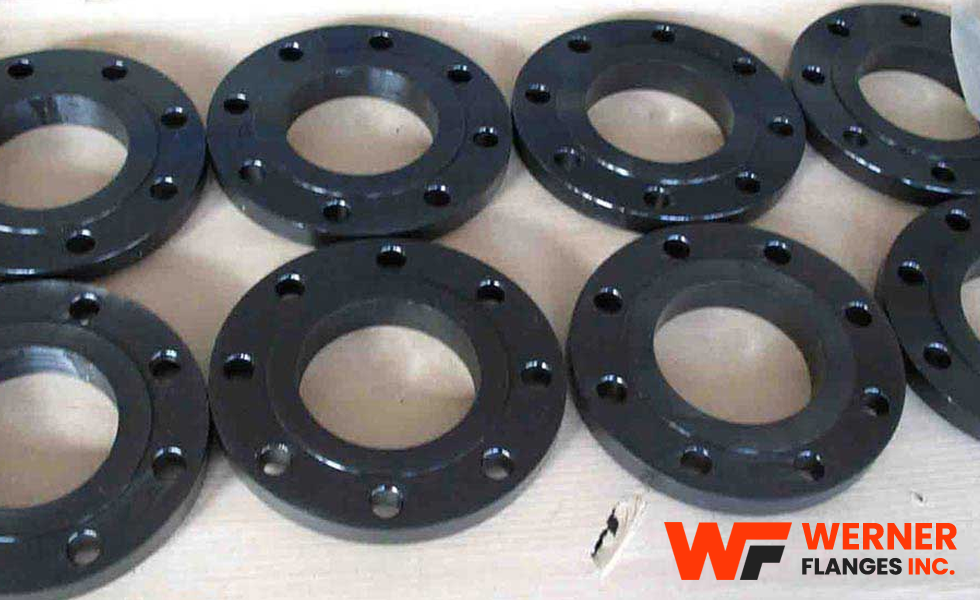
Werner Flanges is a premier carbon steel flanges distributor in Malaysia, serving the nation's thriving oil and gas, petrochemical, power generation, and manufacturing industries with over two decades of expertise. As a certified manufacturer and direct exporter, we supply high-quality carbon steel flanges manufactured to ASTM A105, ASTM A350 LF2, and ASTM A516 specifications, meeting the stringent requirements of Malaysian industrial projects.
Our carbon steel flanges are extensively used across Malaysia’s industrial landscape—from PETRONAS refineries in Kertih and Melaka to semiconductor manufacturing facilities in Penang and Kulim, from palm oil processing plants in Johor to power generation stations in Sarawak. We understand the unique demands of Malaysia’s humid tropical climate, corrosive environments, and the need for reliable piping solutions that deliver long-term performance.
We supply all types of carbon steel flanges including weld neck, slip on, blind, socket weld, threaded, and lap joint flanges in pressure classes ranging from 150# to 2500#, sizes from ½” to 60″, manufactured in full compliance with ASME B16.5, ASME B16.47, DIN, and BS standards. Our manufacturing facility employs advanced closed-die forging technology and rigorous heat treatment processes to ensure superior grain structure, mechanical properties, and dimensional accuracy.
With strategic logistics partnerships and established supply chains, we deliver carbon steel flanges to major Malaysian cities including Kuala Lumpur, Johor Bahru, Penang, Ipoh, Kuching, Kota Kinabalu, and Shah Alam within 18–22 days via Port Klang and Port of Tanjung Pelepas. Our commitment to quality is backed by ISO 9001:2015 certification, comprehensive material test certificates, and third-party inspection services from internationally recognized bodies including TÜV, DNV, Lloyd's Register, and SGS.
Carbon Steel Flanges Malaysia | 18–22 Days Delivery | ISO 9001:2015 Certified | TÜV, DNV, LR & SGS Approved
Specifications
| Specification | Details |
|---|---|
| Pressure Rating | Class 150 to Class 2500 |
| Flange Type | Plate Flange |
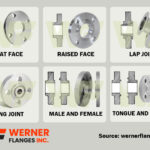
| Facing Type | Raised Face (RF), Flat Face (FF), Ring Type Joint (RTJ) |
| Size Range | ½” to 24” (DN 15 to DN 600) |
| Temperature Range | -29°C to +593°C (Depending on Material & Pressure Class) |
| Applications | Oil & Gas, Petrochemical, Power Generation, Water Treatment, Marine & Industrial Sectors |
| Manufacturing Process | Forged / Machined |
| Certification | EN 10204 3.1 / 3.2, IBR, NACE MR0175 / ISO 15156 (as applicable) |
Matel and Grade
| Type of Materials | Common Specifications / Customization Available on Request |
|---|---|
| Duplex Steel | ASTM/ASME A182 F51, F60, F61, UNS S31803, UNS S32205 |
| Super Duplex Steel | ASTM/ASME A182 F53, F55, UNS S32750, UNS S32760, F44 (6Mo) |
| Stainless Steel | ASTM/ASME A182 F304, F304L, F316, F316L, F310, F317L, F321, F347 |
| Carbon Steel | ASTM A105, A350 LF1, LF2, LF3, A266 Class 1/2, A694 F42 to F70, A765 Gr. II |
| Alloy Steel | ASTM/ASME A182 F1, F5, F9, F11, F12, F22 |
| Non-Ferrous Alloys | Titanium, Brass, Admiralty Brass, Copper Nickel, Nickel Alloys, Hastelloy |
| Titanium | ASTM/ASME B381 Gr.1, Gr.2, Gr.5, Gr.7, Gr.12, Gr.16 |
| Copper Nickel | ASTM B151 UNS C70600 (Cu-Ni 90/10), C71500 (Cu-Ni 70/30) |
| Brass, Al-Brass | ASTM B152 UNS C26000, C27200, C28000; ASTM B111 for Al-Brass |
| Nickel Alloys | ASTM B160, B161, B564 – UNS N02200, N02201, N04400, N08800, N08825, N06600, N06601, N06625, Monel K500 |
| Alloy 20 | ASTM B462 UNS N08020 |
| Hastelloy | ASTM B564 UNS N10276 (Hastelloy C276), N06022 (Hastelloy C22) |
| Cladded Materials | ASTM B898, B265, B424 or custom explosion/clad bonding using dissimilar metals |
| Titanium-Steel, Nickel-Steel, Titanium-Copper, Stainless Steel-Carbon Steel, Bimetallic/Trimetallic Combinations |
Types of Flanges
| Slip On Flanges | Weld Neck Flanges | Blind Flanges | Socket Weld Flanges | Threaded Flanges |
| Lap Joint Flanges | Reducing Flanges | Orifice Flanges | Long Weld Neck Flanges | Plate Flanges |
Industries and Applications We Supply
| Industry | Applications |
|---|---|
Oil & Gas Industry |
Carbon steel flanges form the backbone of Malaysia’s vital oil and gas sector, serving PETRONAS facilities from upstream exploration to downstream refining and distribution. Upstream Production: In offshore platforms dotting the South China Sea, Sabah, and Sarawak waters, ASTM A105 carbon steel flanges connect wellhead equipment, Christmas trees, and manifold piping systems handling crude oil and natural gas production. High-pressure Class 900# and 1500# weld neck flanges are specified for wellhead connections subjected to extreme pressures and corrosive hydrogen sulfide environments. The Kikeh and Gumusut-Kakap deepwater developments utilize thousands of carbon steel flanges in subsea production systems and topside process facilities. PETRONAS Carigali’s onshore operations in Terengganu employ carbon steel flanges in gathering systems, separation facilities, and crude stabilization units. The reliability of ASTM A105 material in Malaysia’s tropical climate, combined with appropriate corrosion protection, makes it the economical choice for non-sour service applications. Midstream Processing: Malaysia’s gas processing infrastructure—including the Peninsular Gas Utilisation (PGU) project, Sabah-Sarawak Gas Pipeline (SSGP), and numerous gas processing plants—relies heavily on carbon steel flanges for pipeline connections, compressor stations, and gas treatment facilities. The 512-km West-East Gas Pipeline employs large-diameter ASME B16.47 Series A flanges in sizes up to 42″ to transport natural gas from offshore fields to industrial consumers in Peninsular Malaysia. LNG facilities in Bintulu, Sarawak—comprising Malaysia LNG Satu, Dua, and Tiga—utilize specialized ASTM A350 LF2 low-temperature carbon steel flanges in cryogenic services handling liquefied natural gas at -162°C. These facilities produce approximately 25.7 million tonnes per annum of LNG, requiring thousands of flanges in refrigeration systems, LNG storage tanks, and export loading systems. Downstream Refining: PETRONAS operates major refineries in Melaka (156,000 barrels per day), Port Dickson (88,000 bpd), Kertih (130,000 bpd), and Miri processing crude oil into petroleum products. Carbon steel flanges dominate piping systems in crude distillation units, vacuum towers, catalytic crackers, hydroprocessing units, and product blending facilities. ASTM A105 Class 300# and 600# flanges handle moderate-pressure, moderate-temperature applications, while specialized high-pressure flanges serve hydrogen reforming and hydrotreating processes. The RAPID (Refinery and Petrochemical Integrated Development) project in Pengerang, Johor—Southeast Asia’s largest integrated refinery and petrochemical complex—incorporates tens of thousands of carbon steel flanges across crude processing units (300,000 bpd capacity) and petrochemical derivatives facilities. This $27 billion investment represents Malaysia’s commitment to downstream value addition, creating massive demand for high-quality, certified carbon steel flanges meeting international standards. Distribution Infrastructure: Petroleum product distribution networks serving Malaysia’s 32 million population utilize carbon steel flanges in tank farms, loading terminals, service stations, and bulk storage facilities from Perlis to Johor in Peninsular Malaysia and throughout Sabah and Sarawak in East Malaysia. |
Petrochemical Plants: |
|
| Power Generation |
|
|
Malaysia’s growing urban population and industrial base require extensive water treatment and distribution infrastructure where carbon steel flanges provide cost-effective piping connections. Municipal Water Treatment: Facilities serving Kuala Lumpur, Johor Bahru, Penang, and other major cities employ large-diameter carbon steel flanges in:
ASTM A105 Class 150# flanges dominate municipal water applications due to economical pricing, adequate pressure ratings for typical water distribution pressures (5-10 bar), and good corrosion resistance when properly coated. Wastewater Treatment Plants: Indah Water Konsortium (IWK) facilities treating sewage from 8.8 million customers across Malaysia specify carbon steel flanges with protective coatings in:
Internal and external coatings (epoxy, coal tar, or polyethylene) extend flange service life in wastewater environments containing hydrogen sulfide and other corrosive compounds. Industrial Water Systems: Manufacturing facilities, semiconductor fabs, and pharmaceutical plants utilize carbon steel flanges in process water, cooling water, and wastewater treatment systems. Penang’s water-intensive electronics industry relies on properly coated carbon steel flanges for non-critical water services while reserving stainless steel for ultrapure water applications. |
Frequently Asked Questions (FAQs)
Q1: Difference between Slip-On Flanges and Weld Neck Flanges, and which to choose for Malaysian applications?
Slip-On Flanges allow the pipe to slip inside the flange bore before welding, requiring two fillet welds (inside and outside). Weld Neck Flanges have a tapered hub and use a single butt weld. For Malaysian applications:
- Slip-On Flanges: Suitable for class 150# and 300# applications in palm oil processing, water treatment, general industrial piping, and moderate-pressure systems. Cost-effective and easier to install.
- Weld Neck Flanges: Recommended for high-pressure applications (600# and above) in Petronas facilities, offshore platforms, high-temperature steam systems, and critical process piping.
Q2: Material selection for Slip-On Flanges in Malaysia’s tropical climate?
Material depends on application and environment:
- Carbon Steel ASTM A105: Standard choice for most industrial applications. Apply proper coating for outdoor use in humid conditions.
- Stainless Steel 316L: For coastal installations, offshore platforms, food-grade palm oil refining, and pharmaceutical applications.
- Duplex F51 or Super Duplex F53: For offshore oil & gas platforms, seawater injection systems, and high-chloride chemical processes.
- Alloy Steel F11/F22: Required for high-temperature refinery or power plant applications.
Q3: Compliance with Malaysian standards and Petronas specifications?
Our Slip-On Flanges are manufactured per:
- ASME B16.5 – Dimensional & pressure-temperature standard
- ASME Section VIII – Pressure vessel flange requirements
- ASME B31.3 – Process piping code compliance
- Petronas Technical Standards – Material and testing for Malaysian oil & gas sector
- NACE MR0175 / ISO 15156 – Sour gas service applications
Third-party inspection is available from SIRIM QAS (Malaysia), TÜV Süd, DNV, Lloyd’s Register, Bureau Veritas, or SGS. Documentation includes EN 10204 3.1 material test certificates acceptable for Petronas projects.
Q4: Slip-On Flanges with RTJ (Ring Type Joint) facing for offshore applications?
Yes, RTJ Slip-On Flanges are available for high-pressure offshore applications in Malaysian waters. RTJ facing options include:
- R-Type grooves: Oval or octagonal cross-section ring gaskets
- RX-Type grooves: Pressure-energized design
- BX-Type grooves: Extreme high-pressure applications
Commonly specified in Duplex (F51) or Super Duplex (F53/F55) stainless steel. RTJ grooves on Slip-On designs are precision-machined as per project requirements.
Q5: Technical support for flange selection and installation in Malaysia?
We provide full support throughout the project lifecycle:
- Pre-purchase: Material selection, pressure class, facing type, gasket & bolt specifications, ASME B16.5 compliance verification
- Installation guidance: Weld procedures, pre/post-weld heat treatment, bolt torque, gasket installation, flange alignment
- Post-delivery support: Documentation interpretation, material certificate verification, technical queries, replacement part cross-referencing
Our technical team is available via email, phone, and WhatsApp during Malaysian business hours (GMT+8) to support projects in Kuala Lumpur, Johor, Penang, and across Malaysia.
GET A QUOTE
-
How to Submit Your Inquiry:
Email: sales@wernerflanges.com