Leading Manufacturer & Exporter of
Stainless Steel Flanges to Egypt
Werner Flanges stands as Egypt's trusted partner for premium stainless steel flanges, serving the nation's rapidly expanding industrial sector with over two decades of manufacturing excellence. As a leading stainless steel flanges manufacturer in Egypt, we supply comprehensive solutions to petrochemical complexes, power generation facilities, oil & gas operations, and water treatment plants across Cairo, Alexandria, Port Said, Suez, and beyond.
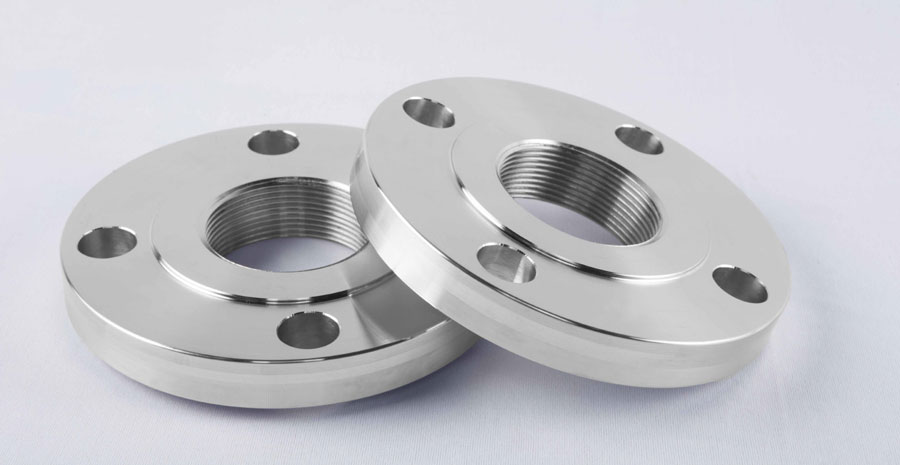
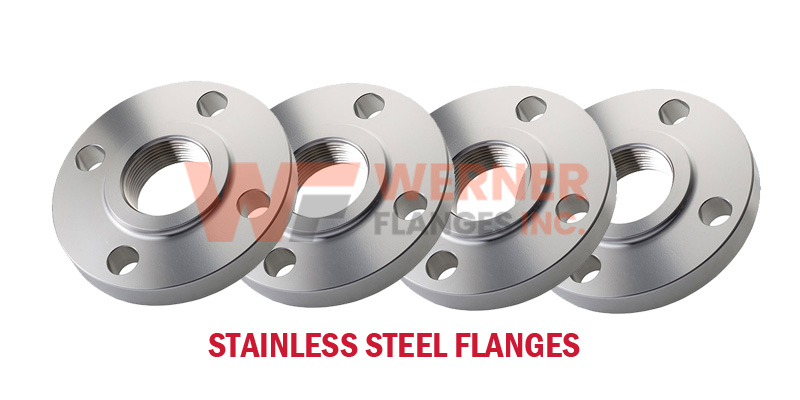
Our stainless steel flanges conform to international standards including ASME B16.5, ASME B16.47, DIN, EN, and BS specifications, manufactured from certified ASTM A182 materials. We offer complete grade availability including F304, F304L, F316, F316L, F321, F347, and duplex grades, engineered to withstand Egypt’s demanding industrial environments from the Mediterranean coast to the Red Sea industrial zones.
With manufacturing facilities equipped with advanced forging and heat treatment capabilities, Werner Flanges delivers precision-engineered stainless steel flanges in pressure classes ranging from 150# to 2500#, sizes from 1/2″ to 60″, and all facing configurations. Our strategic inventory management ensures rapid delivery to Egypt’s major industrial hubs including the Suez Canal Economic Zone, Ain Sokhna, and Alexandria Petroleum Complex, with typical sea freight delivery in 18-22 days to Alexandria Port and Damietta Port.
Every stainless steel flange we manufacture for the Egyptian market undergoes rigorous quality testing including PMI verification, dimensional inspection, mechanical testing, and non-destructive examination. We provide complete material traceability with certified test reports complying with Egyptian Organization for Standardization (EOS) requirements and international certifications from TÜV, Lloyd's Register, and Bureau Veritas.
Specifications
| Specification | Details |
|---|---|
| Pressure Rating | Class 150 to Class 2500 |
| Flange Type | Plate Flange |
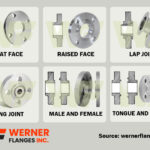
| Facing Type | Raised Face (RF), Flat Face (FF), Ring Type Joint (RTJ) |
| Size Range | ½” to 24” (DN 15 to DN 600) |
| Temperature Range | -29°C to +593°C (Depending on Material & Pressure Class) |
| Applications | Oil & Gas, Petrochemical, Power Generation, Water Treatment, Marine & Industrial Sectors |
| Manufacturing Process | Forged / Machined |
| Certification | EN 10204 3.1 / 3.2, IBR, NACE MR0175 / ISO 15156 (as applicable) |
Matel and Grade
| Type of Materials | Common Specifications / Customization Available on Request |
|---|---|
| Duplex Steel | ASTM/ASME A182 F51, F60, F61, UNS S31803, UNS S32205 |
| Super Duplex Steel | ASTM/ASME A182 F53, F55, UNS S32750, UNS S32760, F44 (6Mo) |
| Stainless Steel | ASTM/ASME A182 F304, F304L, F316, F316L, F310, F317L, F321, F347 |
| Carbon Steel | ASTM A105, A350 LF1, LF2, LF3, A266 Class 1/2, A694 F42 to F70, A765 Gr. II |
| Alloy Steel | ASTM/ASME A182 F1, F5, F9, F11, F12, F22 |
| Non-Ferrous Alloys | Titanium, Brass, Admiralty Brass, Copper Nickel, Nickel Alloys, Hastelloy |
| Titanium | ASTM/ASME B381 Gr.1, Gr.2, Gr.5, Gr.7, Gr.12, Gr.16 |
| Copper Nickel | ASTM B151 UNS C70600 (Cu-Ni 90/10), C71500 (Cu-Ni 70/30) |
| Brass, Al-Brass | ASTM B152 UNS C26000, C27200, C28000; ASTM B111 for Al-Brass |
| Nickel Alloys | ASTM B160, B161, B564 – UNS N02200, N02201, N04400, N08800, N08825, N06600, N06601, N06625, Monel K500 |
| Alloy 20 | ASTM B462 UNS N08020 |
| Hastelloy | ASTM B564 UNS N10276 (Hastelloy C276), N06022 (Hastelloy C22) |
| Cladded Materials | ASTM B898, B265, B424 or custom explosion/clad bonding using dissimilar metals |
| Titanium-Steel, Nickel-Steel, Titanium-Copper, Stainless Steel-Carbon Steel, Bimetallic/Trimetallic Combinations |
Types of Flanges
| Slip On Flanges | Weld Neck Flanges | Blind Flanges | Socket Weld Flanges | Threaded Flanges |
| Lap Joint Flanges | Reducing Flanges | Orifice Flanges | Long Weld Neck Flanges | Plate Flanges |
Industries and Applications We Supply
| Industry | Applications |
|---|---|
Oil & Gas Industry |
The Egyptian oil and gas sector represents the primary market for stainless steel flanges, with applications spanning upstream exploration, midstream transportation, and downstream refining operations across the Western Desert, Gulf of Suez, Mediterranean Sea, and Nile Delta regions. Upstream Applications: Werner Flanges supplies stainless steel flanges to Egyptian oil fields including the Zohr gas field (Mediterranean’s largest natural gas discovery), West Nile Delta fields, and traditional Western Desert operations. F316L flanges dominate wellhead connections, Christmas tree assemblies, and production manifolds where sour gas conditions (H2S >50 ppm) mandate superior corrosion resistance. Offshore platforms operated by BP Egypt, Eni, and Apache Corporation specify NACE MR0175 compliant materials for subsea equipment exposed to seawater and corrosive hydrocarbons. The Badr El-Din Petroleum Company (BAPETCO) and Khalda Petroleum Company operations in Egypt’s Western Desert employ F304L flanges for sweet crude gathering systems, while sour fields require F316L or duplex grades. Gas lift injection systems, water injection manifolds, and produced water handling equipment utilize stainless steel flanges sized from 2″ instrument connections to 36″ trunk lines. Midstream Transportation: Natural gas transmission networks operated by Egyptian Natural Gas Holding Company (EGAS) and Gasco employ stainless steel flanges at compressor stations, metering facilities, and custody transfer points. The Arab Gas Pipeline connecting Egyptian gas to Jordan, Syria, and Lebanon incorporates F316L flanges at scrubber vessels, pig launchers/receivers, and block valve stations requiring corrosion-resistant materials. LNG facilities including Egyptian LNG (ELNG) at Idku and Spanish Egyptian Gas Company (SEGAS) at Damietta specify cryogenic-service stainless steel flanges for liquefaction trains, storage tank connections, and loading arm interfaces. F304L and F316L grades provide adequate toughness at LNG temperatures (-162°C) while resisting thermal cycling damage during cooldown/warmup sequences. Downstream Refining: Egyptian refineries operated by Egyptian General Petroleum Corporation including Cairo Oil Refining Company, Alexandria Petroleum Company, Suez Oil Processing Company, and MIDOR refinery consume substantial quantities of stainless steel flanges. Crude distillation units employ F321 flanges on high-temperature overhead systems and steam networks, while F316L serves corrosive bottoms circuits and desalter systems. Fluid catalytic cracking (FCC) units specify F321 or F347 flanges for regenerator connections and catalyst circulation systems operating above 650°C. Hydroprocessing units (hydrotreaters, hydrocrackers) require F316L or duplex materials for hydrogen-rich, sulfur-bearing environments causing hydrogen-induced cracking in carbon steel. Sulfur recovery units processing acid gas from hydroprocessing operations employ F316L flanges for amine treating systems, Claus furnace connections, and tail gas treating equipment. The corrosive nature of H2S, SO2, and sulfur condensation demands stainless steel construction for reliable long-term operation. |
Petrochemical & Chemical Processing |
|
Power Generation |
|
Water & Wastewater Treatment |
|
Frequently Asked Questions (FAQs)
-
Q1: What stainless steel flange grades are suitable for Egyptian seawater applications?
- For Egyptian coastal applications including Mediterranean and Red Sea environments, we recommend ASTM A182 F316L as the minimum grade for seawater service. The 2–3% molybdenum content provides superior pitting and crevice corrosion resistance compared to F304L. For elevated temperatures (above 50°C) or high-velocity seawater, consider duplex F51 or super duplex F53 grades offering enhanced strength and localized corrosion resistance. Our technical team provides material selection guidance based on seawater temperature, chloride concentration, flow velocity, and service life requirements.
-
Q2: How long does delivery take to Egyptian ports and inland locations?
- Standard sea freight from our Indian manufacturing facilities to Alexandria Port or Port Said requires 18–22 days. Inland transportation to Cairo, Suez, or other Egyptian cities adds 1–4 days. For urgent requirements, expedited air freight via Cairo International Airport reduces delivery to 5–7 days. Our Dubai warehouse stocks common F304L and F316L sizes enabling 3–5 day emergency delivery. Lead times include manufacturing (4–6 weeks), testing/documentation (1 week), and shipping.
-
Q3: Can you manufacture stainless steel flanges to Egyptian custom specifications?
- Yes, Werner Flanges accommodates Egyptian project-specific requirements including non-standard dimensions, modified pressure ratings, special facing configurations, exotic material grades (6-Moly, Alloy 20, Hastelloy), unique marking (Arabic-English bilingual, QR codes), and protective coating systems. Our engineering team provides design verification, stress analysis, and ASME compliance certification for custom configurations. Custom manufacturing adds 1–2 weeks to standard lead times depending on complexity.
-
Q4: What quality certifications and test reports do you provide for Egyptian projects?
-
Every stainless steel flange shipment to Egypt includes:
- Material Test Certificates (MTC) per EN 10204 Type 3.1 or 3.2
- Chemical composition analysis per ASTM E415
- Mechanical test results (tensile, yield, elongation, hardness)
- Dimensional inspection reports verifying ASME B16.5 compliance
- PMI (Positive Material Identification) for 100% of flanges
- Heat treatment charts with digital temperature recording
- NDT reports (Liquid Penetrant Inspection standard, UT for weld necks)
- Third-party inspection certificates when specified (TÜV, LR, BV, DNV, SGS)
NACE MR0175 compliance documentation is provided for sour service. PED certification is supplied for European-financed projects. All documentation is available in electronic PDF format.
-
Q5: Do your stainless steel flanges comply with NACE MR0175 for sour service in Egyptian oil fields?
-
Yes, Werner Flanges manufactures stainless steel flanges complying with NACE MR0175 / ISO 15156. NACE-compliant manufacturing includes:
- Material selection per NACE MR0175 Part 3 (typically F316L, duplex F51, or super duplex F53)
- Hardness control (maximum HRC 22 for austenitic stainless steels)
- Controlled heat treatment preventing susceptible microstructures
- Documented SSC (Sulfide Stress Cracking) resistance
- PMI verification on 100% of flanges
- NACE compliance certification with each shipment
Offshore platforms, sour gas facilities, and high-H2S crude oil operations receive complete NACE documentation supporting HSE requirements.
-
Q6: Can I get stainless steel flanges with bilingual Arabic-English marking for Egyptian facilities?
- Absolutely. Customized marking including Arabic and English text is available. Standard marking per MSS SP-25 includes manufacturer name, material grade, size, class, and heat number. Additional options include Arabic text, customer logos, QR codes, service designation codes, and project-specific numbering. Marking methods include low-stress stamping, laser etching, or paint stenciling, ensuring visibility and compliance with Egyptian installation practices.
-
Q7: What sizes and pressure classes are most commonly used in Egyptian petrochemical projects?
-
Common Sizes:
- Small bore: 2″, 3″, 4″ (auxiliary systems, instrumentation)
- Medium bore: 6″, 8″, 10″, 12″ (process piping, transfer lines)
- Large bore: 16″, 20″, 24″ (main headers, feed lines)
Common Pressure Classes:
- Class 150#: General low-pressure services, cooling water, atmospheric systems
- Class 300#: Standard process piping, medium-pressure steam, chemical transfer
- Class 600#: High-pressure reactors, compressor connections, high-pressure steam
Typical Material Grades:
- F304L: Non-corrosive services, general utility
- F316L: Corrosive chemicals, seawater systems, chlorinated environments
- F321: High-temperature applications (furnaces, reactors above 540°C)
GET A QUOTE
- Contact Information:
Email: sales@wernerflanges.com