Leading Manufacturer & Exporter of Premium
Weld Neck Flanges to Brazil
Werner Flanges has established itself as a trusted supplier of high-quality weld neck flanges to Brazil's dynamic industrial sector for over two decades. Our manufacturing expertise, combined with deep understanding of Brazil's petrochemical and oil & gas industries, positions us as the preferred choice for companies seeking reliable, certified weld neck flanges with rapid delivery to major Brazilian cities.
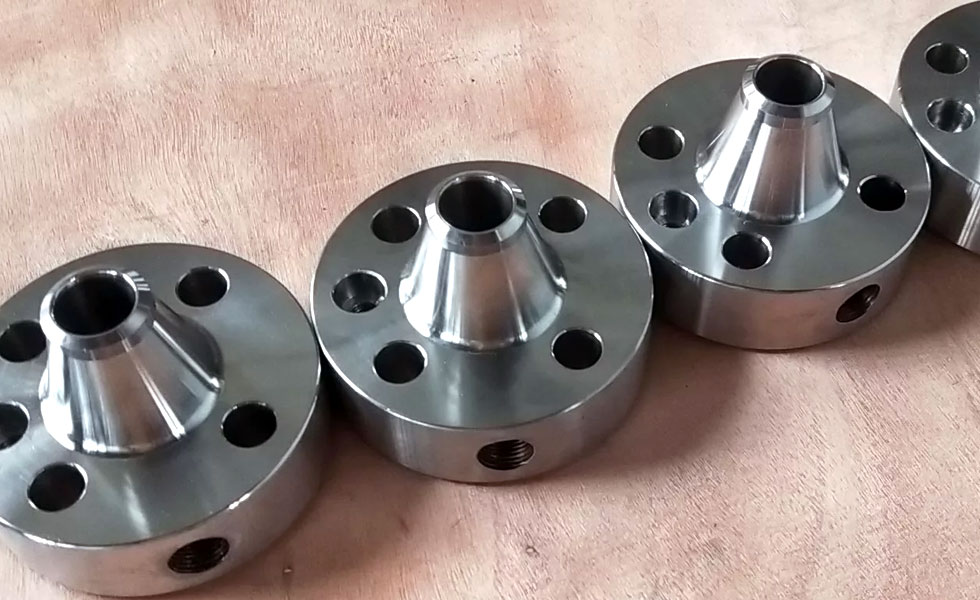
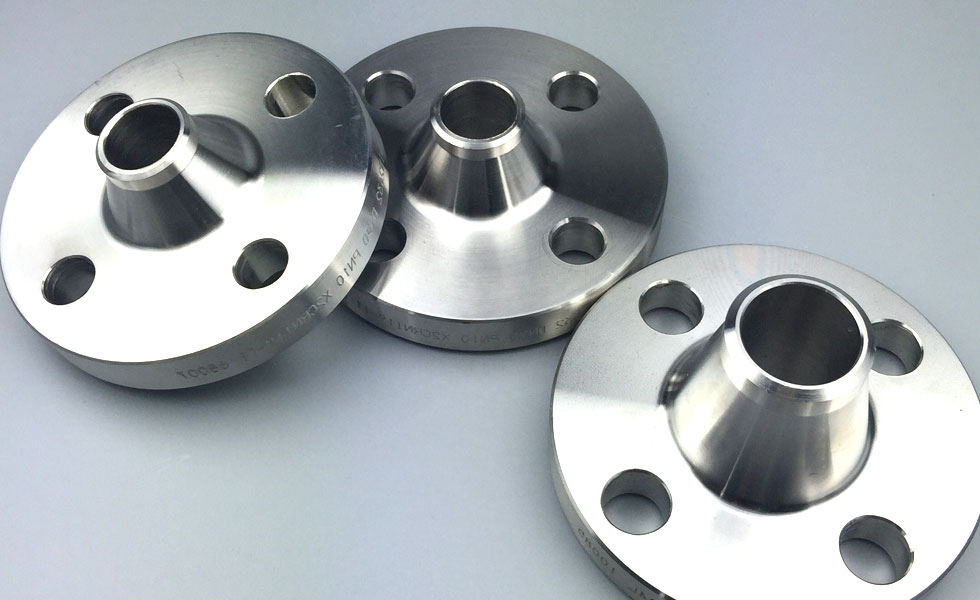
From São Paulo’s manufacturing hub to the offshore platforms of Rio de Janeiro and the petrochemical complexes of Bahia, our weld neck flanges are engineered to meet ASME B16.5 standards and exceed the demanding requirements of Brazil’s most sophisticated industrial projects. Whether you’re connecting critical pipeline infrastructure, managing pressure vessel assemblies, or executing maintenance operations at existing facilities, Werner Flanges delivers precision-engineered products backed by comprehensive documentation and technical support.
Our weld neck flanges are manufactured using high-grade carbon steel, stainless steel, alloy steel, and duplex materials, ensuring superior strength, corrosion resistance, and long-term operational reliability. Each flange undergoes rigorous inspection procedures including dimensional verification, mechanical testing, PMI analysis, and non-destructive examination to guarantee compliance with international quality standards and Brazil’s industrial regulations.
With efficient export logistics through major Brazilian ports such as Santos, Rio de Janeiro, and Salvador, Werner Flanges ensures timely delivery, secure packaging, and complete material traceability for every shipment. Supported by a responsive technical team and project-focused supply approach, we help Brazilian EPC contractors, distributors, and industrial operators maintain operational efficiency across oil & gas, petrochemical, power generation, and infrastructure projects nationwide.
"ASME B16.5 weld neck flanges Brazil"
"stainless steel 316L weld neck flange exporter Rio de Janeiro"
"carbon steel A105 weld neck flange supplier São Paulo"
"F22 alloy steel weld neck flange high temperature steam"
"duplex stainless weld neck flange deepwater subsea"
"NACE MR0175 certified weld neck flange sour service"
"weld neck flange 600# class offshore platform manufacturer"
"premium quality weld neck flanges fast delivery Brazil
Specifications
| Specification | Details |
|---|---|
| Pressure Rating | Class 150 to Class 2500 |
| Flange Type | Plate Flange |
| Facing Type | Raised Face (RF), Flat Face (FF), Ring Type Joint (RTJ) |
| Size Range | ½” to 24” (DN 15 to DN 600) |
| Temperature Range | -29°C to +593°C (Depending on Material & Pressure Class) |
| Applications | Oil & Gas, Petrochemical, Power Generation, Water Treatment, Marine & Industrial Sectors |
| Manufacturing Process | Forged / Machined |
| Certification | EN 10204 3.1 / 3.2, IBR, NACE MR0175 / ISO 15156 (as applicable) |
Matel and Grade
| Type of Materials | Common Specifications / Customization Available on Request |
|---|---|
| Duplex Steel | ASTM/ASME A182 F51, F60, F61, UNS S31803, UNS S32205 |
| Super Duplex Steel | ASTM/ASME A182 F53, F55, UNS S32750, UNS S32760, F44 (6Mo) |
| Stainless Steel | ASTM/ASME A182 F304, F304L, F316, F316L, F310, F317L, F321, F347 |
| Carbon Steel | ASTM A105, A350 LF1, LF2, LF3, A266 Class 1/2, A694 F42 to F70, A765 Gr. II |
| Alloy Steel | ASTM/ASME A182 F1, F5, F9, F11, F12, F22 |
| Non-Ferrous Alloys | Titanium, Brass, Admiralty Brass, Copper Nickel, Nickel Alloys, Hastelloy |
| Titanium | ASTM/ASME B381 Gr.1, Gr.2, Gr.5, Gr.7, Gr.12, Gr.16 |
| Copper Nickel | ASTM B151 UNS C70600 (Cu-Ni 90/10), C71500 (Cu-Ni 70/30) |
| Brass, Al-Brass | ASTM B152 UNS C26000, C27200, C28000; ASTM B111 for Al-Brass |
| Nickel Alloys | ASTM B160, B161, B564 – UNS N02200, N02201, N04400, N08800, N08825, N06600, N06601, N06625, Monel K500 |
| Alloy 20 | ASTM B462 UNS N08020 |
| Hastelloy | ASTM B564 UNS N10276 (Hastelloy C276), N06022 (Hastelloy C22) |
| Cladded Materials | ASTM B898, B265, B424 or custom explosion/clad bonding using dissimilar metals |
| Titanium-Steel, Nickel-Steel, Titanium-Copper, Stainless Steel-Carbon Steel, Bimetallic/Trimetallic Combinations |
Types of Flanges
| Slip On Flanges | Weld Neck Flanges | Blind Flanges | Socket Weld Flanges | Threaded Flanges |
| Lap Joint Flanges | Reducing Flanges | Orifice Flanges | Long Weld Neck Flanges | Expander Flanges |
Industries and Applications We Supply
| Industry | Applications |
|---|---|
Oil & Gas Industry |
|
|
|
Power Generation |
|
Water & Wastewater Treatment |
|
Frequently Asked Questions (FAQs)
- q1: what’s the difference between weld neck flanges and slip-on flanges?
- weld neck flanges feature a tapered hub that gradually transitions from the pipe o.d. to the flange face, providing superior stress distribution. slip-on flanges fit over the pipe o.d. and are fillet-welded in place. weld neck flanges are preferred for high-pressure (>300 psi) and critical service applications, while slip-on flanges are suitable for low-pressure systems and smaller bore sizes.
- q2: can you supply nace mr0175 certified weld neck flanges for sour service in campos basin operations?
- yes, we manufacture nace mr0175/iso 15156 certified weld neck flanges in astm a182 f11 and other suitable alloys. these flanges are designed for hydrogen sulfide service in brazil’s offshore crude operations, and all materials include nace compliance documentation.
- q3: what pressure class should i specify for my 60 bar operating system?
- for 60 bar operating pressure, options include 300# class (rated 51 bar at 38°c), 600# class (rated 103 bar) providing a comfortable safety margin, and 900# class for maximum safety. most engineers select 600# for continuous 60 bar service, accommodating pressure transients and thermal derating. consultation with your project engineer is recommended.
- q4: how long does delivery typically take to são paulo if i order today?
- for stock sizes in standard materials (a105 carbon steel, 316l stainless, f22 alloy), delivery to são paulo usually takes 21–25 days via standard sea freight. custom or special materials extend delivery to 35–45 days. expedited air freight (14–16 days) is available at a premium. contact our sales team for specifics.
- q5: do you provide third-party inspection certificates (tüv, dnv, etc.) for these flanges?
- yes, third-party inspection by tüv, dnv, bureau veritas, sgs, or lloyd’s is available on request. many brazilian customers, especially for petrobras contracts, require third-party certification.
- q6: what is the difference between 316l and duplex material for seawater applications?
- 316l stainless steel (astm a182 f316l) is traditional for seawater service with proven coastal and offshore performance. duplex stainless steel (astm a182 f51) provides ~40% higher strength and superior pitting resistance. for pre-sal deepwater operations, duplex allows lighter designs, though 316l remains economical and suitable for standard offshore and desalination applications.
- q7: can i obtain flanges without raised face (flat face) for specific gasket compatibility?
- yes, flat face (ff) weld neck flanges are available for applications using flat gaskets. while raised face (rf) is standard, flat face options are commonly supplied for 150# and 300# classes. specify flat face requirement during quotation; there is no significant cost premium.
GET A QUOTE
-
Email: sales@wernerflanges.com