Leading Manufacturer & Exporter of
Carbon Steel Flanges to Brazil
Werner Flanges is Brazil's trusted carbon steel flanges distributor, supplying premium-quality forged flanges engineered to meet the rigorous demands of the country's oil and gas, petrochemical, mining, and infrastructure sectors. With over two decades of manufacturing excellence, we deliver carbon steel flanges to Brazil's major industrial centers including São Paulo, Rio de Janeiro, Santos, Campinas, Porto Alegre, Belo Horizonte, Salvador, Manaus, and the critical offshore pre-salt basin operational hubs. Our products support major Petrobras deepwater facilities, Vale mining complexes, Braskem petrochemical operations, and the country's expanding refinery and infrastructure network.
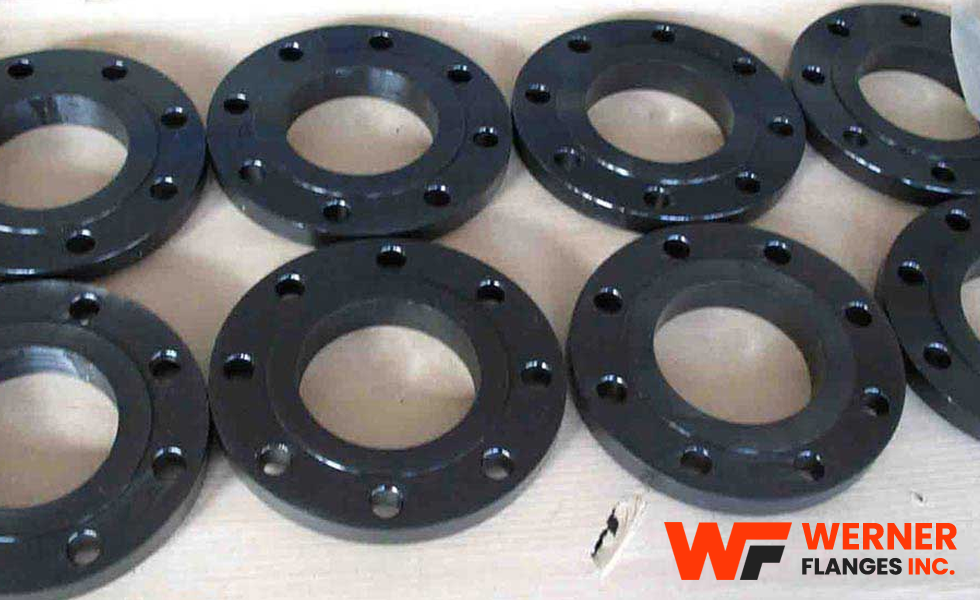
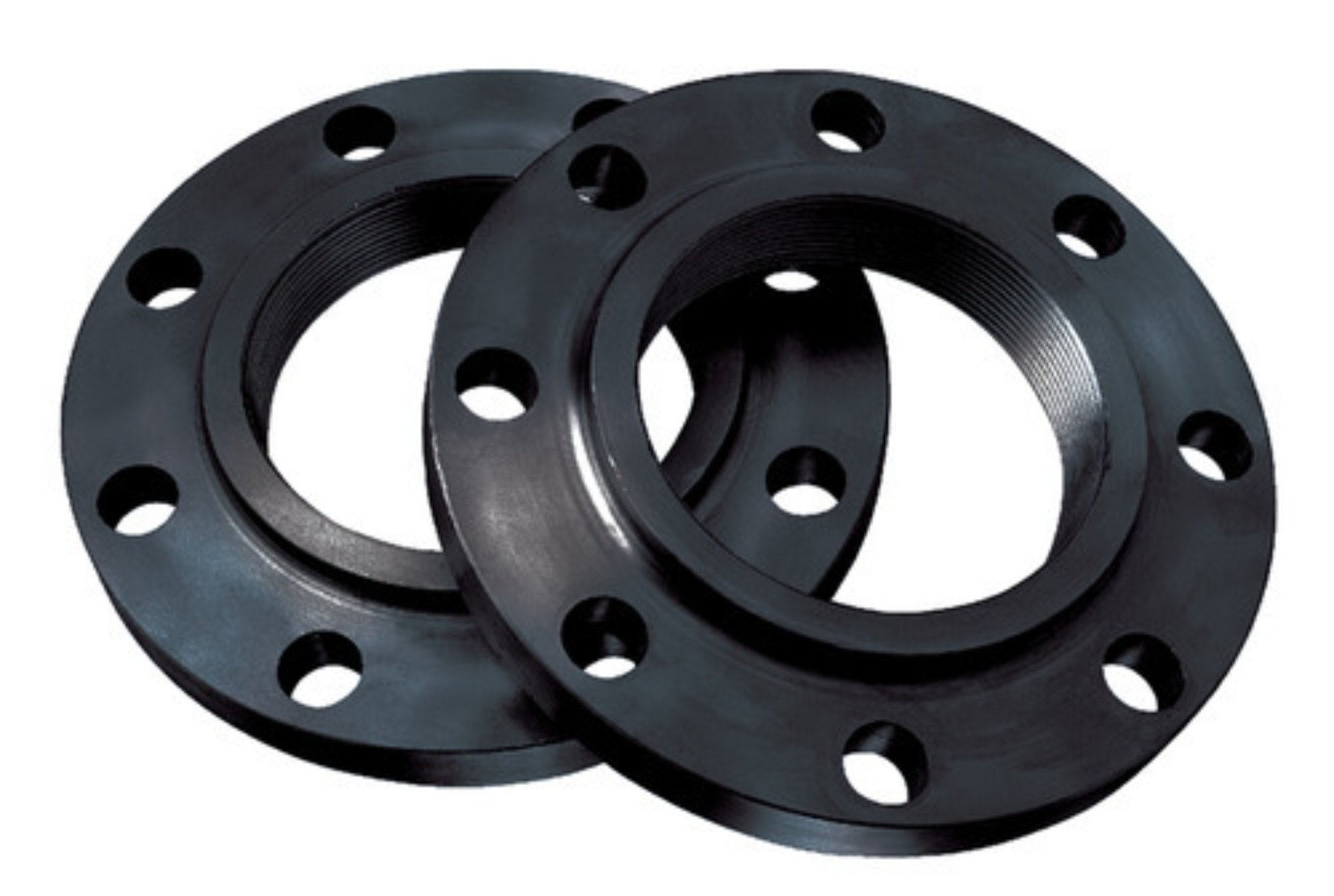
Our carbon steel flanges conform to ASME B16.5, ASME B16.47, and MSS SP-44 standards, available in pressure classes from 150# to 2500# and sizes ranging from 1/2″ to 60″. We specialize in ASTM A105 carbon steel flanges for high-pressure, elevated-temperature applications and ASTM A350 LF2 grades for low-temperature service in LNG and cryogenic installations. Every flange undergoes comprehensive quality testing — dimensional inspection, mechanical property verification, and non-destructive examination — ensuring compliance with API, NACE MR0175, ABNT NBR standards, and Petrobras engineering specifications (N-series standards).
As a direct manufacturer and distributor, Werner Flanges eliminates intermediary costs, offering Brazilian buyers competitive pricing without compromising quality. Our logistics network delivers to Porto de Santos and Porto de Paranaguá within 25-32 days via sea freight, with expedited air freight options to Guarulhos International Airport (São Paulo) or Galeão International Airport (Rio de Janeiro) for urgent project requirements. We provide complete material traceability, third-party inspection coordination, and full documentation packages compliant with Brazilian customs (Receita Federal) requirements and INMETRO regulations.
Whether you're procuring flanges for Petrobras pre-salt deepwater platforms in the Santos Basin, midstream pipeline infrastructure operated by TAG or TBG, downstream refinery operations at REPLAN or REDUC, Braskem petrochemical complexes in Camaçari or Triunfo, or Vale mining and processing facilities in Pará and Minas Gerais — Werner Flanges delivers the reliability, technical depth, and supply chain efficiency that Brazil's industries require.
Brazil Industrial Flange Supply | Offshore, Refinery & Petrochemical Projects | Mining & Pipeline Infrastructure | Reliable & Technically Advanced Solutions
Specifications
| Specification | Details |
|---|---|
| Pressure Rating | Class 150 to Class 2500 |
| Flange Type | Plate Flange |
| Facing Type | Raised Face (RF), Flat Face (FF), Ring Type Joint (RTJ) |
| Size Range | ½” to 24” (DN 15 to DN 600) |
| Temperature Range | -29°C to +593°C (Depending on Material & Pressure Class) |
| Applications | Oil & Gas, Petrochemical, Power Generation, Water Treatment, Marine & Industrial Sectors |
| Manufacturing Process | Forged / Machined |
| Certification | EN 10204 3.1 / 3.2, IBR, NACE MR0175 / ISO 15156 (as applicable) |
Matel and Grade
| Type of Materials | Common Specifications / Customization Available on Request |
|---|---|
| Duplex Steel | ASTM/ASME A182 F51, F60, F61, UNS S31803, UNS S32205 |
| Super Duplex Steel | ASTM/ASME A182 F53, F55, UNS S32750, UNS S32760, F44 (6Mo) |
| Stainless Steel | ASTM/ASME A182 F304, F304L, F316, F316L, F310, F317L, F321, F347 |
| Carbon Steel | ASTM A105, A350 LF1, LF2, LF3, A266 Class 1/2, A694 F42 to F70, A765 Gr. II |
| Alloy Steel | ASTM/ASME A182 F1, F5, F9, F11, F12, F22 |
| Non-Ferrous Alloys | Titanium, Brass, Admiralty Brass, Copper Nickel, Nickel Alloys, Hastelloy |
| Titanium | ASTM/ASME B381 Gr.1, Gr.2, Gr.5, Gr.7, Gr.12, Gr.16 |
| Copper Nickel | ASTM B151 UNS C70600 (Cu-Ni 90/10), C71500 (Cu-Ni 70/30) |
| Brass, Al-Brass | ASTM B152 UNS C26000, C27200, C28000; ASTM B111 for Al-Brass |
| Nickel Alloys | ASTM B160, B161, B564 – UNS N02200, N02201, N04400, N08800, N08825, N06600, N06601, N06625, Monel K500 |
| Alloy 20 | ASTM B462 UNS N08020 |
| Hastelloy | ASTM B564 UNS N10276 (Hastelloy C276), N06022 (Hastelloy C22) |
| Cladded Materials | ASTM B898, B265, B424 or custom explosion/clad bonding using dissimilar metals |
| Titanium-Steel, Nickel-Steel, Titanium-Copper, Stainless Steel-Carbon Steel, Bimetallic/Trimetallic Combinations |
Types of Flanges
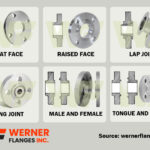
| Slip On Flanges | Weld Neck Flanges | Blind Flanges | Socket Weld Flanges | Threaded Flanges |
| Lap Joint Flanges | Reducing Flanges | Orifice Flanges | Long Weld Neck Flanges | Expander Flanges |
Industries and Applications We Supply
| Industry | Applications |
|---|---|
Oil, Gas & Petrochemical Industry |
Carbon steel flanges are fundamental to Petrobras’ massive operational footprint spanning upstream, midstream, and downstream. Offshore, FPSO vessels operating over pre-salt fields in the Santos Basin — including FPSO Guanabara, FPSO Carioca, and the P-series fixed platforms in the Campos Basin — rely on Class 600# through 1500# ASTM A105 weld neck flanges throughout topside process modules: crude oil separation trains, gas compression decks, water treatment systems, and offloading headers. These installations must meet Petrobras N-133 (welding), N-1601 (pipeline design), and N-2162 (inspection) standards, which Werner Flanges’ documentation packages fully support. Onshore, Transpetro’s 14,000 km pipeline network transporting crude oil, LPG, and petroleum products between production terminals, refineries, and distribution centers uses predominantly Class 300# and 600# carbon steel flanges at pump stations, mainline valves, pig launchers, and metering skids. The OSPAR system (Santos–Paulínia–Replan), OSBRA (Paulínia–Brasília), and OLEODUTO do Sul connecting Petrobras’ southern refineries each require thousands of flanges for routine maintenance and capacity expansion. At Petrobras’ six active refineries — REPLAN (Paulínia, SP), REDUC (Duque de Caxias, RJ), RNEST (Ipojuca, PE), REGAP (Betim, MG), REFAP (Canoas, RS), and REMAN (Manaus, AM) — carbon steel flanges in Class 150# through 900# ratings serve atmospheric and vacuum distillation units, fluid catalytic cracking, hydrotreating, naphtha reforming, and product treatment circuits. RNEST, Petrobras’ newest and most technically advanced refinery, incorporates extensive Class 600# carbon steel flanges in its deep conversion hydrocracking complex, handling hydrogen-rich streams at pressures up to 170 bar. |
Pharmaceutical & Healthcare Manufacturing |
Brazil’s petrochemical sector, led by Braskem (Latin America’s largest petrochemical company), consumes substantial quantities of carbon steel flanges across the ABC Paulista industrial complex, Camaçari Petrochemical Pole in Bahia, and Triunfo Petrochemical Pole in Rio Grande do Sul. At Braskem’s ethylene crackers producing over 3 million tons annually, carbon steel flanges in Class 300#–600# connect quench towers, compression trains, cold box feed systems, and propylene fractionation columns. The high-pressure ethylene product compression system utilizes Class 900# weld neck flanges handling pressures approaching 100 bar. Downstream polymer production facilities — polyethylene, polypropylene, PVC, and EVA plants — incorporate Class 150# and 300# carbon steel flanges throughout monomer feed systems, reactor feed preparation circuits, and product discharge handling, areas where carbon steel provides adequate corrosion resistance and significant cost advantages over alloy alternatives. Brazil’s growing petrochemical derivatives sector, including São Paulo-based manufacturers of packaging films, automotive components, and agricultural inputs, uses carbon steel flanges in cooling, compressed air, and steam utility systems across hundreds of production facilities |
| Power Generation |
Brazil’s electricity matrix — dominated by hydroelectric power but supplemented by significant thermoelectric, wind, and solar capacity — creates diverse carbon steel flange demand. Natural gas-fired thermoelectric plants in the Northeast (critical during low-rainfall periods affecting Nordeste interconnection) and Southeast use Class 300#–600# carbon steel flanges in gas turbine fuel supply, heat recovery steam generator (HRSG) connections, and steam turbine extraction systems. The Angra nuclear complex in Rio de Janeiro state — Brazil’s only nuclear power generation — uses carbon steel flanges in non-nuclear auxiliary systems including circulating water, diesel fuel, and compressed air. Brazil’s ambitious renewable energy expansion, including large-scale wind farm clusters in Rio Grande do Norte and Bahia (over 23 GW installed capacity) and rapidly growing solar installations, drives demand for carbon steel flanges in wind turbine hydraulic systems, solar thermal concentrators, and grid connection substations. Hydroelectric plants — including the Itaipu binational facility (14 GW) and Belo Monte (11 GW) — use carbon steel flanges throughout turbine cooling water, transformer oil, and auxiliary service systems. Municipal water and sanitation utilities (SANEAGO, SANEPAR, SABESP, Embasa) across Brazil’s 5,570 municipalities utilize Class 150# carbon steel flanges extensively in pumping stations, water treatment plants, and distribution networks. Brazil’s ambitious sanitation framework (Marco Legal do Saneamento, 2020) targets 99% water access and 90% sewage treatment by 2033, generating decade-long investment in water infrastructure and sustained carbon steel flange demand across all regions. |
Mining & Mineral Processing |
Brazil’s world-leading mining industry — iron ore in Pará and Minas Gerais, bauxite in Pará, copper in Goiás — creates substantial demand for carbon steel flanges in mineral processing infrastructure. At Vale’s S11D iron ore project in Carajás, PA — the world’s largest iron ore mine — carbon steel flanges connect slurry pumping circuits, tailings disposal pipelines, and water management systems across the 100+ km mining complex. The 550 km Carajás slurry pipeline transporting iron ore concentrate to the São Luís port terminal uses large-diameter Class 300# and 600# flanges at pump stations and intermediate piping assemblies. Samarco’s iron ore pellet production complex in Anchieta, ES — currently in recovery operations following the 2015 Fundão dam failure — is rebuilding its tailings management and process water infrastructure, representing demand for high-quality carbon steel flanges in new environmental compliance systems. CSN’s integrated steel complex in Volta Redonda, RJ incorporates carbon steel flanges throughout blast furnace gas handling, coke plant utilities, and hot strip mill cooling systems. Werner Flanges understands mining sector requirements including abrasion-resistant specification upgrades and rubber-lined piping compatibility, and can tailor products to Brazil’s specific mining applications. |
Frequently Asked Questions (FAQs) about ANSI B16.5 Plate Flanges
- Q1: Are your carbon steel flanges compliant with Petrobras N-series engineering standards?
- yes. werner flanges manufactures astm a105 and a350 lf2 carbon steel flanges fully compatible with petrobras n-series requirements for materials, welding, and inspection. documentation packages include material traceability, pmi results, hardness data, and third-party certificates. for sour service per petrobras n-1728, flanges are low-sulfur heats with certified nace mr0175 compliance.
- Q2: What is the delivery time for carbon steel flanges to Brazil?
- standard sizes from inventory (nps 1/2″–24″, class 150#–600#) reach santos or paranaguá ports in 25–32 days by sea. inland trucking adds 2–4 days. air freight to guarulhos or galeão reduces delivery to 6–8 days. custom sizes or class 900#–2500# may require 4–8 weeks manufacturing.
- Q3: Do you supply NACE MR0175 flanges for Brazil’s pre-salt H2S service?
- yes. we supply nace mr0175 / iso 15156-compliant carbon steel flanges from low-sulfur astm a105 heats with max 200 hb hardness, certified chemistry, and heat treatment records, meeting h2s service requirements in pre-salt fields.
- Q4: Can you provide third-party inspection by agencies recognized in Brazil?
- yes. pre-shipment inspection by bureau veritas do brasil, tüv rheinland brasil, sgs do brasil, dnv brasil, and intertek brasil is available. inspectors witness mechanical testing, dimensional verification, ndt, and process review, with certified reports.
- Q5: What documentation do you provide for Brazilian customs (Receita Federal)?
- en 10204 3.1 certificates, dimensional reports, pmi reports, compliance certificates, commercial invoice (siscomex compatible), packing list, certificate of origin, and bill of lading. freight partners handle di processing, duty classification, and nota fiscal generation.
- Q6: Are documents available in Portuguese?
- yes. certificates, inspection reports, and compliance documentation can be translated into portuguese to facilitate integration with inmetro and client quality management systems.
- Q7: Can you supply large-diameter flanges for Brazilian pipeline projects?
- yes. carbon steel flanges up to 60″ (dn1500) per asme b16.47 series a and b, suitable for transpetro pipelines, crude terminals, and large-bore water mains. lead times: 6–10 weeks.
- Q8: Do you accommodate Brazil’s local content (Conteúdo Local) requirements for Petrobras projects?
- while werner flanges is an international manufacturer, we work with brazilian distributors to structure supply arrangements addressing local content considerations. contact sales for project-specific solutions.
GET A QUOTE
-
CONTACT WERNER FLANGES:
Email: sales@wernerflanges.com