Leading Manufacturer & Exporter of
Stainless Steel Flanges to Bangladesh
Werner Flanges stands as a trusted stainless steel flanges manufacturer serving Bangladesh's rapidly expanding industrial sector. With over two decades of manufacturing excellence, we supply high-quality stainless steel flanges in grades SS 304, 304L, 316, 316L, and 321 to industries across Dhaka, Chittagong, Khulna, Sylhet, and Rajshahi. Our comprehensive product range meets the demanding requirements of Bangladesh's textile processing plants, pharmaceutical facilities, food processing units, power generation stations, and the growing chemical industry.
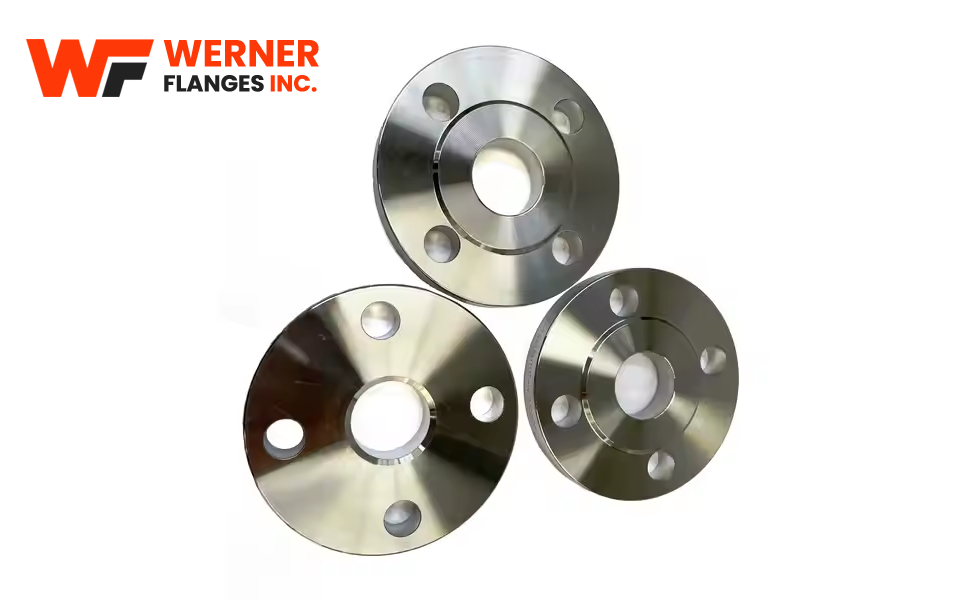
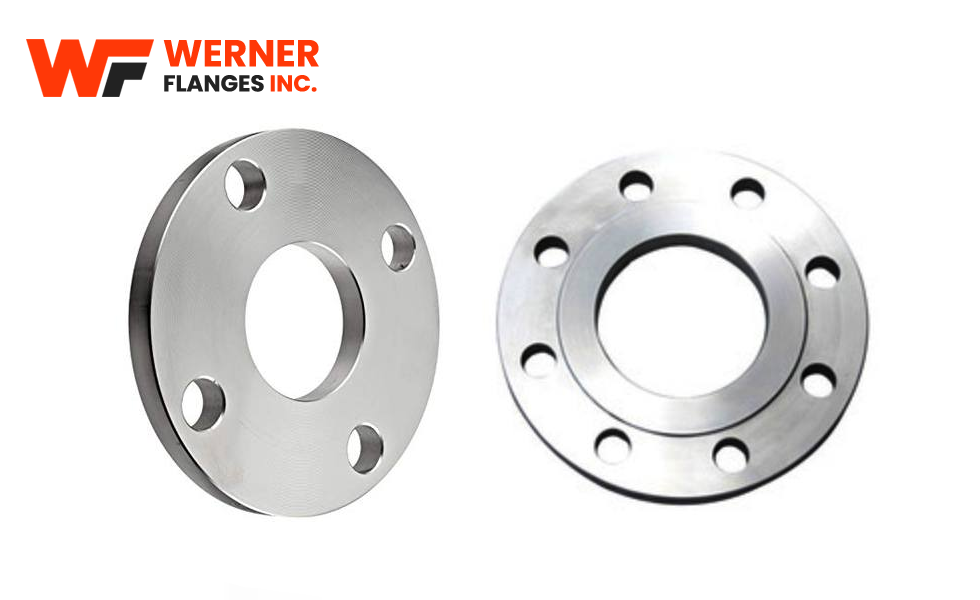
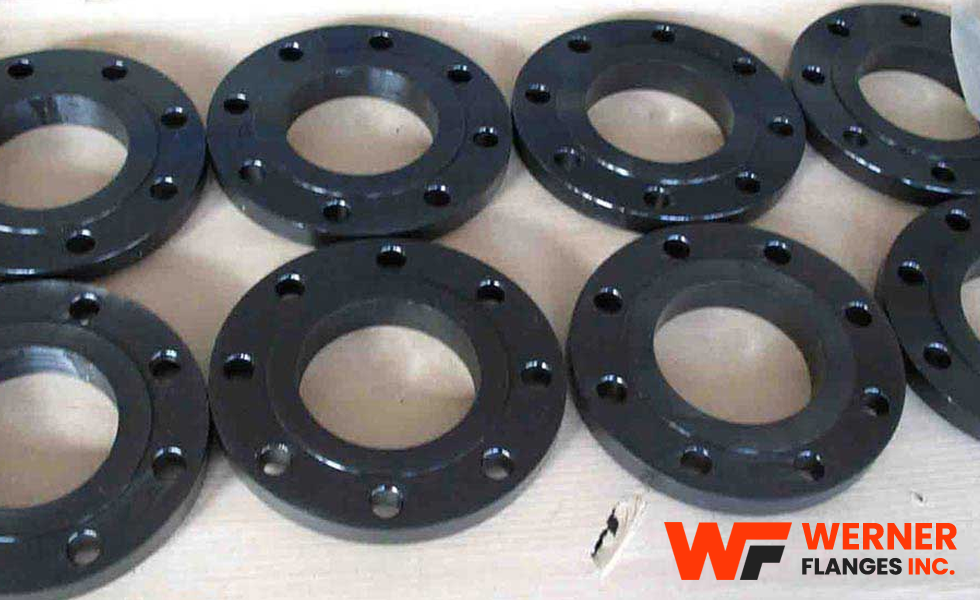
As Bangladesh continues its journey toward becoming a middle-income economy, the demand for corrosion-resistant piping solutions has surged. Our stainless steel flanges comply with international standards including ASME B16.5, ASTM A182, DIN, and BS specifications, making them ideal for both local industrial applications and export-oriented manufacturing facilities. We manufacture flanges in all pressure classes from 150# to 2500# and sizes ranging from 1/2″ to 60″, ensuring we meet the diverse needs of Bangladesh’s industrial landscape.
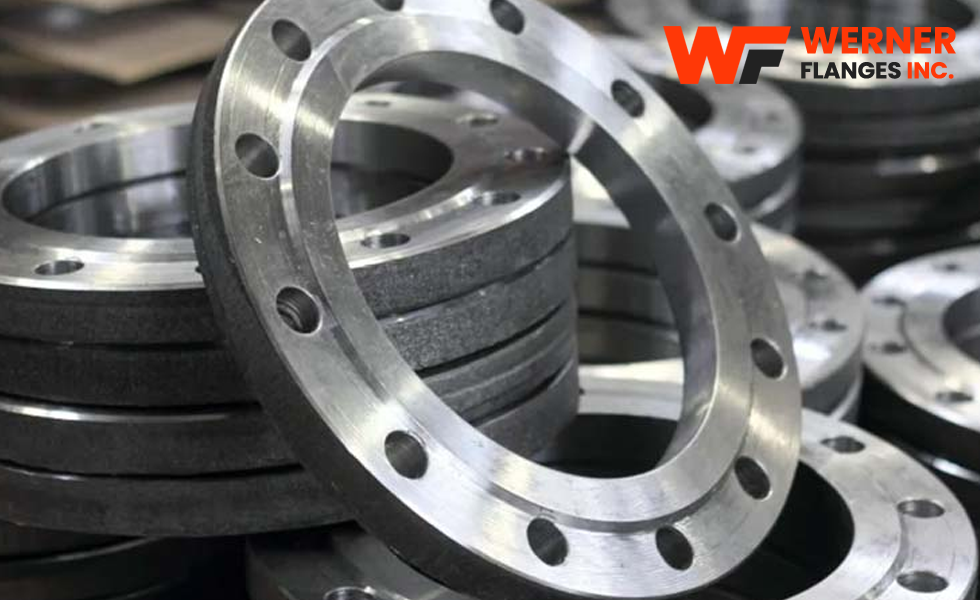
Our manufacturing facility employs advanced forging and heat treatment processes to produce flanges with exceptional mechanical properties and corrosion resistance. Every stainless steel flange undergoes rigorous quality testing including PMI verification, dimensional inspection, and mechanical testing to ensure compliance with international standards. With strategic shipping partnerships through Chittagong Port and Mongla Port, we deliver flanges to your facility within 20-25 days, with expedited air freight options available for urgent requirements.
Bangladesh's focus on infrastructure development, including the Rooppur Nuclear Power Plant, Rampal Power Station, and numerous textile wet processing facilities, requires reliable, corrosion-resistant flange solutions. Werner Flanges provides complete material traceability, comprehensive documentation, and technical support to ensure your projects meet the highest quality and safety standards.
Specifications
| Specification | Details |
|---|---|
| Pressure Rating | Class 150 to Class 2500 |
| Flange Type | Plate Flange |
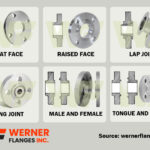
| Facing Type | Raised Face (RF), Flat Face (FF), Ring Type Joint (RTJ) |
| Size Range | ½” to 24” (DN 15 to DN 600) |
| Temperature Range | -29°C to +593°C (Depending on Material & Pressure Class) |
| Applications | Oil & Gas, Petrochemical, Power Generation, Water Treatment, Marine & Industrial Sectors |
| Manufacturing Process | Forged / Machined |
| Certification | EN 10204 3.1 / 3.2, IBR, NACE MR0175 / ISO 15156 (as applicable) |
Matel and Grade
| Type of Materials | Common Specifications / Customization Available on Request |
|---|---|
| Duplex Steel | ASTM/ASME A182 F51, F60, F61, UNS S31803, UNS S32205 |
| Super Duplex Steel | ASTM/ASME A182 F53, F55, UNS S32750, UNS S32760, F44 (6Mo) |
| Stainless Steel | ASTM/ASME A182 F304, F304L, F316, F316L, F310, F317L, F321, F347 |
| Carbon Steel | ASTM A105, A350 LF1, LF2, LF3, A266 Class 1/2, A694 F42 to F70, A765 Gr. II |
| Alloy Steel | ASTM/ASME A182 F1, F5, F9, F11, F12, F22 |
| Non-Ferrous Alloys | Titanium, Brass, Admiralty Brass, Copper Nickel, Nickel Alloys, Hastelloy |
| Titanium | ASTM/ASME B381 Gr.1, Gr.2, Gr.5, Gr.7, Gr.12, Gr.16 |
| Copper Nickel | ASTM B151 UNS C70600 (Cu-Ni 90/10), C71500 (Cu-Ni 70/30) |
| Brass, Al-Brass | ASTM B152 UNS C26000, C27200, C28000; ASTM B111 for Al-Brass |
| Nickel Alloys | ASTM B160, B161, B564 – UNS N02200, N02201, N04400, N08800, N08825, N06600, N06601, N06625, Monel K500 |
| Alloy 20 | ASTM B462 UNS N08020 |
| Hastelloy | ASTM B564 UNS N10276 (Hastelloy C276), N06022 (Hastelloy C22) |
| Cladded Materials | ASTM B898, B265, B424 or custom explosion/clad bonding using dissimilar metals |
| Titanium-Steel, Nickel-Steel, Titanium-Copper, Stainless Steel-Carbon Steel, Bimetallic/Trimetallic Combinations |
Types of Flanges
| Slip On Flanges | Weld Neck Flanges | Blind Flanges | Socket Weld Flanges | Threaded Flanges |
| Lap Joint Flanges | Reducing Flanges | Orifice Flanges | Long Weld Neck Flanges | Plate Flanges |
Industries and Applications We Supply
| Industry | Applications |
|---|---|
Oil & Gas Industry |
While Bangladesh’s oil and gas sector is smaller than neighboring countries, exploration and production continue in northern gas fields and Bay of Bengal offshore blocks. Petrobangla, the state-owned oil and gas corporation, oversees upstream operations where stainless steel flanges serve gas processing plants, wellhead equipment, and pipeline infrastructure.
Upstream Applications: Wellhead connections and Christmas tree assemblies use SS 316 flanges rated 900# and higher for high-pressure gas service. Corrosion-resistant materials are essential given Bangladesh’s humid climate and presence of CO2 and H2S in some gas reservoirs. Production manifolds and separator vessels employ stainless steel flanges to handle condensate and sour gas streams that would rapidly corrode carbon steel. Gas Processing Plants: Natural gas sweetening units removing CO2 and H2S require SS 316L flanges resistant to amine solutions used in absorption processes. Compression stations boosting gas pressure for transmission use Class 600# stainless steel flanges on compressor discharge piping where temperatures reach 150-180°C. Glycol dehydration systems employ SS 304 flanges for moderate service and SS 316 where chlorides are present. Distribution Infrastructure: While most gas transmission pipelines use carbon steel flanges, metering stations and regulating facilities often specify stainless steel flanges for instrument connections, sampling systems, and critical safety valves. The Bangladesh Gas Transmission Company Limited (GTCL) maintains pipeline integrity through quality flanged connections resistant to Bangladesh’s monsoon climate. |
Power Generation
|
|
Pharmaceutical Industry Excellence |
|
|
|
Frequently Asked Questions (FAQs)
-
1. what stainless steel grades do you recommend for bangladesh’s pharmaceutical industry?
- ss 316l (astm a182 f316l) is the preferred grade for pharmaceutical applications due to superior corrosion resistance and low carbon content preventing sensitization during welding. the low carbon variant eliminates the need for post-weld heat treatment while maintaining excellent resistance to pharmaceutical cleaning chemicals including caustic solutions, oxidizers, and acids. for sterile processing areas requiring electropolished surfaces, 316l accepts mirror finishes achieving ra values below 0.4 microns that prevent bacterial adhesion and facilitate cleaning validation. f304l is also supplied for less corrosive applications where cost optimization is important while maintaining hygienic standards.
-
2. how long does delivery to chittagong port typically take?
- standard sea freight delivery from our manufacturing facility in india to chittagong port requires 18-20 days, with an additional 2-4 days for inland transportation to dhaka, gazipur, or other locations. total door-to-door delivery averages 22-24 days from order confirmation. for urgent requirements, air freight to hazrat shahjalal international airport enables delivery within 5-7 days for flanges up to 12″ size. we recommend ordering 4-6 weeks before the required on-site date to allow time for manufacturing, inspection, shipping, and customs clearance. large projects requiring container quantities should allow 6-8 weeks lead time for optimal scheduling.
-
3. can you provide flanges meeting nace mr0175 requirements for sour service?
- yes, our stainless steel flanges fully comply with nace mr0175/iso 15156 requirements for equipment handling hydrogen sulfide in oil and gas applications. austenitic stainless steels including f304, f304l, f316, and f316l naturally meet nace hardness limits (maximum 22 hrc equivalent) when properly solution annealed. we provide certified hardness test reports documenting compliance and can arrange third-party inspection by nace-accredited inspectors if required by your project specifications. nace-compliant flanges prevent sulfide stress cracking that could lead to failures in sour service environments.
-
4. do you offer custom flange manufacturing for non-standard applications?
- yes, we manufacture custom flanges for special requirements beyond asme b16.5 standards. custom capabilities include non-standard bore diameters matching specific pipe wall thicknesses, modified pressure-temperature ratings, special facing configurations for unique gasket designs, extra-thick flanges for extreme service conditions, and overlay cladding combining corrosion-resistant wetted surfaces with structural carbon steel backings. our engineering team provides design support, finite element analysis for stress verification, and prototype manufacturing for testing before full production. minimum order quantities for custom flanges depend on complexity but typically start at 10 pieces.
-
5. what quality documentation do you provide with shipments to bangladesh?
- every shipment includes comprehensive documentation facilitating customs clearance and project acceptance: en 10204 3.1 material test certificates from steel mills, heat treatment charts documenting time-temperature cycles, dimensional inspection reports with actual measurements, pmi test reports verifying grade accuracy, hardness test results confirming proper heat treatment, non-destructive testing reports (ut, lpi) per project requirements, commercial invoice and packing list, certificate of origin declaring indian manufacture, and third-party inspection certificates when requested. for pharmaceutical projects requiring equipment validation, we provide enhanced documentation including manufacturing batch records, calibration certificates for inspection equipment, and quality system compliance statements supporting gmp requirements.
-
6. can flanges be supplied with special coatings or surface treatments?
- yes, we offer several surface treatment options beyond standard passivation: electropolishing producing mirror finishes with ra <0.5 microns for pharmaceutical and food applications, ptfe (teflon) coatings for enhanced chemical resistance, hot-dip galvanizing on backing flanges for lap joint assemblies, epoxy or polyurethane coatings on non-wetted surfaces for atmospheric corrosion protection, and special cleaning procedures meeting oxygen service or pharmaceutical clean room requirements. electropolishing is the most requested treatment for bangladesh’s pharmaceutical industry, producing smooth, easily cleaned surfaces that resist bacterial colonization and facilitate validation.