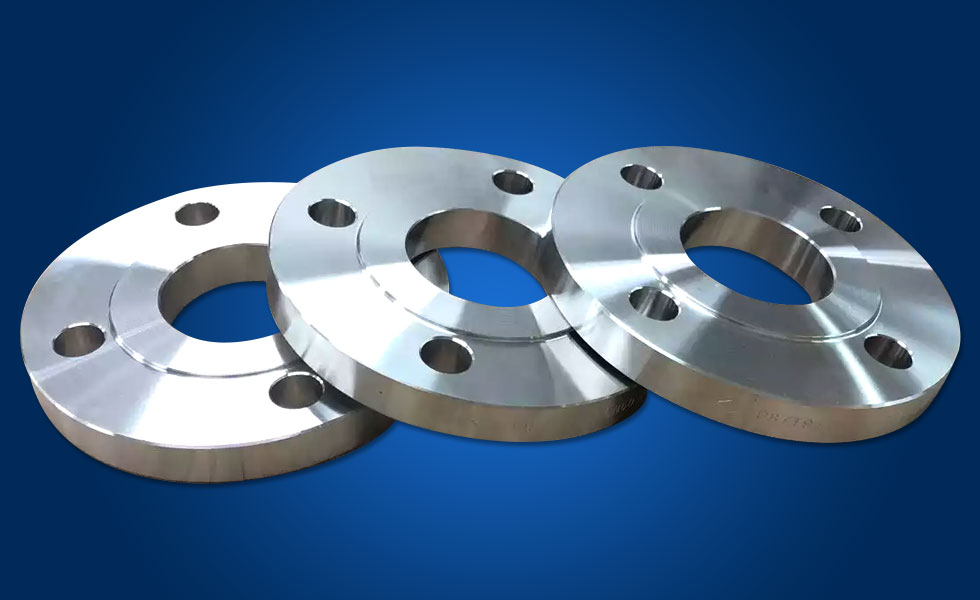
Slip On Flanges to South Africa

Leading Manufacturer & Exporter of
Slip On Flanges to South Africa

Werner Flanges stands as South Africa's trusted partner for premium quality slip on flanges, serving the nation's mining, petrochemical, power generation, and manufacturing sectors for over two decades. As an ISO 9001:2015 certified manufacturer based in India, we supply comprehensive ranges of ASME B16.5 slip on flanges to major industrial hubs across South Africa including Johannesburg, Cape Town, Durban, Port Elizabeth, Richards Bay, and Secunda.
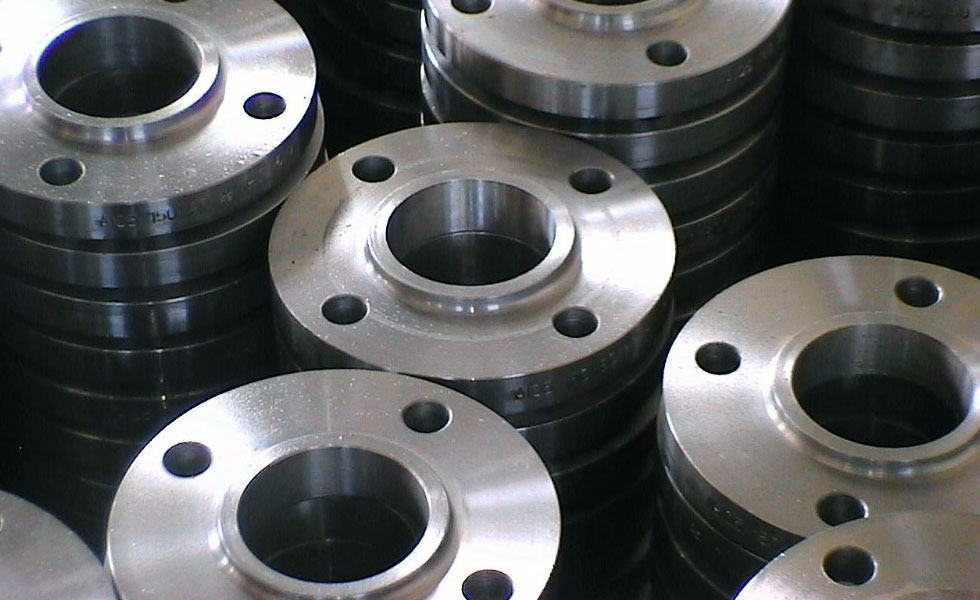
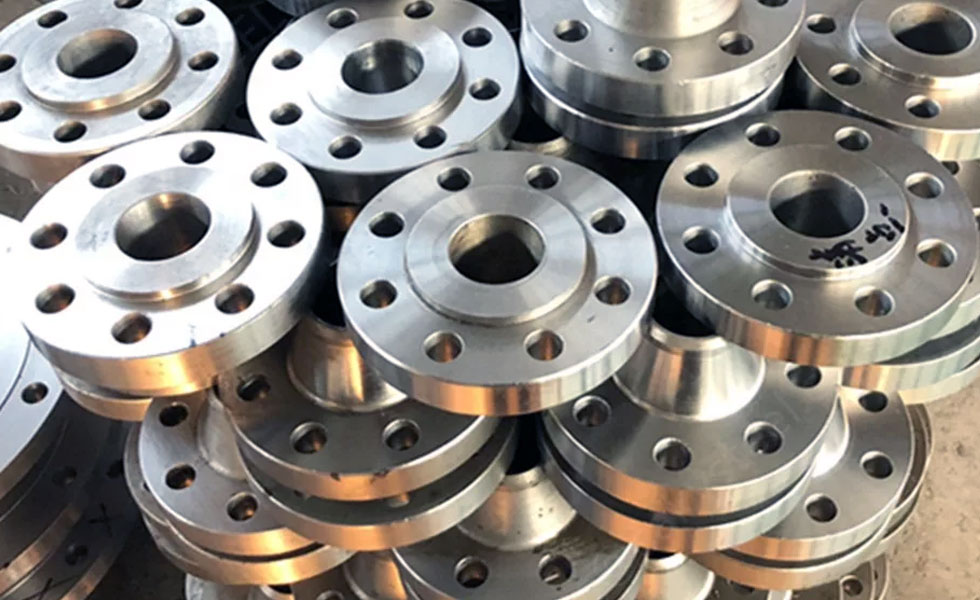
Our slip on flanges are engineered to meet the demanding requirements of South African industries, complying with both international standards (ASME, ASTM, API) and local SANS specifications. We understand the critical role that reliable piping components play in South Africa’s resource extraction, processing, and energy sectors, which is why every flange we manufacture undergoes rigorous quality testing and third-party inspection before shipment.

With manufacturing facilities equipped with advanced forging and CNC machining technology, Werner Flanges produces slip on flanges in carbon steel, stainless steel, alloy steel, and duplex materials across all pressure classes from 150# to 2500# and sizes ranging from ½” to 60″. Our competitive pricing, combined with fast sea freight delivery to Durban and Cape Town ports (typically 18-22 days), makes us the preferred supplier for projects across the Gauteng industrial corridor, KwaZulu-Natal chemical complexes, and Western Cape manufacturing facilities.

Whether you're sourcing flanges for Sasol's petrochemical operations, Eskom power stations, Anglo American mining projects, or municipal water infrastructure, Werner Flanges delivers the quality, certification, and technical support that South African engineering standards demand.

Specifications

Specification Details
Pressure Rating Class 150 to Class 2500
Flange Type Plate Flange
Facing Type Raised Face (RF), Flat Face (FF), Ring Type Joint (RTJ)
Size Range ½” to 24” (DN 15 to DN 600)
Temperature Range -29°C to +593°C (Depending on Material & Pressure Class)
Applications Oil & Gas, Petrochemical, Power Generation, Water Treatment, Marine & Industrial Sectors
Manufacturing Process Forged / Machined
Certification EN 10204 3.1 / 3.2, IBR, NACE MR0175 / ISO 15156 (as applicable)

Matel and Grade

Type of Materials Common Specifications / Customization Available on Request
Duplex Steel ASTM/ASME A182 F51, F60, F61, UNS S31803, UNS S32205
Super Duplex Steel ASTM/ASME A182 F53, F55, UNS S32750, UNS S32760, F44 (6Mo)
Stainless Steel ASTM/ASME A182 F304, F304L, F316, F316L, F310, F317L, F321, F347
Carbon Steel ASTM A105, A350 LF1, LF2, LF3, A266 Class 1/2, A694 F42 to F70, A765 Gr. II
Alloy Steel ASTM/ASME A182 F1, F5, F9, F11, F12, F22
Non-Ferrous Alloys Titanium, Brass, Admiralty Brass, Copper Nickel, Nickel Alloys, Hastelloy
Titanium ASTM/ASME B381 Gr.1, Gr.2, Gr.5, Gr.7, Gr.12, Gr.16
Copper Nickel ASTM B151 UNS C70600 (Cu-Ni 90/10), C71500 (Cu-Ni 70/30)
Brass, Al-Brass ASTM B152 UNS C26000, C27200, C28000; ASTM B111 for Al-Brass
Nickel Alloys ASTM B160, B161, B564 – UNS N02200, N02201, N04400, N08800, N08825, N06600, N06601, N06625, Monel K500
Alloy 20 ASTM B462 UNS N08020
Hastelloy ASTM B564 UNS N10276 (Hastelloy C276), N06022 (Hastelloy C22)
Cladded Materials ASTM B898, B265, B424 or custom explosion/clad bonding using dissimilar metals
Titanium-Steel, Nickel-Steel, Titanium-Copper, Stainless Steel-Carbon Steel, Bimetallic/Trimetallic Combinations

Types of Flanges

Slip On Flanges Raised Face Slip On Flanges Flat Face Slip On Flanges RTJ Slip On Flanges Forged Slip On Flanges
Plate Slip On Flanges Industrial Slip On Flanges High Pressure Slip On Flanges ASME B16.5 Slip On Flanges ANSI Slip On Flanges

Industries and Applications We Supply

Industry Applications
Oil & Gas Industry
  • While South Africa has limited indigenous crude oil production, the country maintains significant downstream refining, gas processing, and synthetic fuels capabilities requiring extensive flange populations.PetroSA Gas-to-Liquids Facility (Mossel Bay): South Africa’s only commercial GTL plant converts offshore natural gas from the offshore EM field into liquid fuels using Fischer-Tropsch synthesis. Slip on flanges in carbon steel (A105) and alloy steel (F11, F22) serve:
    • Natural gas intake and processing systems (Class 300# and 600# for 30-60 bar pressures)
    • Syngas production units operating at elevated temperatures
    • Product fractionation and upgrading units
    • Cooling water and utility systems (Class 150# for low-pressure services)
    • Steam generation and distribution (F22 for high-temperature steam)

    As PetroSA explores future gas sources including potential LNG imports or additional offshore discoveries, slip on flanges in A350 LF2 (for cryogenic LNG) and duplex stainless steel F51 (for sour gas service) will support new infrastructure.

    Petroleum Refineries: South African refineries process imported crude oil at facilities in Durban (Engen refinery), Cape Town (Astron Energy/Chevron Cape Town refinery), and Sasolburg (Sasol Natref). Slip on flanges serve:

    • Crude distillation atmospheric and vacuum towers
    • Catalytic cracking and reforming units
    • Hydrotreating and hydrodesulfurization processes (F11 for hydrogen service)
    • Product storage and distribution systems
    • Cooling water and firefighting systems (Class 150# for low-pressure water)
    • Waste water treatment facilities (316L for corrosive sour water)

    Offshore Oil & Gas: South Africa’s emerging offshore exploration along the Outeniqua Basin (Southern Cape) and Orange Basin (West Coast) requires corrosion-resistant flanges for harsh marine environments:

    • Topside process piping (duplex F51 and super duplex F53 for seawater resistance)
    • Produced water handling (316L and duplex materials)
    • Chemical injection systems (stainless steel for methanol, corrosion inhibitors)
    • Seawater cooling and ballast systems (super duplex F53 for maximum chloride resistance)
    • Gas export pipelines (carbon steel with external coating)

    Total’s Brulpadda discovery and subsequent exploration success at Luiperd prospect (2019-2020) and recent finds by Shell and others highlight growing offshore potential, driving future demand for high-integrity flanges resistant to sour gas, carbon dioxide, and chloride corrosion.


Petrochemical & Chemical Processing
  • Sasol Synfuels Complex (Secunda, Mpumalanga): The world’s only commercial coal-to-liquids facility and South Africa’s largest industrial complex employs tens of thousands of flanges across multiple process units:
    • Coal Gasification: High-pressure steam and oxygen react with coal to produce syngas; slip on flanges in F22 alloy steel handle 450-540°C steam, while A105 serves cooling water and low-temperature services
    • Gas Cleaning: Removal of sulfur, tar, and particulates uses corrosion-resistant 316L flanges for caustic scrubbing systems
    • Fischer-Tropsch Synthesis: Syngas converts to liquid hydrocarbons in reactors operating at 20-40 bar and 200-250°C; Class 300# and 600# slip on flanges in carbon and alloy steel manage process streams
    • Product Upgrading: Hydrocracking and reforming use F11 flanges for hydrogen service resistance
    • Utilities: Massive steam, cooling water, compressed air, and process water systems employ thousands of Class 150# and 300# A105 slip on flanges
    • Chemical Production: Adjacent chemical complexes producing alcohols, ketones, acids, and polymers specify stainless steel (304L, 316L) for corrosion resistance

    Sasol Chemical Operations (Sasolburg, Free State): Chemical production facilities manufacturing explosives precursors for mining, polymers, solvents, and specialty chemicals:

    • Nitric acid production (316L for corrosion resistance to dilute and concentrated acid)
    • Ammonia synthesis (F22 for high-temperature, high-pressure service)
    • Polymer reactors (316L and specialized alloys for monomer and catalyst services)
    • Solvent recovery and purification (304L for organic chemical compatibility)

    Other Chemical Facilities:

    • AECI (African Explosives and Chemical Industries): Mining explosives manufacturing in Modderfontein (Johannesburg) uses slip on flanges in nitric acid, ammonium nitrate, and emulsion production
    • Omnia: Fertilizer and chemical production serving South African agriculture specifies corrosion-resistant flanges for ammonia, nitric acid, and phosphoric acid services

    Specialty chemical producers: Fine chemicals, pharmaceuticals, and agrochemicals throughout Gauteng industrial areas use 316L slip on flanges for product purity and corrosion resistance

Power Generation
  • South Africa’s electricity system, dominated by coal-fired generation but transitioning toward renewables, represents one of the largest flange markets in Sub-Saharan Africa.Eskom Coal-Fired Power Stations: South Africa operates approximately 42,000 MW of coal-fired generating capacity across 13 major stations. Slip on flanges serve critical and auxiliary systems:Medupi and Kusile (Supercritical Units):
    • Main steam systems: 16.5 MPa (165 bar), 565°C conditions require F91 and F22 alloy steel flanges (typically weld neck for most critical service, but slip on for auxiliary connections)
    • Reheat steam: F22 and F91 for 540-565°C intermediate pressure steam
    • Feedwater heaters: Class 600# A105 and stainless steel for condensate and extraction steam
    • Condensate systems: Class 150# A105 for low-pressure condensate recovery
    • Cooling water: Large diameter (up to 60″) Class 150# A105 for circulating water intake and discharge
    • Flue gas desulfurization (FGD): 316L for corrosive limestone slurry and gypsum handling
    • Ash handling: A105 with abrasion-resistant internals for bottom ash and fly ash slurry transport

    Subcritical Stations (Kendal, Matimba, Majuba, Tutuka, others):

    • Lower steam conditions (160-170 bar, 535-545°C) primarily use F22 alloy steel for high-temperature service
    • Extensive auxiliary systems (compressed air, service water, demineralized water, lube oil) use Class 150# A105 slip on flanges
    • Coal handling and milling systems employ abrasion-resistant materials
    • Turbine extraction and gland steam use Class 300# and 600# carbon and alloy steel
    • Boiler blowdown and chemical injection use 316L for water chemistry control

    Gas Turbine and Combined Cycle:

    • Ankerlig and Gourikwa open-cycle gas turbines (Western Cape) burning diesel/kerosene for peaking duty
    • Future combined cycle plants will use F22 and F91 for HRSG (heat recovery steam generator) high-temperature sections
    • Natural gas infrastructure (if future gas supplies materialize) will require extensive flange populations

    Koeberg Nuclear Power Station (Western Cape): South Africa’s only nuclear plant (2 x 900 MW pressurized water reactors) requires nuclear-grade flanges with enhanced documentation and quality assurance:

    • Primary circuit: Weld neck flanges preferred, but slip on flanges in alloy 600 or 316L for auxiliary systems
    • Secondary circuit: Carbon steel and stainless steel for steam generators, feedwater, and condensate
    • Cooling water: Large diameter flanges for Atlantic Ocean seawater intake and discharge (316L or duplex for seawater resistance)
    • Auxiliary systems: Extensive use of Class 150# and 300# slip on flanges in carbon and stainless steels

    Renewable Energy:

    • Concentrated solar power (CSP) plants in Northern Cape: Molten salt and thermal oil systems require high-temperature stainless steel and alloy steel flanges
    • Biomass and waste-to-energy: Corrosion-resistant materials for combustion gas and steam systems
    • Geothermal exploration: If commercialized, will require specialized alloys for high-temperature brine


Water & Wastewater Treatment
  • South Africa faces chronic water scarcity, making water infrastructure critical to economic and social development.Bulk Water Supply – Rand Water: Supplying Gauteng province and surrounding areas, Rand Water operates extensive infrastructure:
    • Large diameter water mains (up to 60″): Class 150# A105 slip on flanges with epoxy coating or cement mortar lining
    • Pump stations: Class 150# and 300# flanges for high-pressure pumping (some stations pump against 100+ meter heads)
    • Treatment plant piping: Stainless steel 304L/316L for chemical dosing, chlorination, and ozone systems
    • Storage reservoirs: Flanged connections for inlet/outlet works

    Municipal Water Treatment: Cities including Johannesburg, Cape Town, Durban (eThekwini), Pretoria (Tshwane), Port Elizabeth (Gqeberha), and Bloemfontein operate water treatment plants:

    • Raw water intake: A105 with protective coating for surface water (rivers, dams)
    • Coagulation and flocculation: 316L for alum and polymer dosing systems
    • Filtration: Carbon steel and stainless steel for backwash systems
    • Disinfection: 316L for chlorine gas, sodium hypochlorite, and ozone applications
    • Distribution pumping: Class 150# and 300# A105 for pressurized distribution

    Wastewater Treatment:

    • Sewage collection: A105 flanges with coating for corrosive hydrogen sulfide environments
    • Biological treatment: 316L for aeration systems and biological reactors
    • Sludge handling: Duplex stainless steel F51 for abrasive, corrosive sludge pumping
    • Digester gas systems: A105 for biogas collection and utilization
    • Effluent discharge: 316L for chlorinated or UV-disinfected effluent

    Desalination: Water scarcity drives desalination interest, particularly in coastal cities:

    • Seawater intake: Super duplex F53 for maximum chloride resistance
    • Pre-treatment: 316L for chemical dosing and filtration
    • High-pressure RO: Duplex F51 and super duplex F53 for 60-70 bar feed pressure
    • Post-treatment: 316L for remineralization and disinfection
    • Brine discharge: Super duplex for concentrated seawater disposal


Frequently Asked Questions (FAQs)

Q1: Are your Slip On Flanges compliant with ASME and ASTM standards for South African industries?

Yes. Werner Flanges Slip On Flanges are manufactured per ASME B16.5 (sizes NPS 1/2″–24″) and ASME B16.47 (larger sizes). Materials comply with ASTM specifications such as A105, A182, and A350. Products are widely accepted by EPC contractors, mining, power, and petrochemical industries in South Africa.

Q2: What delivery timelines can be expected for South African ports?

Standard sea freight to Durban, Cape Town, or Johannesburg ports is 20–28 days from order confirmation, including manufacturing, ocean transit, and customs clearance. Expedited air freight options are available for urgent maintenance or project requirements.

Q3: Do you provide NACE MR0175/ISO 15156 certified Slip On Flanges for sour service in South Africa?

Absolutely. NACE-compliant flanges are offered for environments with H₂S or CO₂ exposure, common in oil & gas operations in South Africa. Our compliance includes hardness control, proper heat treatment, chemical composition verification, and full documentation.

Q4: Which materials are suitable for South Africa’s industrial and coastal applications?

Available materials: Carbon steel (A105, A350 LF2), Stainless steel (F304/F304L, F316/F316L, F321), Alloy steel (F11, F22, F91), Duplex/Super Duplex (F51, F53, F55), Nickel alloys (Inconel, Monel, Hastelloy).
For coastal/marine exposure, F316/F316L is preferred. Duplex and super duplex are recommended for highly corrosive or offshore conditions.

Q5: Do you support third-party inspection for South African projects?

Yes. TPI services are available from TÜV, DNV, Lloyd’s Register, Bureau Veritas, SGS, Intertek, and ABS. Services include material verification, heat treatment review, dimensional inspection, mechanical testing, NDT verification, and issuance of independent certificates.

Q6: Can you supply custom or non-standard Slip On Flanges for South African projects?

Yes. We can manufacture custom bore sizes, modified bolt circles, extended necks, oversized flanges (up to 120″), unique facings, and exotic alloys. Engineering support ensures compliance with pressure ratings and structural integrity.

Q7: What documentation accompanies Slip On Flanges shipments to South Africa?

Documentation includes EN 10204 3.1 Material Certificates, Dimensional Inspection Reports, Heat Treatment Charts, PMI reports, Hardness & NDT reports, Manufacturer’s Compliance Certificate, Commercial Invoice, Packing List, Certificate of Origin, and Fumigation Certificate. Optional TPI certificates, NACE compliance, and impact test reports can also be provided.

GET A QUOTE

Contact Information

Email: sales@wernerflanges.com
  • 0800-123456 (24/7 Support Line)
  • info@example.com
  • 6701 Democracy Blvd, Suite 300, USA