Leading Manufacturer & Exporter of
Slip On Flanges to Egypt
Werner Flanges stands as Egypt's trusted partner for premium-quality slip on flanges, serving the nation's expanding industrial infrastructure for over two decades. As a specialized manufacturer and direct exporter, we deliver ASME B16.5 certified slip on flanges to major industrial hubs across Cairo, Alexandria, Port Said, Suez, Assiut, and the emerging industrial zones along the Suez Canal Economic Zone.
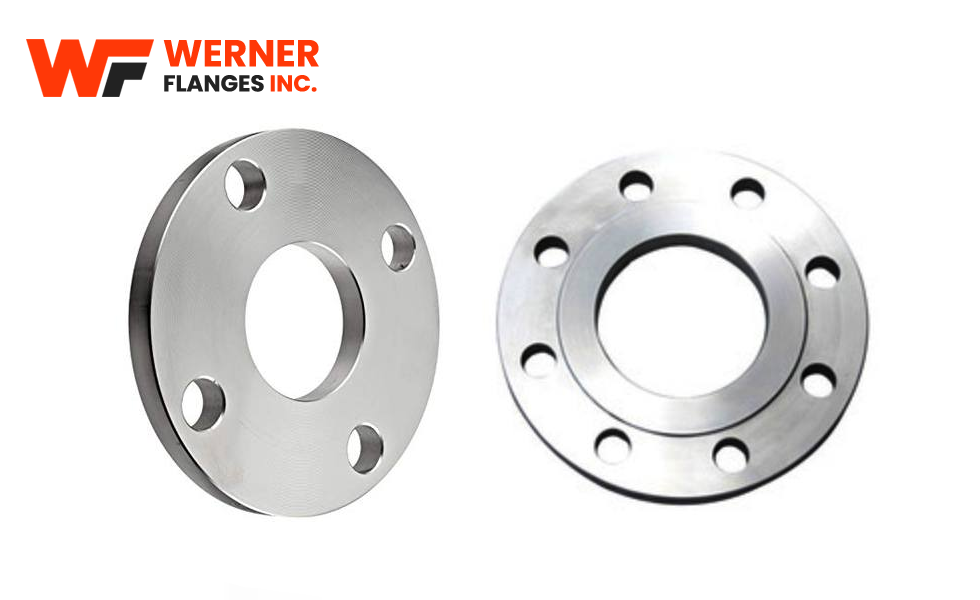
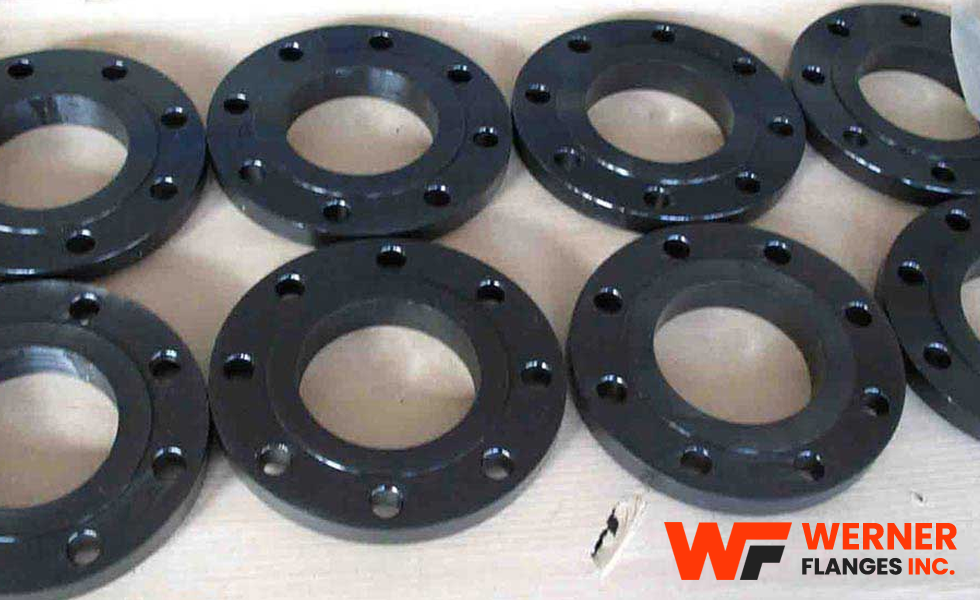
Egypt’s strategic position as a gateway between Africa, Asia, and Europe, combined with its ambitious industrial expansion initiatives, demands reliable piping solutions that meet international standards. Our slip on flanges are engineered specifically for the Egyptian market, addressing the unique requirements of the country’s oil and gas sector, petrochemical facilities, power generation plants, and water infrastructure projects including desalination plants and wastewater treatment facilities.
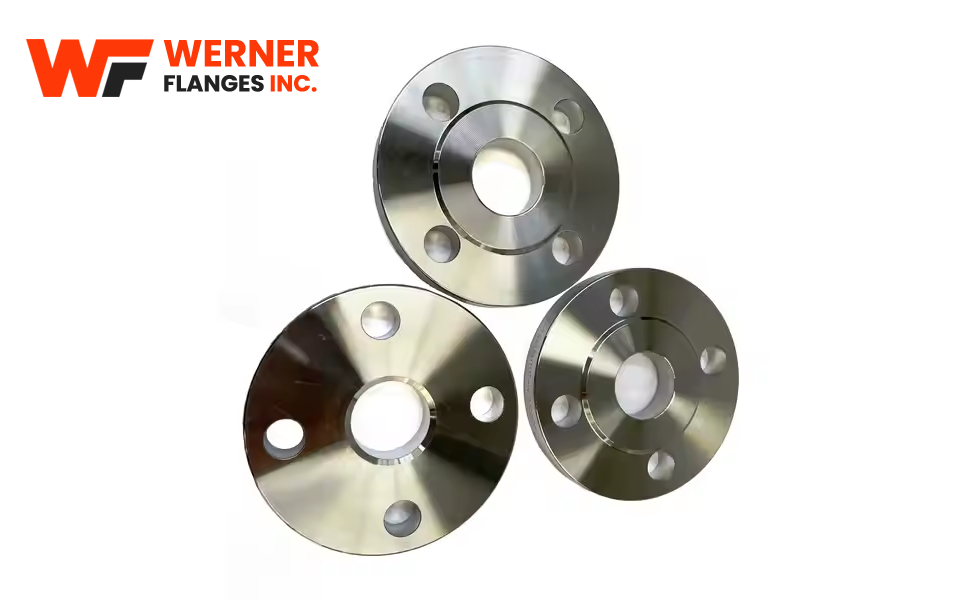
Slip on flanges, also known as SO flanges, represent one of the most economical and widely used flange types in moderate-pressure applications. These flanges slide over the pipe and are welded both inside and outside, providing a strong, leak-proof connection that’s easier to install than weld neck flanges while maintaining excellent performance in applications up to 300# pressure class. For Egypt’s diverse industrial landscape—from the natural gas processing facilities in the Mediterranean to the petroleum refineries in Cairo and Suez—slip on flanges offer the perfect balance of cost-effectiveness, installation ease, and reliable performance.
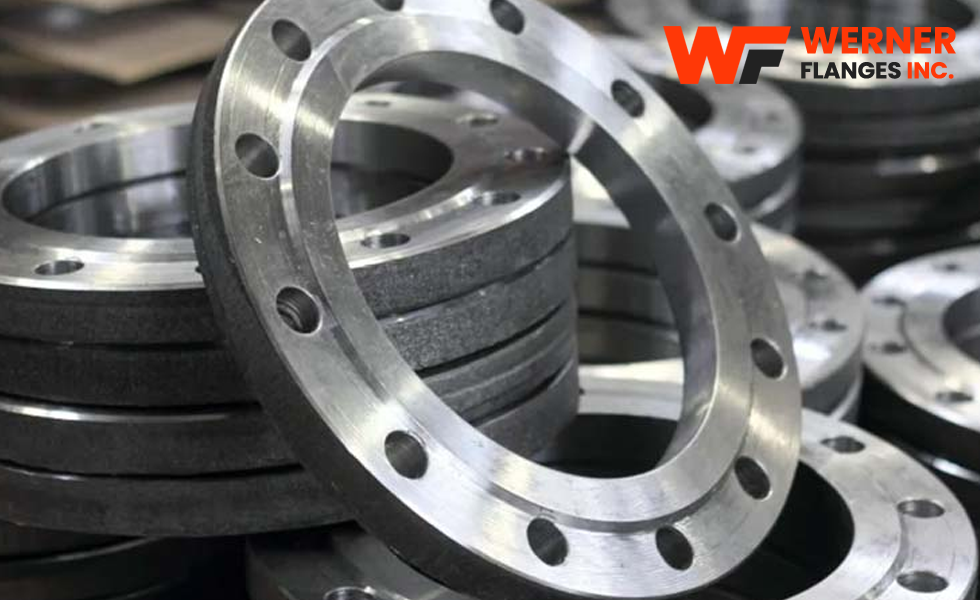
We manufacture slip on flanges in comprehensive size ranges from ½” to 60″ NPS, pressure classes from 150# to 2500#, and a complete spectrum of materials including carbon steel (ASTM A105, A350 LF2), stainless steel (304, 304L, 316, 316L, 321), alloy steel (F11, F22, F91), and duplex/super duplex grades (F51, F53, F55). Every flange we produce complies with ASME B16.5, ASME B16.47, and relevant API specifications, with full material traceability and comprehensive test documentation.
Our Egypt-focused supply chain ensures delivery times of 18-22 days to Alexandria Port and Port Said, with expedited air freight options available for urgent project requirements. We maintain strategic inventory of commonly specified sizes and materials to serve Egypt's fast-paced industrial projects with minimal lead times.
Specifications
| Specification | Details |
|---|---|
| Pressure Rating | Class 150 to Class 2500 |
| Flange Type | Plate Flange |
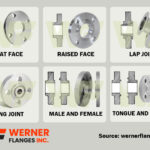
| Facing Type | Raised Face (RF), Flat Face (FF), Ring Type Joint (RTJ) |
| Size Range | ½” to 24” (DN 15 to DN 600) |
| Temperature Range | -29°C to +593°C (Depending on Material & Pressure Class) |
| Applications | Oil & Gas, Petrochemical, Power Generation, Water Treatment, Marine & Industrial Sectors |
| Manufacturing Process | Forged / Machined |
| Certification | EN 10204 3.1 / 3.2, IBR, NACE MR0175 / ISO 15156 (as applicable) |
Matel and Grade
| Type of Materials | Common Specifications / Customization Available on Request |
|---|---|
| Duplex Steel | ASTM/ASME A182 F51, F60, F61, UNS S31803, UNS S32205 |
| Super Duplex Steel | ASTM/ASME A182 F53, F55, UNS S32750, UNS S32760, F44 (6Mo) |
| Stainless Steel | ASTM/ASME A182 F304, F304L, F316, F316L, F310, F317L, F321, F347 |
| Carbon Steel | ASTM A105, A350 LF1, LF2, LF3, A266 Class 1/2, A694 F42 to F70, A765 Gr. II |
| Alloy Steel | ASTM/ASME A182 F1, F5, F9, F11, F12, F22 |
| Non-Ferrous Alloys | Titanium, Brass, Admiralty Brass, Copper Nickel, Nickel Alloys, Hastelloy |
| Titanium | ASTM/ASME B381 Gr.1, Gr.2, Gr.5, Gr.7, Gr.12, Gr.16 |
| Copper Nickel | ASTM B151 UNS C70600 (Cu-Ni 90/10), C71500 (Cu-Ni 70/30) |
| Brass, Al-Brass | ASTM B152 UNS C26000, C27200, C28000; ASTM B111 for Al-Brass |
| Nickel Alloys | ASTM B160, B161, B564 – UNS N02200, N02201, N04400, N08800, N08825, N06600, N06601, N06625, Monel K500 |
| Alloy 20 | ASTM B462 UNS N08020 |
| Hastelloy | ASTM B564 UNS N10276 (Hastelloy C276), N06022 (Hastelloy C22) |
| Cladded Materials | ASTM B898, B265, B424 or custom explosion/clad bonding using dissimilar metals |
| Titanium-Steel, Nickel-Steel, Titanium-Copper, Stainless Steel-Carbon Steel, Bimetallic/Trimetallic Combinations |
Types of Flanges
| Slip On Flanges | Raised Face Slip On Flanges | Flat Face Slip On Flanges | RTJ Slip On Flanges | Forged Slip On Flanges |
| Plate Slip On Flanges | Industrial Slip On Flanges | High Pressure Slip On Flanges | ASME B16.5 Slip On Flanges | ANSI Slip On Flanges |
Industries and Applications We Supply
| Industry | Applications |
|---|---|
Oil & Gas Industry |
|
Petrochemical & Chemical Processing |
|
Power Generation |
|
Water & Wastewater Treatment |
|
Frequently Asked Questions (FAQs)
-
Q1: What is the difference between slip on flanges and weld neck flanges, and which should I choose for my Egyptian project?
-
Slip on flanges slide over the pipe and are welded inside and outside with fillet welds, while weld neck flanges have a tapered hub that butt-welds to the pipe.
Choose slip on flanges for:
- Lower pressure applications (typically Class 150-300#)
- Cost-sensitive projects where initial savings are important
- Systems with minimal thermal cycling
- Applications where easier installation is preferred
Choose weld neck flanges when:
- High pressure or temperature service (Class 600# and above)
- Severe cyclic conditions are present
- Thin-wall pipe is used (SO flanges require thicker pipe wall for fillet weld strength)
- Offshore or critical applications requiring maximum reliability
For most Egyptian industrial applications below 50 bar and 300°C, slip on flanges provide excellent performance at lower cost. Contact our technical team to review your specific operating conditions.
-
Q2: What delivery times can Werner Flanges provide to Egypt, and do you offer expedited shipping?
-
Standard delivery is 18–22 days sea freight to Alexandria Port or Port Said for stock items and common specifications. Custom manufacturing adds 7–14 days depending on material and testing requirements.
Expedited options:
- Express Sea Freight: 14–16 days to Egyptian ports
- Air Freight: 5–7 days to Cairo International Airport or Alexandria Airport
- Courier Service: 3–5 days for small urgent items
We maintain inventory of popular sizes (2″-12″) in Class 150# and 300#, materials A105, F304L, and F316L for immediate dispatch. Contact us with your required delivery date for the most economical shipping option.
-
Q3: Are your slip on flanges certified to ASME standards and acceptable for Egyptian oil and gas projects?
-
Yes, all slip on flanges are manufactured per ASME B16.5 (sizes ½”–24″) and ASME B16.47 Series A/B (26″ and larger). Materials comply with ASTM specifications (A105, A182, A350, etc.). Documentation includes:
- Material Test Certificates per EN 10204 3.1 or 3.2
- Dimensional inspection reports verifying ASME compliance
- PMI test reports confirming material grade
- Certificates of Compliance
Flanges are regularly supplied to EGPC, EGAS, and international operators in Egypt. Third-party inspection (TÜV, DNV, Lloyd’s, BV, SGS) can be arranged for major projects.
-
Q4: What material should I specify for seawater applications in Egyptian desalination plants or coastal facilities?
-
Recommended materials for seawater service:
- ASTM A182 F316L: Minimum grade for continuous seawater contact. Resistant to chloride pitting and crevice corrosion. Suitable for ambient seawater temperatures.
- ASTM A182 F51 (Duplex 2205): Twice the strength and better chloride stress corrosion cracking resistance. Ideal for high-pressure seawater injection systems.
- ASTM A182 F53/F55 (Super Duplex): Optimal for critical seawater applications, offshore platforms, and high-temperature or corrosive environments (H2S, CO2).
Egyptian Red Sea and Mediterranean desalination plants typically specify F316L for cost-effective applications and F51 duplex for critical systems requiring 25+ year service life. Avoid carbon steel and F304 in seawater—both corrode rapidly.
-
Q5: Can you manufacture custom slip on flanges with dimensions different from ASME B16.5 standards?
-
Yes. Custom slip on flanges can include:
- Non-standard pressure ratings or thicknesses
- Special bore diameters for non-standard pipe sizes
- Modified bolt hole patterns or quantities
- Long weld neck slip on designs with extended hub
- Special facing types or surface finishes
- Customer-specified material grades or dual certifications
- Reducing slip on flanges in custom size combinations
Provide your dimensional requirements, operating conditions, and quantity. Manufacturing drawings are submitted for approval before production. Custom flanges typically add 2–3 weeks to delivery depending on complexity.
-
Q6: Do you provide installation guidance or technical support for slip on flange installation in Egypt?
-
Yes. We provide comprehensive technical support:
- Installation Procedures: Guidelines for pipe preparation, alignment, welding, and bolt-up
- Welding Specifications: Recommended procedures, filler metals, and fillet weld parameters
- Torque Charts: Proper bolt torque values for each flange size and pressure class
- Gasket Selection: Guidance on compatible gaskets for your service
- Technical Consultation: Engineers available by phone/email for installation questions
For major Egyptian projects, site visits by technical representatives can review installation, inspect welding quality, and train maintenance teams.
-
Q7: How do I ensure I’m ordering the correct pressure class for my application?
-
Selecting the correct pressure class requires evaluating:
- Operating Pressure: Use ASME B16.5 pressure-temperature rating tables. Ensure the flange class is rated for your maximum operating pressure at maximum temperature.
- Design Margin: Include safety factor above normal operating conditions to handle surges, water hammer, or process upsets.
- Temperature Derating: A Class 300# flange rated for 51 bar at ambient may only be rated for 40 bar at 300°C. Always check the pressure-temperature curve.
- Future Considerations: If future operating pressure increases are anticipated, specify a higher class initially.
Our technical team can review your process conditions and recommend the appropriate pressure class. Typical Egyptian usage: Class 150# in low-pressure water systems, Class 300# in oil/gas facilities, and Class 600# in high-pressure steam/petrochemical applications.
GET A QUOTE
Ready to Source High-Quality Slip On Flanges for Your Egyptian Project?
Werner Flanges makes the quotation process straightforward and responsive.
How to Request Your Quote
Contact our export team with your flange requirements. We respond to all Egyptian inquiries within 2–4 business hours with preliminary quotations, and provide detailed technical quotes within 24 hours after reviewing specifications.
Information to Provide for Accurate Quotation
To expedite your quote, please include:
Flange Specifications:
- Size (NPS in inches or DN in mm)
- Pressure class (150#, 300#, 600#, etc.)
- Material grade (A105, F304L, F316L, F22, etc.)
- Facing type (RF, FF, or RTJ)
- Quantity required
Project Details:
- Delivery location in Egypt (city/port)
- Required delivery date or project schedule
- Any special testing requirements (UT, MPI, third-party inspection)
- Applicable standards (ASME B16.5, customer specifications)
- End-use application (helps us recommend optimal specifications)
Commercial Preferences:
- Payment terms required (advance payment, LC, credit terms)
- Delivery method (sea freight, air freight, DDP terms)
- Documentation requirements (language, certification level)
Contact Werner Flanges Egypt Export Team
Email: sales@wernerflanges.com