Leading Manufacturer & Exporter of
Carbon Steel Flanges to Singapore
Werner Flanges stands as Singapore's trusted partner for premium carbon steel flanges, serving the island nation's dynamic industrial landscape for over two decades. As a leading manufacturer and direct distributor, we supply high-performance carbon steel flanges that meet the rigorous demands of Singapore's petrochemical complexes, marine facilities, and offshore platforms.
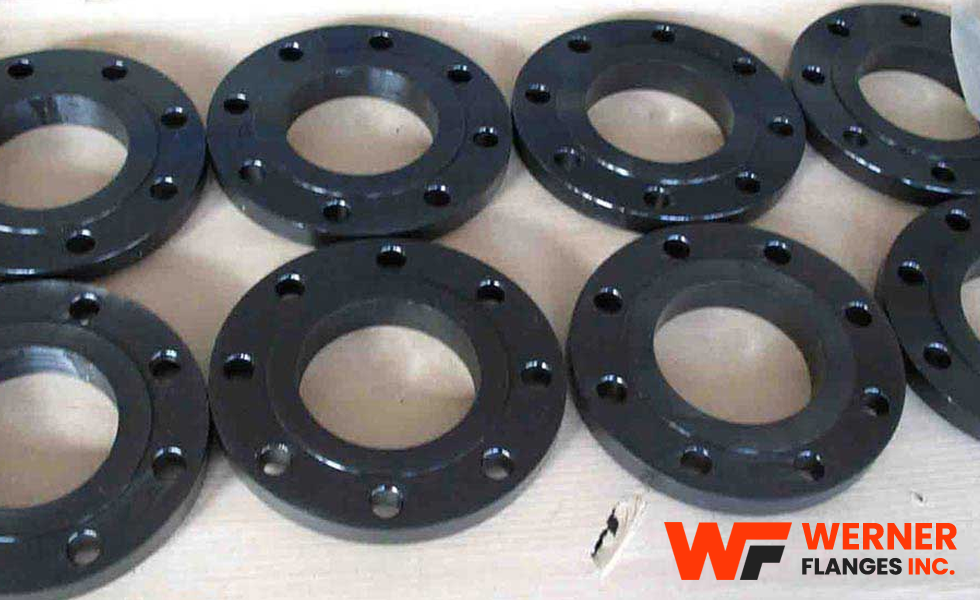
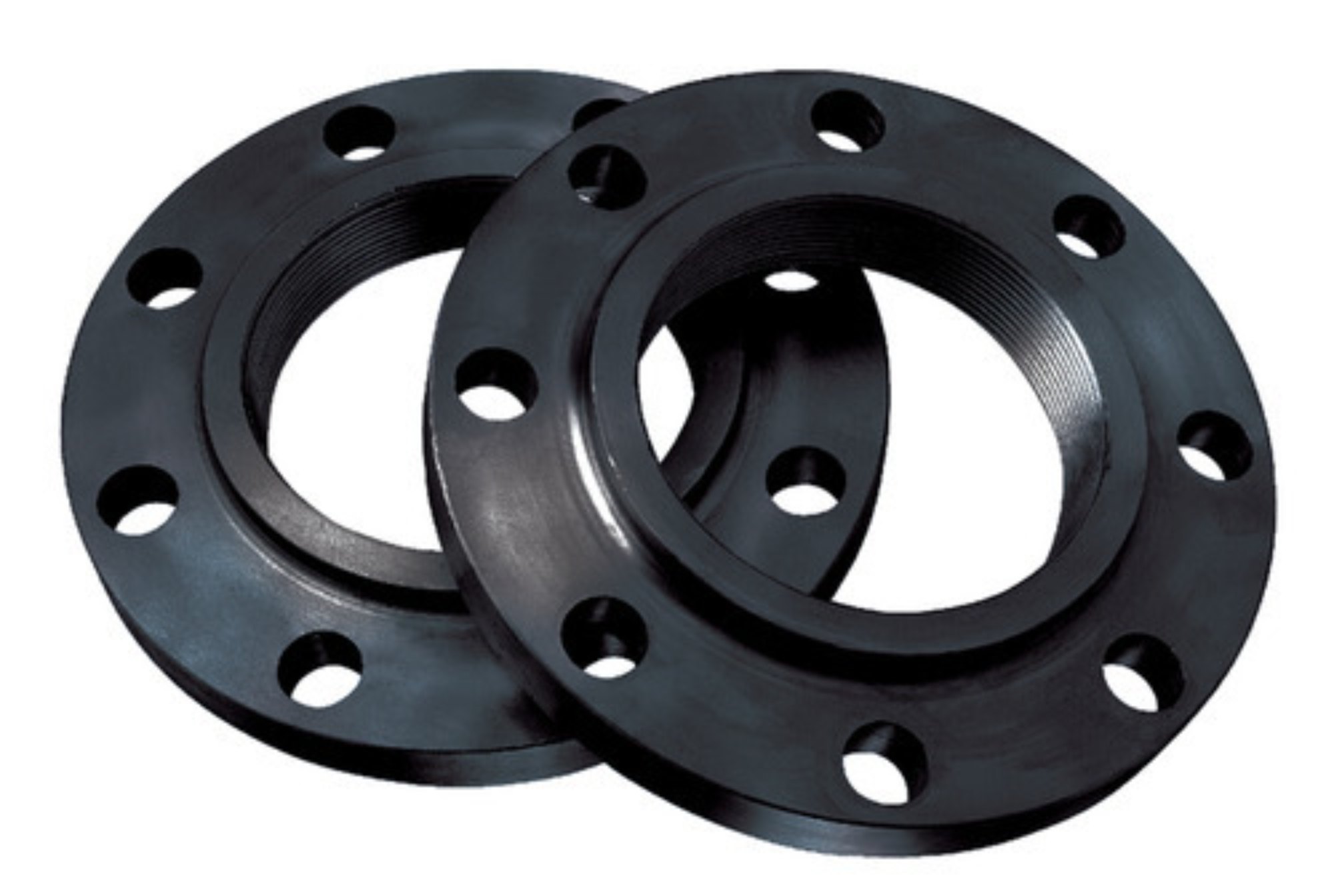
Our comprehensive range includes ASTM A105 and ASTM A350 LF2 carbon steel flanges in all pressure classes from 150# to 2500#, manufactured to ASME B16.5, ASME B16.47, and DIN standards. With strategic logistics partnerships through Singapore’s world-class ports including Pasir Panjang Terminal, Jurong Port, and PSA terminals, we ensure rapid delivery across the island—from Jurong Industrial Estate to Tuas Biomedical Park, Woodlands industrial zones to Changi manufacturing hubs.
Singapore’s position as Southeast Asia’s petrochemical hub demands materials that withstand corrosive marine environments, high-pressure applications, and stringent quality requirements. Our carbon steel flanges serve major installations including ExxonMobil’s integrated refinery, Shell’s Pulau Bukom complex, Jurong Aromatics Corporation, and numerous offshore oil and gas platforms. Every flange undergoes comprehensive testing including PMI verification, dimensional inspection, and mechanical property testing to ensure compliance with international standards and local regulations.
Our commitment to Singapore's industrial sector includes maintaining strategic inventory positions for rapid delivery to Jurong Island facilities, PSA terminals, and offshore installation bases. With average delivery times of 18–25 days for standard orders via Port of Singapore, and expedited air freight options available for critical requirements, we ensure your projects maintain schedule and budget integrity. Our technical support team maintains regular communication with Singapore-based engineers, project managers, and procurement specialists, ensuring seamless collaboration from quotation through delivery and installation support.
Singapore Flange Supply | 18–25 Days Delivery via Port of Singapore | Jurong Island & PSA Support | Technical & Project Coordination
Specifications
| Specification | Details |
|---|---|
| Pressure Rating | Class 150 to Class 2500 |
| Flange Type | Plate Flange |
| Facing Type | Raised Face (RF), Flat Face (FF), Ring Type Joint (RTJ) |
| Size Range | ½” to 24” (DN 15 to DN 600) |
| Temperature Range | -29°C to +593°C (Depending on Material & Pressure Class) |
| Applications | Oil & Gas, Petrochemical, Power Generation, Water Treatment, Marine & Industrial Sectors |
| Manufacturing Process | Forged / Machined |
| Certification | EN 10204 3.1 / 3.2, IBR, NACE MR0175 / ISO 15156 (as applicable) |
Matel and Grade
| Type of Materials | Common Specifications / Customization Available on Request |
|---|---|
| Duplex Steel | ASTM/ASME A182 F51, F60, F61, UNS S31803, UNS S32205 |
| Super Duplex Steel | ASTM/ASME A182 F53, F55, UNS S32750, UNS S32760, F44 (6Mo) |
| Stainless Steel | ASTM/ASME A182 F304, F304L, F316, F316L, F310, F317L, F321, F347 |
| Carbon Steel | ASTM A105, A350 LF1, LF2, LF3, A266 Class 1/2, A694 F42 to F70, A765 Gr. II |
| Alloy Steel | ASTM/ASME A182 F1, F5, F9, F11, F12, F22 |
| Non-Ferrous Alloys | Titanium, Brass, Admiralty Brass, Copper Nickel, Nickel Alloys, Hastelloy |
| Titanium | ASTM/ASME B381 Gr.1, Gr.2, Gr.5, Gr.7, Gr.12, Gr.16 |
| Copper Nickel | ASTM B151 UNS C70600 (Cu-Ni 90/10), C71500 (Cu-Ni 70/30) |
| Brass, Al-Brass | ASTM B152 UNS C26000, C27200, C28000; ASTM B111 for Al-Brass |
| Nickel Alloys | ASTM B160, B161, B564 – UNS N02200, N02201, N04400, N08800, N08825, N06600, N06601, N06625, Monel K500 |
| Alloy 20 | ASTM B462 UNS N08020 |
| Hastelloy | ASTM B564 UNS N10276 (Hastelloy C276), N06022 (Hastelloy C22) |
| Cladded Materials | ASTM B898, B265, B424 or custom explosion/clad bonding using dissimilar metals |
| Titanium-Steel, Nickel-Steel, Titanium-Copper, Stainless Steel-Carbon Steel, Bimetallic/Trimetallic Combinations |
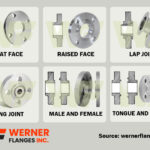
Types of Flanges
| Slip On Flanges | Weld Neck Flanges | Blind Flanges | Socket Weld Flanges | Threaded Flanges |
| Lap Joint Flanges | Reducing Flanges | Orifice Flanges | Long Weld Neck Flanges | Plate Flanges |
Industries and Applications We Supply
| Industry | Applications |
|---|---|
Oil & Gas Industry |
Upstream Production Facilities: Singapore’s position as regional oil and gas hub extends to upstream support services, with numerous companies providing equipment and materials for offshore platforms throughout Southeast Asia. Carbon steel ASTM A105 flanges serve production manifolds, wellhead systems, and export pipelines on platforms in Malaysia, Indonesia, Thailand, and Vietnam waters. High-pressure Class 600# and 900# flanges handle produced fluids from wellheads operating at pressures up to 700 bar. The robust construction withstands production surges, well testing operations, and shutdown/startup cycles common in offshore operations. Material selection favoring normalized A105N ensures impact toughness adequate for dynamic offshore loading from wave action and operational vibration. Subsea equipment manufactured in Singapore incorporates carbon steel flanges in production trees, manifolds, and flowline connections. The flanges must withstand seawater exposure, cathodic protection currents, and mechanical stresses from installation operations. Specialized coatings and material treatments extend service life in this demanding environment. Midstream Pipeline & Terminal Operations: Singapore’s petroleum storage terminals including those on Jurong Island, Pulau Sebarok, and Pulau Bukom utilize extensive carbon steel flanges in crude oil receiving, storage tank connections, and product dispatch systems. Large-diameter Class 150# flanges in 20″ to 48″ sizes accommodate high-volume transfer rates necessary for Singapore’s position as Asia’s trading and refining hub. Tank farm piping networks employ thousands of flanges connecting storage tanks to manifolds, pumps, and loading facilities. The flanges must resist atmospheric corrosion from tropical humidity and occasional salt spray, while handling temperature variations as different crude grades and products flow through shared systems. Marine loading arms and ship-to-shore transfer systems incorporate swivel joints with carbon steel flanges accommodating vessel movement while maintaining leak-tight seals. The dynamic loads and vibration from pump pulsation and wave action demand robust flange design and careful gasket selection. Downstream Refinery Operations: Shell’s Pulau Bukom refinery, one of Asia’s largest, processes 500,000 barrels daily using carbon steel flanges throughout crude distillation, vacuum distillation, catalytic cracking, hydrocracking, and product treatment units. ASTM A105 flanges in Class 300# to 600# handle crude oil at temperatures to 380°C and pressures to 35 bar through atmospheric distillation. Vacuum distillation operates at sub-atmospheric pressure but elevated temperature (400°C), where A105 material’s high-temperature strength prevents creep deformation. Larger-diameter, lower-pressure-class flanges accommodate high volumetric flow rates while maintaining vacuum integrity essential for heavy fuel oil and asphalt production. Catalytic processing units including fluid catalytic crackers and hydroprocessing units employ extensive Class 600# and 900# flanges in reactor feed, effluent, and recycle systems. Operating pressures of 70-150 bar and temperatures to 400°C challenge material capabilities, requiring careful specification and quality verification ensuring long-term reliability. Product treatment and blending facilities use predominantly Class 150# and 300# flanges in sizes 4″ to 16″ handling gasoline, diesel, jet fuel, and specialized products. The moderate pressure/temperature conditions allow cost-effective flange selection while maintaining safety and environmental protection standards Singapore’s regulations demand. Offshore Support & Fabrication: Singapore’s marine fabrication yards including Sembcorp Marine, Keppel Offshore & Marine, and Dyna-Mac construct topside modules, jackets, and subsea equipment incorporating thousands of carbon steel flanges. These facilities require reliable, high-quality flanges meeting international offshore standards and classification society approvals. Production equipment modules feature extensive piping with flanges enabling assembly, testing, and eventual offshore installation. The flanges must survive construction handling, load-out stresses, offshore transportation, and lifting operations before entering service. Robust Class 300# and 600# flanges with protective coatings ensure survival through these demanding operations. |
Petrochemical Plants: |
|
| Power Generation |
|
|
Seawater Desalination: Singapore’s NEWater and desalination programs address water security through advanced treatment and seawater conversion. Desalination plants use carbon steel ASTM A105 flanges in seawater intake systems, pre-treatment piping, and brine discharge, with appropriate coating systems protecting against marine corrosion. High-pressure reverse osmosis systems typically employ stainless steel for membrane housings and immediate piping, but carbon steel flanges serve pre-treatment filters, chemical dosing, and post-treatment storage where corrosion rates remain manageable with proper material selection and coatings. Municipal Water Distribution: PUB’s water distribution network supplying potable water across Singapore employs carbon steel flanges in trunk mains, pumping stations, and reservoir connections. Large-diameter Class 150# flanges in 12″ to 48″ sizes facilitate maintenance access while providing structural integrity for pressure surges during pump starts and valve operations. Cement-mortar linings and epoxy coatings protect internal surfaces from corrosion, extending service life in potable water service. External coatings resist atmospheric corrosion in above-ground installations and soil-side corrosion in buried applications. Cathodic protection systems supplement coatings, ensuring long-term reliability throughout Singapore’s water infrastructure. Wastewater Treatment Plants: Singapore’s extensive wastewater collection and treatment system uses carbon steel flanges in pumping stations, treatment basins, and sludge handling systems. Class 150# flanges predominate in moderate-pressure applications, with coating systems selected based on service environment ranging from raw sewage to treated effluent. Biogas systems at wastewater treatment plants capturing methane from anaerobic digesters employ carbon steel flanges in gas compression, conditioning, and utilization systems. The low-pressure, ambient-temperature conditions suit Class 150# ASTM A105 flanges with gas-tight gasket selection preventing fugitive emissions. Industrial Wastewater Treatment: Petrochemical and chemical facilities on Jurong Island operate dedicated wastewater treatment systems before discharge to municipal systems. Carbon steel flanges serve in equalization basins, biological treatment units, and tertiary treatment processes, with material selection based on chemical exposure from process condensates and cooling water blowdown. |
Frequently Asked Questions (FAQs)
- Q1: What standards do your carbon steel flanges comply with for Singapore projects?
- Our carbon steel flanges comply with ASME B16.5 and ASME B16.47 standards, widely used in Singapore’s industrial, marine, and petrochemical sectors. We can also supply flanges meeting DIN, BS, or project-specific requirements. All flanges undergo dimensional verification and inspection reports confirming conformance.
- Q2: What delivery options are available for carbon steel flanges to Singapore?
- We provide reliable sea freight and air freight options. Standard sea freight delivery to PSA terminals or Jurong Port typically takes 18–24 days, including ocean transit. For urgent orders, air freight through Changi Airport can reduce delivery time to 5–7 days. Regular shipping schedules ensure consistent material flow for projects and inventory replenishment.
- Q3: Are specialty carbon steel grades available for low-temperature or critical applications?
- Yes, we distribute specialty grades such as ASTM A350 LF2 suitable for low-temperature applications including LNG facilities and industrial refrigeration. Our flanges meet international standards, and documentation confirming material properties is provided with every shipment.
- Q4: Can you supply flanges in non-standard sizes or custom dimensions?
- We offer custom distribution of flanges with non-standard dimensions or modified configurations based on project requirements. Our team can verify availability and provide suitable options for retrofits, specialized equipment, or unique piping systems in Singapore.
- Q5: What quality documentation accompanies flange shipments?
-
Every shipment includes comprehensive documentation such as:
- Material Test Certificates (EN 10204 3.1) showing chemical composition and mechanical properties
- Dimensional inspection reports confirming ASME compliance
- Heat treatment verification where applicable
- Third-party inspection certificates when required
- Commercial documents including invoices, packing lists, and certificates of origin
Documentation can be provided in digital format for convenience or as hard copies with the shipment.
- Q6: Are your carbon steel flanges suitable for Singapore’s marine and industrial environments?
- Yes, our carbon steel flanges are suitable for Singapore’s tropical and coastal environments. Protective coatings, such as epoxy, galvanizing, or chromate finishes, are available depending on project requirements to ensure durability and corrosion resistance in marine, offshore, and industrial applications.